
Age: 54
male
Benjamin Géza Affleck (born August 15, 1972) is an American actor and filmmaker. His accolades include two Academy Awards and three Golden Globe Awards. He began his career as a child when he starred in the PBS educational series The Voyage of the Mimi (1984, 1988). He later appeared in the independent coming-of-age comedy Dazed and Confused (1993) and various Kevin Smith films, including Mallrats (1995), Chasing Amy (1997) and Dogma (1999). Affleck gained wider recognition when he and childhood friend Matt Damon won the Golden Globe and Academy Award for Best Original Screenplay for writing Good Will Hunting (1997), which they also starred in. He then established himself as a leading man in studio films, including the disaster film Armageddon (1998), the war drama Pearl Harbor (2001), and the thrillers The Sum of All Fears and Changing Lanes (both 2002). After a career downturn, during which he appeared in Daredevil (2003) and Gigli (2003), Affleck received a Golden Globe nomination for portraying George Reeves in the noir biopic Hollywoodland (2006). His directorial debut, Gone Baby Gone (2007), which he also co-wrote, was well received. He then directed, co-wrote and starred in the crime drama The Town (2010) and directed and starred in the political thriller Argo (2012); both were critical and commercial successes. For the latter, Affleck won the Golden Globe and BAFTA Award for Best Director, and the Golden Globe, BAFTA, and Academy Award for Best Picture. He has since starred in the psychological thriller Gone Girl (2014), the thriller The Accountant (2016), the action-adventure Triple Frontier (2019), and the sports drama The Way Back (2020). In 2016, he began portraying Batman in superhero films set in the DC Extended Universe. Affleck is the co-founder of the Eastern Congo Initiative, a grantmaking and advocacy-based nonprofit organization. He is also a stalwart supporter of the Democratic Party. Affleck and Damon are co-owners of the production company Pearl Street Films.
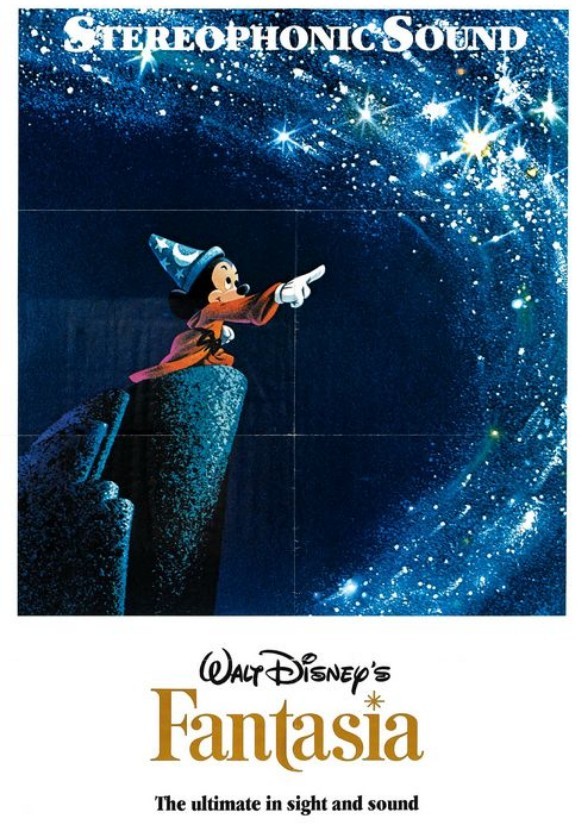
Fantasia opens with live action scenes of members of an orchestra gathering against a blue background and tuning their instruments in half-light, half-shadow. Master of ceremonies Deems Taylor enters the stage (also in half-light, half-shadow) and introduces the program. Toccata and Fugue in D Minor by Johann Sebastian Bach. Live-action shots of the orchestra illuminated in blue and gold, backed by superimposed shadows, fade into abstract patterns. Animated lines, shapes and cloud formations reflect the sound and rhythms of the music. Nutcracker Suite by Pyotr Ilyich Tchaikovsky. Selections from the ballet suite underscore scenes depicting the changing of the seasons from summer to autumn to winter. A variety of dances are presented with fairies, fish, flowers, mushrooms, and leaves, including "Dance of the Sugar Plum Fairy", "Chinese Dance", "Arabian Dance", "Russian Dance","Dance of the Flutes" and "Waltz of the Flowers". The Sorcerer's Apprentice by Paul Dukas. Based on Goethe's 1797 poem "Der Zauberlehrling". Mickey Mouse, the young apprentice of the sorcerer Yen Sid, attempts some of his master's magic tricks but does not know how to control them. Rite of Spring by Igor Stravinsky. A visual history of the Earth's beginnings is depicted to selected sections of the ballet score. The sequence progresses from the planet's formation to the first living creatures, followed by the reign and extinction of the dinosaurs. Intermission/Meet the Soundtrack: The orchestra musicians depart and the Fantasia title card is revealed. After the intermission there is a brief jam session of jazz music led by a clarinettist as the orchestra members return. Then a humorously stylized demonstration of how sound is rendered on film is shown. An animated sound track "character", initially a straight white line, changes into different shapes and colors based on the sounds played. The Pastoral Symphony by Ludwig van Beethoven. A mythical Greco-Roman world of colorful centaurs and "centaurettes", cupids, fauns and other figures from classical mythology is portrayed to Beethoven's music. A gathering for a festival to honor Bacchus, the god of wine, is interrupted by Zeus, who creates a storm and directs Vulcan to forge lightning bolts for him to throw at the attendees. Dance of the Hours by Amilcare Ponchielli. A comic ballet in four sections: Madame Upanova and her ostriches (Morning); Hyacinth Hippo and her servants (Afternoon); Elephanchine and her bubble-blowing elephant troupe (Evening); and Ben Ali Gator and his troop of alligators (Night). The finale finds all of the characters dancing together until their palace collapses. Night on Bald Mountain by Modest Mussorgsky and Ave Maria by Franz Schubert. At midnight the devil Chernabog awakes and summons evil spirits and restless souls from their graves to Bald Mountain. The spirits dance and fly through the air until driven back by the sound of an Angelus bell as night fades into dawn. A chorus is heard singing Ave Maria as a line of robed monks is depicted walking with lighted torches through a forest and into the ruins of a cathedral.




