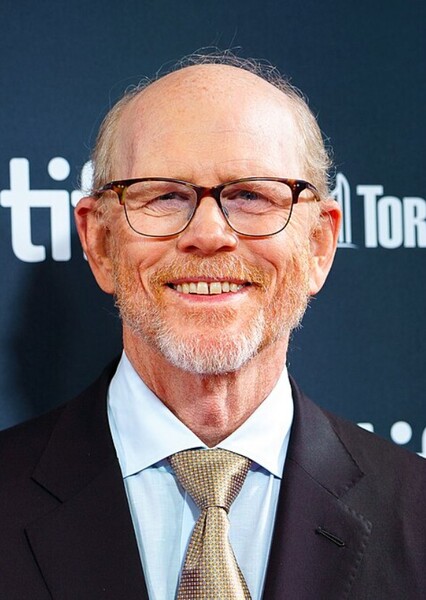
Age: 72
male
Ronald William Howard (born March 1, 1954) is an American filmmaker and actor. Howard first came to prominence as a child actor, guest-starring in several television series, including an episode of The Twilight Zone. He gained national attention for playing young Opie Taylor, the son of Sheriff Andy Taylor (played by Andy Griffith) in the sitcom The Andy Griffith Show from 1960 through 1968. During this time, he also appeared in the musical film The Music Man (1962), a critical and commercial success. He was credited as Ronny Howard in his film and television appearances from 1959 to 1973. Howard was cast in one of the lead roles in the coming-of-age film American Graffiti (1973), which received widespread acclaim and became one of the most profitable films in history. The following year, Howard became a household name for playing Richie Cunningham in the sitcom Happy Days, a role he would play from 1974 through 1984. Howard continued appearing in films during this time, such as the western film The Shootist (1976) and the comedy film Grand Theft Auto (1977), which also marked his directorial debut. In 1984, Howard left Happy Days to focus on directing, producing and occasionally writing variety films and television series. His films include the science-fiction/fantasy Cocoon (1985), the fantasy Willow (1988), the thriller Backdraft (1991), the historical docudrama Apollo 13 (1995), the Christmas comedy How the Grinch Stole Christmas (2000), the biographical drama A Beautiful Mind (2001), the biographical sports drama Cinderella Man (2005), the thriller The Da Vinci Code (2006), the historical drama Frost/Nixon (2008), Solo: A Star Wars Story (2018), and the documentary Pavarotti (2019). For A Beautiful Mind, Howard won the Academy Award for Best Director and Academy Award for Best Picture. He was nominated again for the same awards for Frost/Nixon. In 2003, Howard was awarded the National Medal of Arts. He was inducted into the Television Hall of Fame in 2013. Howard has two stars on the Hollywood Walk of Fame for his contributions in the television and motion pictures industries.
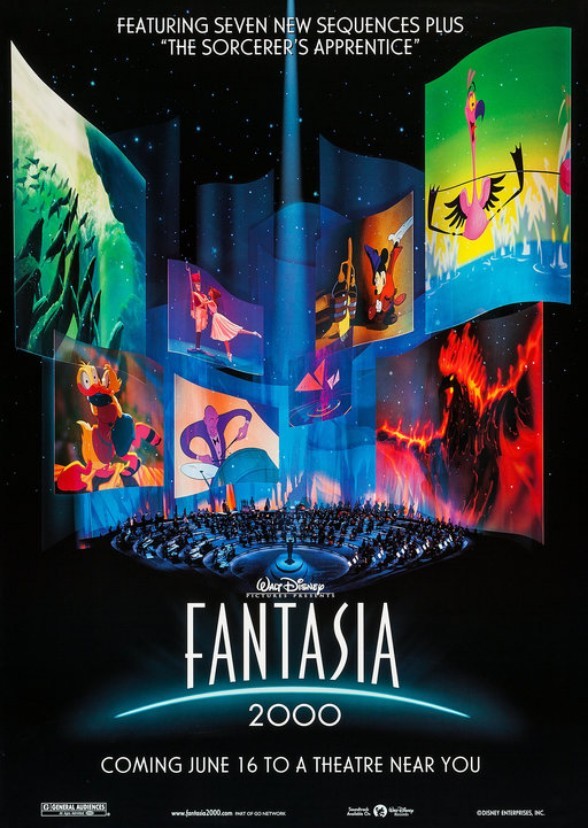
The film begins with the sound of an orchestra tuning and Deems Taylor's introduction from Fantasia. Panels showing various segments from Fantasia fly in outer space and form the set and stage for an orchestra. Musicians take their seats and tune up and animators draw at their desks before James Levine approaches the conductor's podium and signals the beginning of the first piece. Symphony No. 5 (first movement) by Ludwig van Beethoven. Abstract patterns and shapes that resemble butterflies in various colorful shades, tints and hues explore a world of light and darkness whilst being pursued by a swarm of black bats. The world is ultimately conquered by light. Introduced by surviving archival recordings by Deems Taylor. Pines of Rome by Ottorino Respighi. A family of humpback whales are able to fly. The calf is separated from his parents and he becomes trapped in an iceberg. Eventually he finds his way out with his mother's help. The family join a larger pod of whales who fly and frolic through the clouds to emerge into outer space. Introduced by Steve Martin and Itzhak Perlman. Rhapsody in Blue by George Gershwin. Set in New York City in the 1930s, and designed in the style of Al Hirschfeld's known caricatures of the time, the story follows four individuals, Duke, Joe, Rachel, and John, who wish for a better life. The segment ends with all four getting their wish, though their stories interact with each other's without any of them knowing. Introduced by Quincy Jones with pianist Ralph Grierson. Piano Concerto No. 2, Allegro, Opus 102 by Dmitri Shostakovich. Based on the fairy tale "The Steadfast Tin Soldier" by Hans Christian Andersen, a broken toy soldier with one leg falls in love with a toy ballerina and protects her from an evil jack-in-the-box. Unlike the original story, this version has a happy ending. Introduced by Bette Midler featuring pianist Yefim Bronfman. The Carnival of the Animals (Le Carnival des Animaux), Finale by Camille Saint-Saëns. A flock of flamingoes tries to force a slapstick member, who enjoys playing with a yo-yo, to engage in the flock's "dull" routines. Introduced by James Earl Jones with animator Eric Goldberg. The Sorcerer's Apprentice by Paul Dukas. Based on the poem "Der Zauberlehrling" by Goethe, the segment is the only one featured in both Fantasia and Fantasia 2000. It tells the story of Mickey Mouse, an apprentice of sorcerer Yen Sid who attempts some of his master's magic tricks before knowing how to control them. Introduced by Penn & Teller. Pomp and Circumstance – Marches 1, 2, 3 and 4 by Edward Elgar. Based on the story of Noah's Ark from the Book of Genesis, Donald Duck is Noah's assistant and Daisy Duck is Donald's wife. Donald is given the task of gathering the animals to the Ark and misses, loses, and reunites with Daisy in the process. Introduced by James Levine featuring Mickey Mouse and Donald Duck. Firebird Suite—1919 Version by Igor Stravinsky. A Sprite is awoken by her companion, an elk, and accidentally wakes the Firebird, a fiery spirit of destruction in a nearby volcano who destroys the forest and seemingly the Sprite. The Sprite survives and the elk encourages her to restore the forest to its normal state. Introduced by Angela Lansbury.




