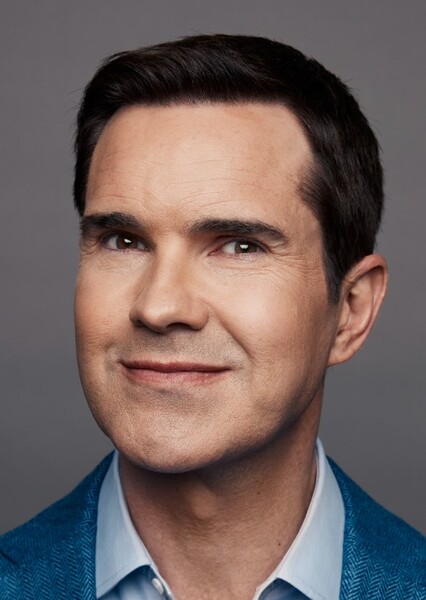
Age: 61
male
Carlos Irwin Estévez (born September 3, 1965), known professionally as Charlie Sheen, is an American actor. He has appeared in films such as Platoon (1986), Wall Street (1987), Young Guns (1988), The Rookie (1990), The Three Musketeers (1993), and The Arrival (1996). In the 2000s, when Sheen replaced Michael J. Fox as the star of ABC's Spin City, his portrayal of Charlie Crawford earned him a Golden Globe Award for Best Actor. He then starred as Charlie Harper on the CBS sitcom Two and a Half Men (2003–11), for which he received multiple Golden Globe and Primetime Emmy nominations, and as Dr. Charles "Charlie" Goodson on the FX series Anger Management (2012–14). In 2010, Sheen was the highest-paid actor on television, earning US$1.8 million per episode of Two and a Half Men. Sheen's personal life has made headlines, including reports of alcohol and drug abuse and marital problems, as well as allegations of domestic violence. In March 2011, his contract for Two and a Half Men was terminated by CBS and Warner Bros. following his derogatory comments about the series' creator, Chuck Lorre. On November 17, 2015, Sheen publicly revealed that he is HIV positive, having been diagnosed four years previously. The disclosure resulted in a vast increase of online search queries for HIV prevention and testing, which was later dubbed the "Charlie Sheen effect".
Charlie Sheen
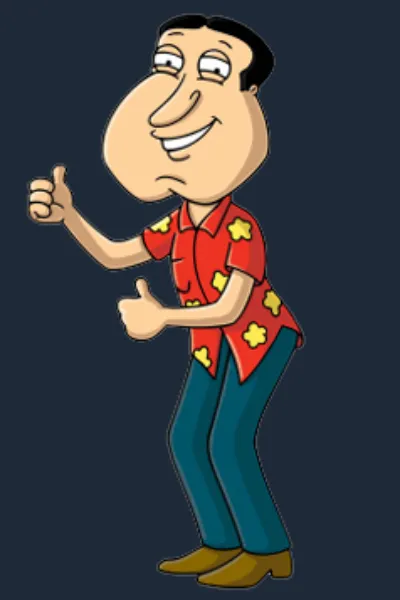
Glenn Quagmire
for Glenn Quagmire in Family Guy
Suggested by giannirodriguez
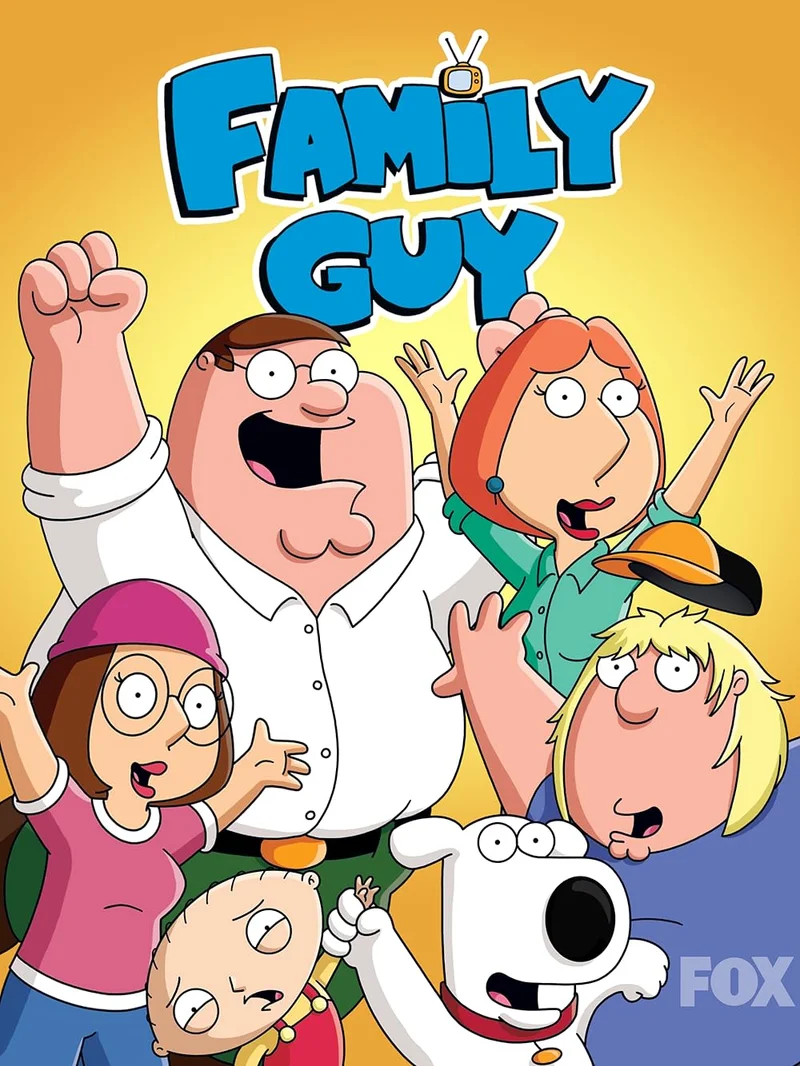
Family Guy follows the Griffin family—bumbling patriarch Peter, his wife Lois, their three children Chris, Meg, and baby Stewie, and their anthropomorphic dog Brian—as they navigate absurd situations in the fictional town of Quahog, Rhode Island. Peter works as a safety inspector at a nuclear power plant while constantly pursuing get-rich-quick schemes and indulging in childish antics that inevitably backfire. Stewie, the precocious infant, schemes to kill his mother and take over the world from his crib, while Brian serves as the family's sardonic voice of reason despite his own neuroses. The show thrives on rapid-fire cutaway gags, pop culture references, and irreverent humor that ranges from slapstick to dark satire. Each episode finds the family embroiled in increasingly ridiculous predicaments—from Peter's feuds with the giant chicken to elaborate musical numbers—that test their dysfunctional bonds. The series balances crude humor with surprising heart, occasionally exploring genuine family dynamics beneath the chaos. Supporting characters like the Chicken, Ernie the Giant Chicken, and various townspeople add layers of absurdity. Family Guy became a cultural phenomenon for its willingness to push boundaries and satirize everything from politics to pop culture, establishing itself as one of television's most quotable and endlessly meme-able comedies.