Age: 31
female
Kim Da-mi ( (Korean: 김다미; born April 9, 1995) is a South Korean actress. She is best known for playing the titular role in the action-mystery film The Witch: Part 1. The Subversion (2018). She is also known for her role in the television series Itaewon Class (2020). She made her acting debut through the independent film 2017 Project With The Same Name, an omnibus feature film produced annually, playing the role of a woman recently involved in a breakup in the episode "Hello, My Hard Work". In 2018, she played the role of a high school student in mystery thriller film Marionette. The same year, she played the lead role of Koo Ja-yoon in the action-mystery film The Witch: Part 1. The Subversion, directed by Park Hoon-jung, where she was chosen from among 1,500 candidates who auditioned for the role. She received universal acclaim for her strong performance in a challenging role that included intense fighting scenes and winning many newcomer awards. Thanks to the success and popularity of The Witch: Part 1. The Subversion, a sequel is scheduled to be produced. In 2020, Kim Da-mi made her television debut in the cable series Itaewon Class, based on the webtoon of the same title. Kim Da-mi won the Baeksang Arts Award for Best New Actress (TV) for her performance. In March 2021, Kim was confirmed to join the SBS drama Our Beloved Summer with Choi Woo-shik, which premiered in December 2021. The drama reunited Kim with Choi after The Witch: Part 1. The Subversion (2018).
Kim Da-mi
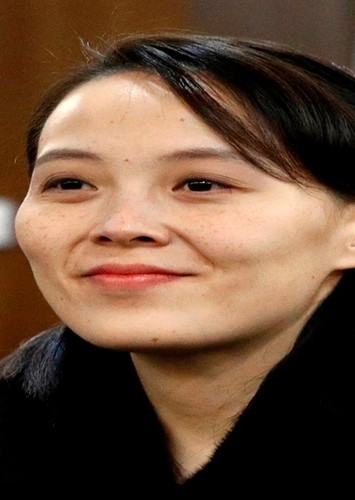
Kim Yo-jong
for Kim Yo-jong in Falun Gong In The Century
Suggested by martinbing

This People Are Try To Fight Thier Right Against the Communists .Falun Gong is a modern qigong discipline combining slow-moving exercises and meditation with a moral philosophy. It was founded by Li Hongzhi, who introduced it to the public in May 1992 in Changchun, Jilin.On 20 July 1999, security forces abducted and detained thousands of Falun Gong practitioners who they identified as leaders.[95] Two days later, on 22 July, the PRC Ministry of Civil Affairs outlawed the Falun Dafa Research Society as an illegal organization that was "engaged in illegal activities, advocating superstition and spreading fallacies, hoodwinking people, inciting and creating disturbances, and jeopardizing social stability".[154][155] The same day, the Ministry of Public Security issued a circular forbidding citizens from practicing Falun Gong in groups, possessing Falun Gong's teachings, displaying Falun Gong banners or symbols, or protesting against the ban.[142] The aim of the ensuing campaign was to "eradicate" the group through a combination of means which included the publication and distribution of propaganda which denounced it and the imprisonment and coercive thought reform of its practitioners, sometimes resulting in deaths. In October 1999, four months after the imposition of the ban, legislation was passed in order to outlaw "heterodox religions" and sentence Falun Gong devotees to prison terms