
Age: 71
male
Brendan Gleeson (born 29 March 1955) is an Irish actor and film director. He is the recipient of three IFTA Awards, two BIFA's, and a Primetime Emmy Award and has been nominated twice for a BAFTA Award, five times for a Golden Globe Award and once for an Academy Award. In 2020, he was listed at number 18 on The Irish Times list of Ireland's greatest film actors. He is the father of actors Domhnall Gleeson and Brian Gleeson. He is best known for his performance as Alastor Moody in the Harry Potter films (2005–2010). He is also known for his supporting roles in films such as Braveheart (1995), Michael Collins (1996), 28 Days Later (2002), Gangs of New York (2002), Cold Mountain (2003), Troy (2004), Suffragette (2015), Paddington 2 (2017), The Ballad of Buster Scruggs (2018), and The Tragedy of Macbeth (2021). He is also known for his leading roles in films such as The General (1998), In Bruges (2008), The Guard (2011), Calvary (2014), Frankie (2019), and The Banshees of Inisherin (2022). He received a nomination for the Academy Award for Best Supporting Actor for the lattermost film. He won an Primetime Emmy Award in 2009 for his portrayal of Winston Churchill in the television film Into the Storm. He also received a Golden Globe Award nomination for his performance as Donald Trump in the Showtime series The Comey Rule (2020). From 2017 to 2019 he starred in the crime series Mr. Mercedes. He received an Emmy Award nomination for Stephen Frears' Sundance TV series State of the Union (2022).
Brendan Gleeson
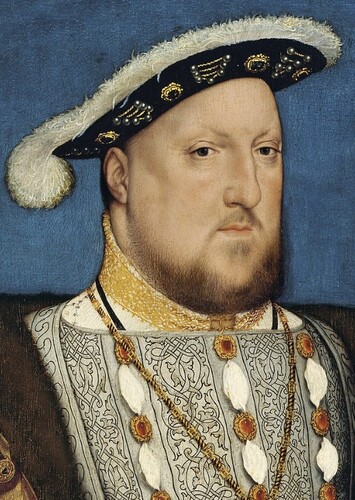
King Henry VIII
for King Henry VIII in Edward VI
Suggested by captainwhaddock
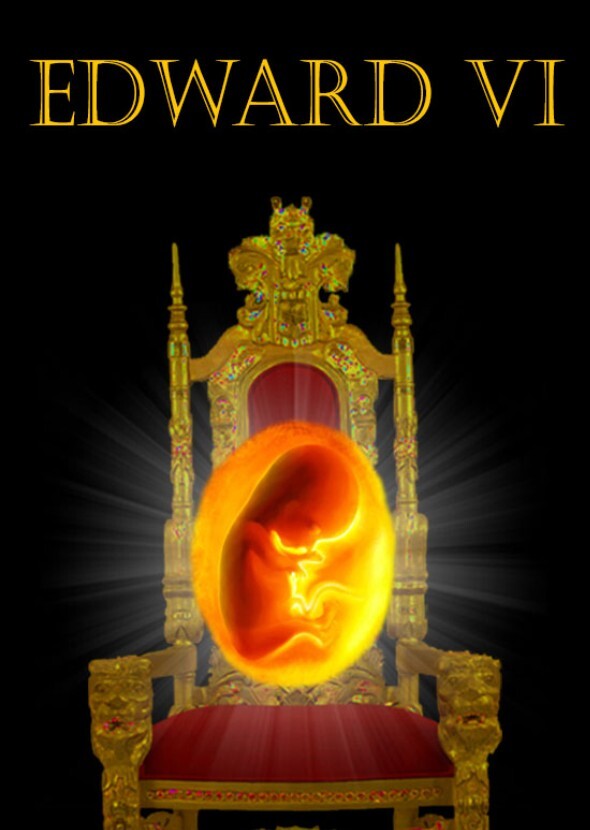
Edward VI, the only legitimate male heir of King Henry VIII, took his seat on the throne at the age of nine. His life would come to an end when he was only fifteen years old, but the mark he would come to leave on England’s history has endured to this day. This part of the Tudor period was chock-full of social unrest and economic struggles as well as turmoil over religious reforms, which the young king and his advisors often made worse by imposing substantial changes on their subjects. Edward VI led his country into a new age where the Church of England was no longer tied to the Catholic Church. Putting his efforts into spreading Protestantism throughout all of England, he continued his father’s work of freeing England from the Holy Roman Empire’s grasp. His successor and half-sister, Queen Mary I, better known as “Bloody Mary,” would try to undo many of Edward’s reforms, but the English Reformation to which Edward contributed significantly would resume its course upon her death.

