
Age: 59
male
Denis Villeneuve (born October 3, 1967) is a Canadian filmmaker. He has received seven Canadian Screen Awards as well as nominations for three Academy Awards, five BAFTA Awards, and two Golden Globe Awards. Villeneuve's films have grossed more than $1.8 billion worldwide. Villeneuve began his career in his home country, directing four French-language dramas: August 32nd on Earth (1998); Maelström (2000); Polytechnique (2009), a dramatisation of the 1989 École Polytechnique massacre; and Incendies (2010). The last of these gained him international prominence and earned a nomination for the Academy Award for Best International Feature Film. He expanded to English-language films by directing the thrillers Prisoners (2013), Enemy (2013), and Sicario (2015). Villeneuve gained wider recognition for directing science fiction films. His work on Arrival (2016) earned him a nomination for the Academy Award for Best Director. This was followed by Blade Runner 2049 (2017), which was critically lauded but financially unsuccessful. His next projects were Dune (2021) and Dune: Part Two (2024), a two-part adaptation of Frank Herbert's novel of the same name. Both films were critically and commercially successful, with the former earning him Academy Award nominations for Best Adapted Screenplay and Best Picture.
Denis Villeneuve

Director
for Director in Echoes of a Sonic Alchemist
Suggested by kamsismith
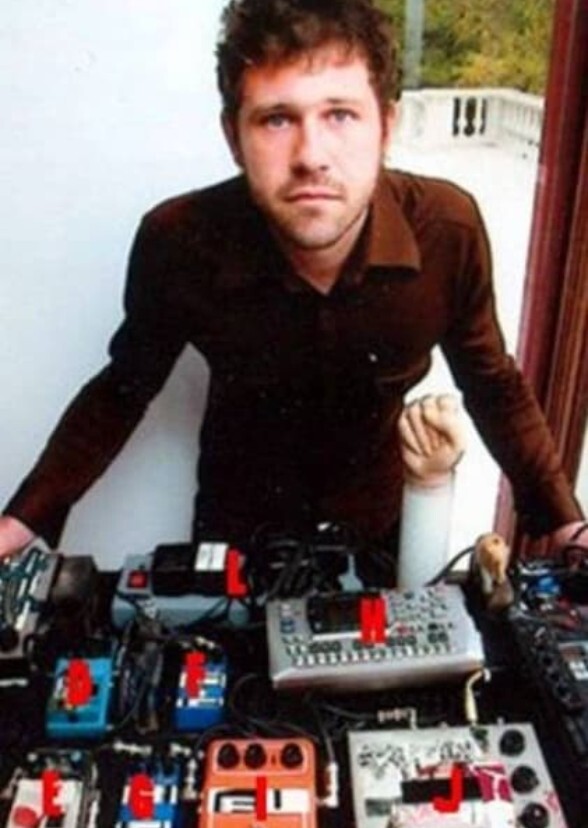
Dive into the life of Jeremy Michael Ward, a creative force behind the rise of two of the most innovative bands of the early 2000s: The Mars Volta and De Facto. Echoes of a Sonic Alchemist is a raw, emotional exploration of the man who turned sound into art, an unsung hero of experimental music whose life burned brightly and tragically short. Set against the backdrop of a burgeoning post-punk and experimental rock scene, the film captures Jeremy’s journey from a young musician in California to becoming the vital sonic architect for The Mars Volta’s groundbreaking sound. As the band’s sound manipulator and vocal operator, Ward helped weave haunting layers of audio that became an essential element of their identity. Simultaneously, his contributions to De Facto showcased his passion for dub and electronic experimentation, pushing boundaries and defying genres. But beneath the artistry lay a man grappling with the pressures of success, personal demons, and the weight of his creative genius. Through intimate moments, we see Jeremy’s humor, vulnerability, and unrelenting drive to explore the limits of sound, even as he wrestles with struggles that ultimately claim his life.



