
Age: 71
male
William James "Willem" Dafoe (born July 22, 1955) is an American actor. Known for his prolific career portraying diverse roles in both mainstream and arthouse films, he is the recipient of various accolades, including the Volpi Cup for Best Actor as well as nominations for four Academy Awards, a BAFTA Award, four Golden Globe Awards, four Critics' Choice Movie Awards, and five Screen Actors Guild Awards. He has frequently collaborated with filmmakers Paul Schrader, Abel Ferrara, Lars von Trier, Julian Schnabel, Wes Anderson, and Robert Eggers. Dafoe was a founding member of experimental theatre company The Wooster Group. He made his film debut with an uncredited role in Heaven's Gate (1980). Dafoe's early career includes credits for The Loveless (1982), Streets of Fire (1984), and To Live and Die in L.A. (1985). He earned his first Academy Award nomination for the war drama Platoon (1986), followed by nominations for his roles in Shadow of the Vampire (2000), The Florida Project (2017), and the Vincent van Gogh biopic At Eternity's Gate (2018). He also gained acclaim and wide recognition for his roles as Jesus Christ in The Last Temptation of Christ (1988) and as the supervillain Norman Osborn in the superhero film Spider-Man (2002), a role he reprised in its sequels Spider-Man 2 (2004) and Spider-Man 3 (2007), and the Marvel Cinematic Universe film Spider-Man: No Way Home (2021). His other film appearance include roles in Mississippi Burning (1988), Born on the Fourth of July (1989), Wild at Heart (1990), Light Sleeper (1992), Body of Evidence (1993), Clear and Present Danger (1994), The English Patient (1996), Affliction (1997), New Rose Hotel(1998), Existenz (1999), The Boondock Saints (1999), American Psycho (2000), Auto Focus (2002), Finding Nemo (2003), The Life Aquatic with Steve Zissou (2004), Inside Man (2006), Mr. Bean's Holiday (2007), Antichrist (2009), Fantastic Mr. Fox (2009), Nymphomaniac (2013), The Fault in Our Stars (2014), John Wick (2014), The Grand Budapest Hotel (2014), Aquaman (2018), The Lighthouse (2019), Nightmare Alley (2021), Poor Things (2023), and Beetlejuice Beetlejuice (2024).
Willem Dafoe

Phil Resch
for Phil Resch in Do Androids Dream of Electric Sheep?
Suggested by user_124400
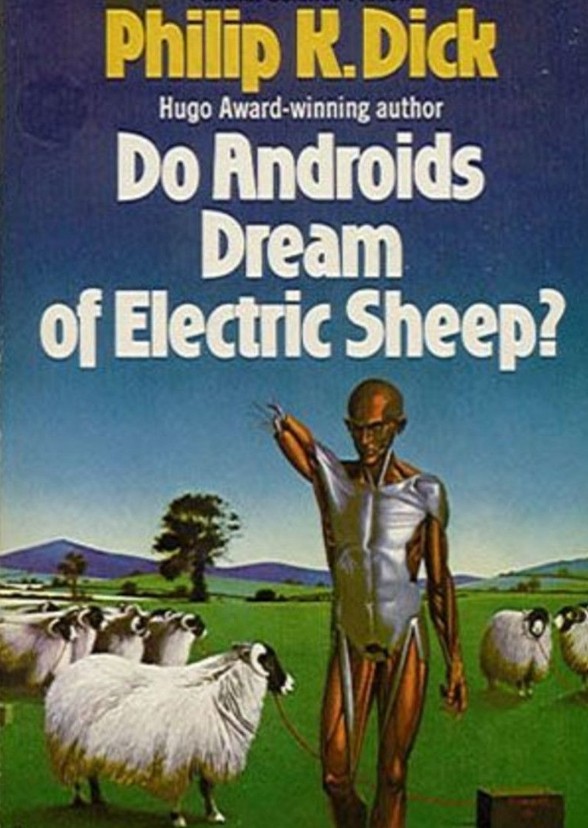
In 2021 following a devastating global war called World War Terminus, the Earth's radioactively polluted atmosphere leads the United Nations to encourage mass emigrations to off-world colonies to preserve humanity's genetic integrity. Moving away from Earth comes with the incentive of free personal androids: robot servants identical to humans. The Rosen Association manufactures the androids on a colony on Mars, but some androids violently rebel and escape to Earth, where they hope to remain undetected. As a result, American and Soviet police departments remain vigilant and keep android bounty-hunting officers on duty. On Earth, owning real live animals has become a fashionable status symbol, both because mass extinctions have made authentic animals rare and because of the accompanying cultural push for greater empathy. However, poor people can only afford realistic-looking robot imitations of live animals. Rick Deckard, the novel's protagonist, for example, owns an electric black-faced sheep. The trend of increased empathy has coincidentally motivated a new technology-based religion called Mercerism, which uses "empathy boxes" to link users simultaneously to a virtual reality of collective suffering, centered on a martyr-like character, Wilbur Mercer, who eternally climbs up a hill while being hit with crashing stones. Acquiring high-status animal pets and linking in to empathy boxes appear to be the only two ways characters in the story strive for existential fulfillment.

