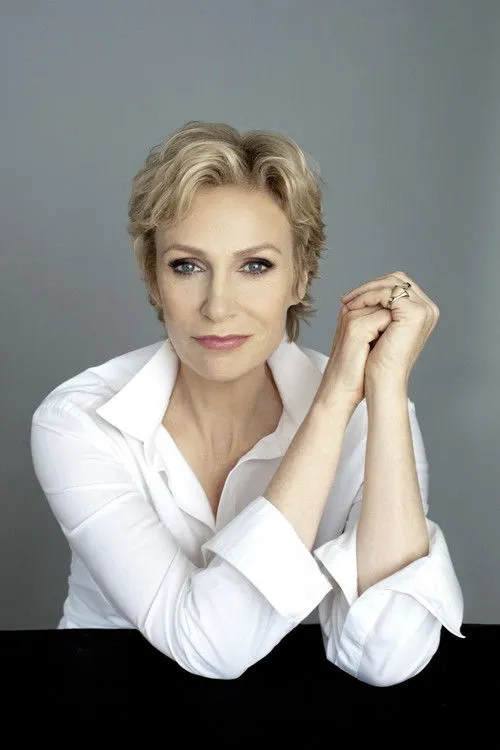
Age: 62
female
Juliette Binoche (born 9 March 1964) is a French actress, artist and dancer. She has appeared in more than 40 feature films, been recipient of numerous international accolades, is a published author and has appeared on stage across the world. Coming from an artistic background, she began taking acting lessons during adolescence. After performing in several stage productions, she was propelled into the world of auteurs Jean-Luc Godard (Hail Mary, 1985), Jacques Doillon (Family Life, 1985) and André Téchiné, who made her a star in France with the leading role in his 1985 drama Rendez-vous. Her sensual performance in her English-language debut The Unbearable Lightness of Being (1988), directed by Philip Kaufman, launched her international career. She sparked the interest of Steven Spielberg, who offered her several parts including a role in Jurassic Park which she declined, choosing instead to join Krzysztof Kieslowski on the set of Three Colors: Blue (1993), a performance for which she won the Venice Film Festival Award for Best Actress and a César. Three years later Binoche gained further acclaim in Anthony Minghella’s The English Patient (1996), for which she was awarded an Academy Award and a BAFTA for Best Supporting Actress in addition to the Best Actress Award at the 1997 Berlin Film Festival. For her performance in Lasse Hallström’s romantic comedy Chocolat (2000) Binoche was nominated for an Academy Award for Best Actress. During the 2000s she maintained a successful, critically acclaimed career, alternating between French and English language roles in both mainstream and art-house productions. In 2010 she won the Best Actress Award at the Cannes Film Festival for her role in Abbas Kiarostami’s Certified Copy making her the first actress to win the European “best actress triple crown”. Throughout her career Binoche has intermittently appeared on stage, most notably in a 1998 London production of Luigi Pirandello’s Naked and in a 2000 production of Harold Pinter's Betrayal on Broadway for which she was nominated for a Tony Award. In 2008 she began a world tour with a modern dance production in-i devised in collaboration with Akram Khan. Affectionately referred to as "La Binoche" by the French press, her other notable performances include: Mauvais Sang (1986), Les Amants du Pont-Neuf, Damage (1992), The Horseman on the Roof (1995), Code Unknown (2000), Caché (2005), Breaking and Entering (2006) and Flight of the Red Balloon (2007). Description above from the Wikipedia article Juliette Binoche, licensed under CC-BY-SA, full list of contributors on Wikipedia.
Juliette Binoche

Laverne
for Laverne in DISNEY'S THE HUNCHBACK OF NOTRE DAME
Suggested by thecookieprincess

This live action remake of the Disney adaptation of Victor Hugo's novel takes place in Paris at the time of brutal Anti-Romani movements. The city's corrupt judge, Claude Frollo, tracks down and kills a few gypsies and sees that one of their "stolen goods" is a baby... with a physical deformity. Assuming it as a demon, Frollo attempts to drop the baby into a well until the archdeacon from Notre Dame stops him and tells him that to redeem his immortal soul, he must raise and care for the child. Frollo reluctantly accepts, and decides to let him stay in the bell tower. He also assumes the boy may be useful to him someday, so Frollo names him "Quasimodo" and spends the next 20 years rasing and educating him. Quasimodo currently works as the church's bell ringer. Frollo tells Quasi that the outside world is a dark, cruel place unfit for "ugly" people. But despite that, with encouragement from his talking gargoyle friends, Quasi decides to explore. Upon attending the Feast of Fools, he meets a beautiful and kind-hearted gypsy named Esmeralda. He also meets the charming captain of the royal guard, Phoebus. Although, just like Frollo warned him, a few people laugh and throw ripe fruit at Quasi. He believes his master was right and returns to the tower. But soon after, Frollo chases after Esmeralda, who then claims sanctuary at Notre Dame. Rated "PG-13" for "Dark thematic material involving atrocities, violence, some rude humor, brief sexual content, and some language."