
"Common peacock" redirects here. For the butterfly with this common name, see Papilio polyctor. The Indian peafowl (Pavo cristatus), also known as the common peafowl, and blue peafowl, is a peafowl species native to the Indian subcontinent. It has been introduced to many other countries. Male peafowl are referred to as peacocks, and female peafowl are referred to as peahens, even though peafowl of either sex are often referred to colloquially as "peacocks".[2] Indian peafowl display a marked form of sexual dimorphism. The peacock is brightly coloured, with a predominantly blue fan-like crest of spatula-tipped wire-like feathers and is best known for the long train made up of elongated upper-tail covert feathers which bear colourful eyespots. These stiff feathers are raised into a fan and quivered in a display during courtship. Despite the length and size of these covert feathers, peacocks are still capable of flight. Peahens lack the train, have a white face and iridescent green lower neck, and dull brown plumage. The Indian peafowl lives mainly on the ground in open forest or on land under cultivation where they forage for berries, grains but also prey on snakes, lizards, and small rodents. Their loud calls make them easy to detect, and in forest areas often indicate the presence of a predator such as a tiger. They forage on the ground in small groups and usually try to escape on foot through undergrowth and avoid flying, though they fly into tall trees to roost. The function of the peacock's elaborate train has been debated for over a century. In the 19th century, Charles Darwin found it a puzzle, hard to explain through ordinary natural selection. His later explanation, sexual selection, is widely but not universally accepted. In the 20th century, Amotz Zahavi argued that the train was a handicap, and that males were honestly signalling their fitness in proportion to the splendour of their trains. Despite extensive study, opinions remain divided on the mechanisms involved. The bird is celebrated in Hindu and Greek mythology and is the national bird of India. The Indian peafowl is listed as of Least Concern on the IUCN Red List.
Peacock

Animals Of The Jungle
for Animals Of The Jungle in Disney's Jungle Book II
Suggested by adrianabengozarlopez
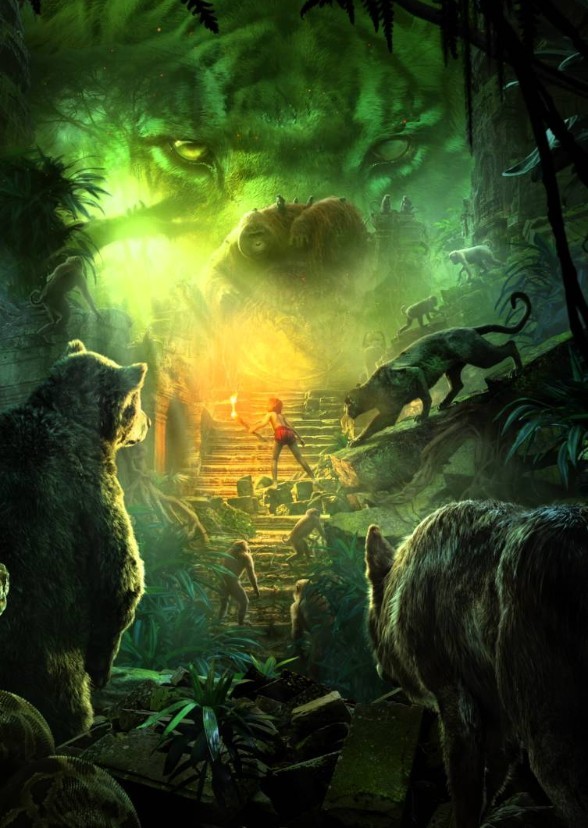
Mowgli is 15 years old and is still living in the jungle with his wolf family and Baloo, the bear and Bagheera, the black panther. Raksha is still the leader of the wolf pack, Mowgli's wolf siblings are all grown, Sura, Lura, Akru and Grey. One day, Baloo injured his paw so Mowgli went off to get some leaves from a medical plant to heal it. However, Mowgli unexpected came across a young girl name Kitty Brydon, who is on her first journey to travel to India. It was Mowgli's first time to ever meet a human girl before, even though he didn't understand man's language. Kitty walked back to other travelers, and Mowgli traveled back to bring the medial plant to heal Baloo, but he grew a new feeling for Kitty as he couldn't stop thinking about her.




