
Measuring 63.5 cm (25 in.) in length, the toco toucan is the largest of all toucans. Its black body and white throat are overshadowed by its most recognizable trait: a large colorful beak. Native to South America, toco toucans inhabit a range of habitats including tropical forests, savannas, and shrublands. The bright orange beak of the toco toucan is about 19 cm (8 in.) long – one third of the bird’s total length. But despite its substantial size, the beak weighs less than you may think. Composed of the protein, keratin, the structure of beak incorporates many air pockets allowing for a very low mass. Furthermore, recent research has concluded that toucans regulate body temperature by adjusting the flow of blood to their beak. More blood flow means more heat is released. When toucans sleep, they tuck their beak under their feathers to keep them warm. Although they spend a lot of time in trees, toucans are not very good at flying. They mainly travel among trees by hopping. When they do take flight, toco toucans flap their wings vigorously and glide, traveling only short distances. Toco toucans use their beaks to pluck and peel fruit, their main source of food. In addition, their beak houses a flat tongue of the same length, which helps the toucan catch insects, frogs, and reptiles. Toco toucans also occasionally eat the eggs of other birds. Toucans nest in the hollows of trees. They often move into cavities created and abandoned by woodpeckers. Several toucans live together in a single hollow. Toco toucans lay 2-4 eggs a year in their hollow. Both parents incubate the eggs for 16-20 days. Once the chicks hatch, both parents continue to care for the young. Baby toucans are not born with an excessively large beak. The beak grows as the birds develop. Toco toucans live up to 20 years in the wild. Predators of toucans include large birds of prey, like hawks and eagles. Because toco toucans can live in a variety of habitats, they are not as susceptible to rainforest destruction as other species. Their population has not been determined, but it is thought to be large due to the frequency of sightings within their range. As such, the toco toucan is listed by the IUCN as being of least concern, and there are no specific efforts to protect the species.
Toco Toucan

Wildlife of Ozaar Island
for Wildlife of Ozaar Island in Disney's Animal Kingdom The Movie (2014)
Suggested by geekking97
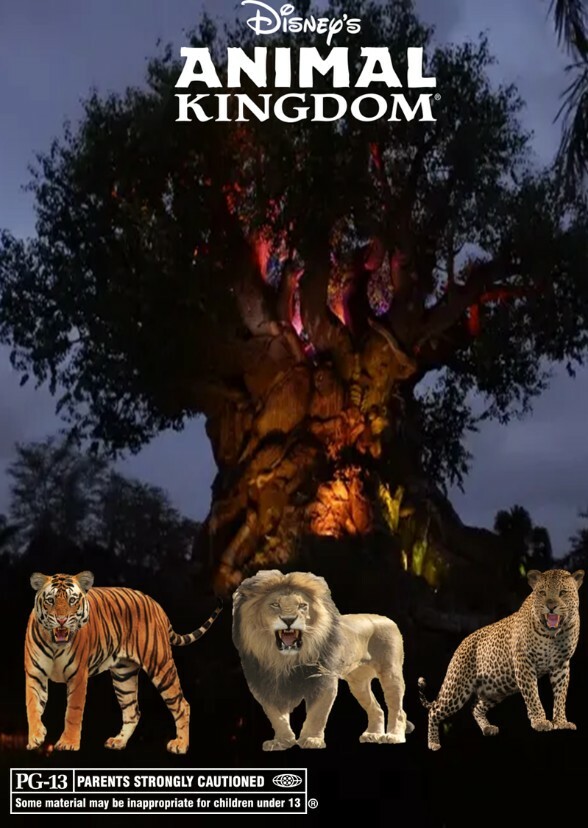
In 1999 Dr. Kevin Richards, a zoologist and archaeologist who teaches at Harvard University. He believes Ozaar Island, and the legendary Tree of Life exist and wants to prove it and make it public. One day he meets two wildlife conservationists Dennis Kavanaugh and Victoria Crawford who agrees to fund the expedition and Kevin’s close friends and wildlife conservationists go along with him. They finally arrive at the jungles of Ozaar Island are in awe of the environment and wildlife of the jungle and are on a mission to get to the tree of life. Along the way Kevn meets a beautiful jungle woman named Sasha Morton and her parents died when she was very young and raised in the jungle since 1984. Kevin must make a difficult decision. Does he go back to America to prove Ozaar Island exists, or does he stay in the jungle with the woman he loves and a place where he’s treated with respect?




