
The nilgai (Boselaphus tragocamelus) (/ˈnɪlˌɡaɪ/, literally meaning "blue cow") is the largest Asian antelope and is ubiquitous across the northern Indian subcontinent. It is the sole member of the genus Boselaphus and was described by Peter Simon Pallas in 1766. The nilgai stands 1–1.5 m (3.3–4.9 ft) at the shoulder; males weigh 109–288 kg (240–635 lb), and the lighter females 100–213 kg (220–470 lb). A sturdy thin-legged antelope, the nilgai is characterised by a sloping back, a deep neck with a white patch on the throat, a short crest of hair along the neck terminating in a tuft, and white facial spots. A column of pendant coarse hair hangs from the dewlap ridge below the white patch. Sexual dimorphism is prominent – while females and juveniles are orange to tawny, adult males have a bluish-grey coat. Only males possess horns, 15–24 cm (5.9–9.4 in) long. The nilgai is diurnal (active mainly during the day). The animals band together in three distinct kinds of groups: one or two females with young calves, three to six adult and yearling females with calves, and all-male groups with two to 18 members. Typically tame, the nilgai may appear timid and cautious if harassed or alarmed; it flees up to 300 m (980 ft)-or even 700 m (2,300 ft), galloping away from the source of danger. Herbivores, nilgai prefer grasses and herbs, though they commonly eat woody plants in the dry tropical forests of India. Females become sexually mature by two years, while males do not become sexually active until four or five years old. The time of the year when mating takes place varies geographically, but a peak breeding season lasting three to four months can be observed at most places. Gestation lasts eight to nine months, following which a single calf (sometimes twins or even triplets) is born. As typical of several bovid species, nilgai calves stay hidden for the first few weeks of their lives. The lifespan of the nilgai is around ten years. The nilgai prefers areas with short bushes and scattered trees in scrub forests and grassy plains. It is common in agricultural land, but rarely in dense forest. Major populations occur in the Indian and Nepal Terai. It was thought to be extinct in Bangladesh. The nilgai was introduced to Texas in the 1920s to 1930s. As of 2008, the feral population in Texas is nearly 37,000. The nilgai is categorised as Least Concern on the IUCN Red List. The nilgai has been associated with Indian culture since the Vedic period (1500–500 BCE). They were hunted in the Mughal era (16th to 19th centuries) and are depicted in numerous miniatures. Nilgai have been considered a pest in several north Indian states, as they ravage crop fields and cause considerable damage. In Bihar, authorities have classified the nilgai as vermin.
Nilgai

Wildlife of Ozaar Island
for Wildlife of Ozaar Island in Disney's Animal Kingdom The Movie (2014)
Suggested by geekking97
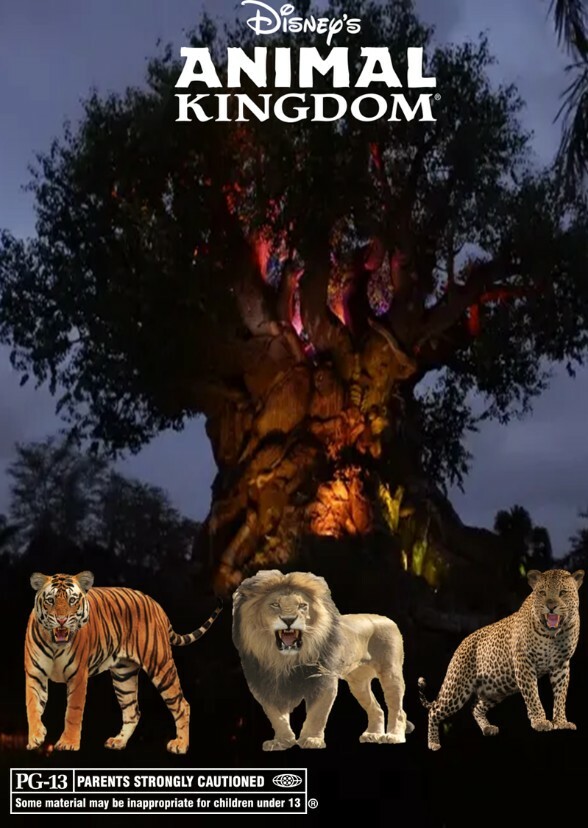
In 1999 Dr. Kevin Richards, a zoologist and archaeologist who teaches at Harvard University. He believes Ozaar Island, and the legendary Tree of Life exist and wants to prove it and make it public. One day he meets two wildlife conservationists Dennis Kavanaugh and Victoria Crawford who agrees to fund the expedition and Kevin’s close friends and wildlife conservationists go along with him. They finally arrive at the jungles of Ozaar Island are in awe of the environment and wildlife of the jungle and are on a mission to get to the tree of life. Along the way Kevn meets a beautiful jungle woman named Sasha Morton and her parents died when she was very young and raised in the jungle since 1984. Kevin must make a difficult decision. Does he go back to America to prove Ozaar Island exists, or does he stay in the jungle with the woman he loves and a place where he’s treated with respect?




