
The Nile crocodile (Crocodylus niloticus) is a large crocodilian native to freshwater habitats in Africa, where it is present in 26 countries. It is widely distributed throughout sub-Saharan Africa, occurring mostly in the central, eastern, and southern regions of the continent, and lives in different types of aquatic environments such as lakes, rivers, swamps, and marshlands.[2] Present in west Africa, the niloticus is there cohabitant with two other crocodilians.[3] Although capable of living in saline environments, this species is rarely found in saltwater, but occasionally inhabits deltas and brackish lakes. The range of this species once stretched northward throughout the Nile, as far north as the Nile Delta. On average, the adult male Nile crocodile is between 3.5 and 5 m (11.5 and 16.4 ft) in length and weighs 225 to 750 kg (500 to 1,650 lb).[4][5][6] However, specimens exceeding 6.1 m (20 ft) in length and weighing up to 1,089 kg (2,400 lb) have been recorded. It is the largest freshwater predator in Africa, and may be considered the second-largest extant reptile in the world, after the saltwater crocodile (Crocodylus porosus).[7][8] Sexual dimorphism is prevalent, and females are usually about 30% smaller than males. They have thick, scaly, heavily armoured skin. Nile crocodiles are opportunistic apex predators; a very aggressive species of crocodile, they are capable of taking almost any animal within their range. They are generalists, taking a variety of prey.[4][8] Their diet consists mostly of different species of fish, reptiles, birds, and mammals. They are ambush predators that can wait for hours, days, and even weeks for the suitable moment to attack. They are agile predators and wait for the opportunity for a prey item to come well within attack range. Even swift prey are not immune to attack. Like other crocodiles, Nile crocodiles have an extremely powerful bite that is unique among all animals, and sharp, conical teeth that sink into flesh, allowing for a grip that is almost impossible to loosen. They can apply high levels of force for extended periods of time, a great advantage for holding down large prey underwater to drown.[8] Nile crocodiles are relatively social crocodiles.[9] They share basking spots and large food sources, such as schools of fish and big carcasses. Their strict hierarchy is determined by size. Large, old males are at the top of this hierarchy and have primary access to food and the best basking spots. Crocodiles tend to respect this order; when it is infringed, the results are often violent and sometimes fatal.[10] Like most other reptiles, Nile crocodiles lay eggs; these are guarded by the females. The hatchlings are also protected for a period of time, but hunt by themselves and are not fed by the parents.[4][11] The Nile crocodile is one of the most dangerous species of crocodile and is responsible for hundreds of human deaths every year.[12] It is a rather common species of crocodile and is not endangered despite some regional declines or extinctions.
Nile Crocodile

Wildlife of Ozaar Island
for Wildlife of Ozaar Island in Disney's Animal Kingdom The Movie (2014)
Suggested by geekking97
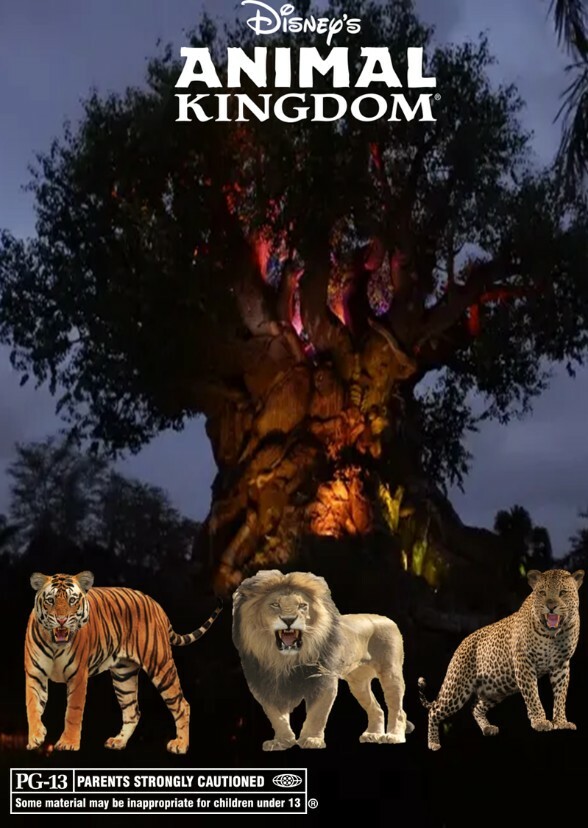
In 1999 Dr. Kevin Richards, a zoologist and archaeologist who teaches at Harvard University. He believes Ozaar Island, and the legendary Tree of Life exist and wants to prove it and make it public. One day he meets two wildlife conservationists Dennis Kavanaugh and Victoria Crawford who agrees to fund the expedition and Kevin’s close friends and wildlife conservationists go along with him. They finally arrive at the jungles of Ozaar Island are in awe of the environment and wildlife of the jungle and are on a mission to get to the tree of life. Along the way Kevn meets a beautiful jungle woman named Sasha Morton and her parents died when she was very young and raised in the jungle since 1984. Kevin must make a difficult decision. Does he go back to America to prove Ozaar Island exists, or does he stay in the jungle with the woman he loves and a place where he’s treated with respect?




