
The blackbuck (Antilope cervicapra), also known as the Indian antelope, is an antelope native to India and Nepal. It inhabits grassy plains and lightly forested areas with perennial water sources. It stands up to 74 to 84 cm (29 to 33 in) high at the shoulder. Males weigh 20–57 kg (44–126 lb), with an average of 38 kg (84 lb). Females are lighter, weighing 20–33 kg (44–73 lb) or 27 kg (60 lb) on average. Males have 35–75 cm (14–30 in) long, ringed horns, though females may develop horns as well. The white fur on the chin and around the eyes is in sharp contrast with the black stripes on the face. The coats of males show a two-tone colouration; while the upper parts and outsides of the legs are dark brown to black, the underparts and the insides of the legs are white. Females and juveniles are yellowish fawn to tan. The blackbuck is the sole living member of the genus Antilope and was scientifically described by Carl Linnaeus in 1758. Two subspecies are recognized. The blackbuck is active mainly during the day. It forms three type of small groups, female, male, and bachelor herds. Males often adopt lekking as a strategy to garner females for mating. While other males are not allowed into these territories, females often visit these places to forage. The male can thus attempt mating with her. The blackbuck is a herbivore and grazes on low grasses, occasionally browsing as well. Females become sexually mature at the age of eight months, but mate no earlier than two years of age. Males mature later, at 1.5 years. Mating takes place throughout the year. Gestation is typically six months long, after which a single calf is born. The lifespan is typically 10 to 15 years. The antelope is native to and found mainly in India, while it is locally extinct in Pakistan and Bangladesh. Formerly widespread, only small, scattered herds are seen today, largely confined to protected areas. During the 20th century, blackbuck numbers declined sharply due to excessive hunting, deforestation, and habitat degradation. The blackbuck has been introduced in Argentina and the United States. In India, hunting of blackbuck is prohibited under Schedule I of the Wildlife Protection Act of 1972. The blackbuck has significance in Hinduism; Indian and Nepali villagers do not harm the antelope.
Blackbuck

Wildlife of Ozaar Island
for Wildlife of Ozaar Island in Disney's Animal Kingdom The Movie (2014)
Suggested by geekking97
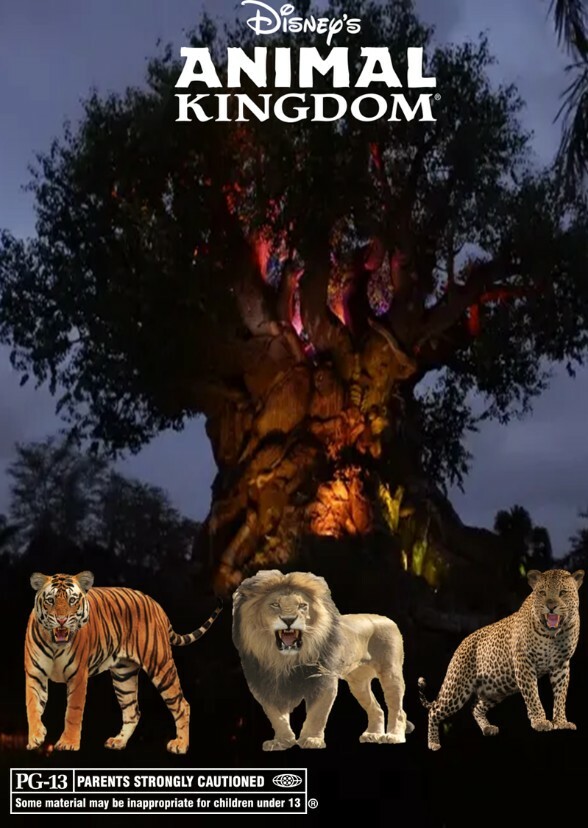
In 1999 Dr. Kevin Richards, a zoologist and archaeologist who teaches at Harvard University. He believes Ozaar Island, and the legendary Tree of Life exist and wants to prove it and make it public. One day he meets two wildlife conservationists Dennis Kavanaugh and Victoria Crawford who agrees to fund the expedition and Kevin’s close friends and wildlife conservationists go along with him. They finally arrive at the jungles of Ozaar Island are in awe of the environment and wildlife of the jungle and are on a mission to get to the tree of life. Along the way Kevn meets a beautiful jungle woman named Sasha Morton and her parents died when she was very young and raised in the jungle since 1984. Kevin must make a difficult decision. Does he go back to America to prove Ozaar Island exists, or does he stay in the jungle with the woman he loves and a place where he’s treated with respect?




