Triceratops (/traɪˈsɛrətɒps/ try-SERR-ə-tops;[1] lit. 'three-horned face') is a genus of chasmosaurine ceratopsian dinosaur that lived during the late Maastrichtian age of the Late Cretaceous period, about 68 to 66 million years ago in what is now western North America. It was one of the last-known non-avian dinosaurs and lived until the Cretaceous–Paleogene extinction event 66 million years ago. The name Triceratops, which means 'three-horned face', is derived from the Greek words trí- (τρί-) meaning 'three', kéras (κέρας) meaning 'horn', and ṓps (ὤψ) meaning 'face'. Bearing a large bony frill, three horns on the skull, and a large, four-legged body, exhibiting convergent evolution with bovines and rhinoceroses, Triceratops is one of the most recognizable of all dinosaurs and the best-known ceratopsian. It was also one of the largest, measuring around 8–9 metres (26–30 ft) long and weighing up to 6–10 metric tons (6.6–11.0 short tons). It shared the landscape with and was most likely preyed upon by Tyrannosaurus, though it is less certain that two adults would battle in the fanciful manner often depicted in museum displays and popular media. The functions of the frills and three distinctive facial horns on its head have inspired countless debates. Traditionally, these have been viewed as defensive weapons against predators. More recent interpretations find it probable that these features were primarily used in species identification, courtship, and dominance display, much like the antlers and horns of modern ungulates. Triceratops was traditionally placed within the "short-frilled" ceratopsids, but modern cladistic studies show it to be a member of Chasmosaurinae, which usually have long frills. Two species, T. horridus and T. prorsus, are considered valid today. Seventeen different species, however, have been named throughout history. Research published in 2010 concluded that the contemporaneous Torosaurus, a ceratopsid long regarded as a separate genus, represents Triceratops in its mature form. This view has still been highly disputed and much more data is needed to settle this ongoing debate. Triceratops has been documented by numerous remains collected since the genus was first described in 1889 by American paleontologist Othniel Charles Marsh. Specimens representing life stages from hatchling to adult have been found. As the archetypal ceratopsian, Triceratops is one of the most beloved, popular dinosaurs and has been featured in numerous films, postage stamps, and many other types of media.[2]
Triceratops

Dinosaurs and Mesozoic Species
for Dinosaurs and Mesozoic Species in Dino Tales
Suggested by manassestobias
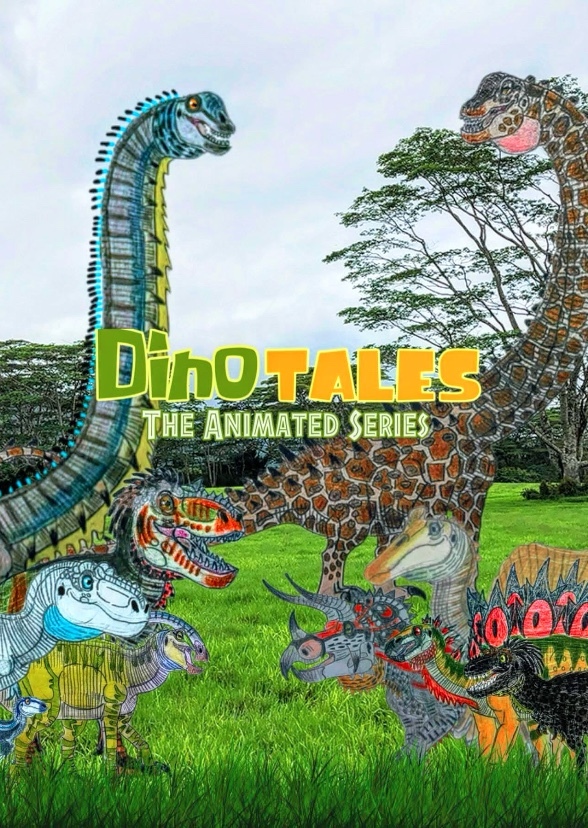
A Green Male Tyrannosaurus Rex named Timmy who enjoys living his lives with best friends Pamela (A Female Parasaurolophus Walkeri), Trent (A Male Triceratops Prorsus), Brydan (A Male Barosaurus Lentus), Stella (A female Spinosaurus Aegyptiacus) and Amy (A Female Alamosaurus Sanjuanensis) living on the HUGEST Island in the North Pacific called “Prehistoric Island (The home of Dinosaurs and other prehistoric beasts)”. Timmy and friends embark on various adventures with their neighbours, families and millions of Other Residents on Prehistoric Island. They are then encountered By A Malevolent, Cruel, Violent Wicked Tyrannosaurus Vannus from PalaeoTerra named Tyros who is planning take over Prehistoric Island as The King ever since he’s been planning his takeover on the throne of PalaeoTerra. Timmy And friends must team up with Other Residents/inhabitants on Prehistoric Island and go to PalaeoTerra to face many obstacles in order defeat Tyros. It is up to Timmy and his friends to protect Prehistoric Island from the villainous Tyrannosaurus Vannus.