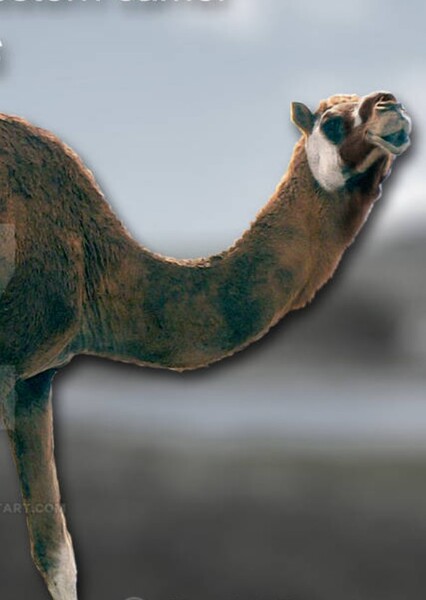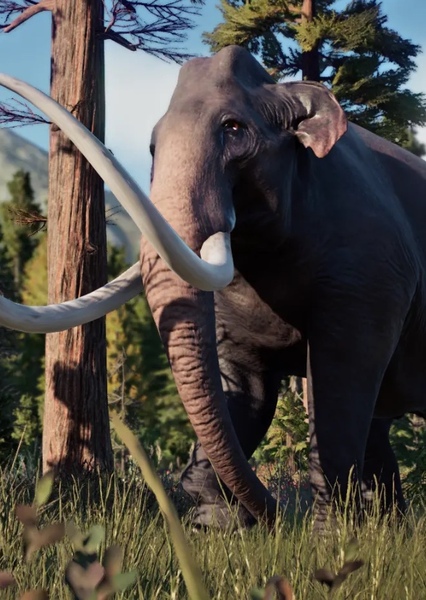
The Columbian mammoth (Mammuthus columbi) is an extinct species of mammoth that inhabited North America as far north as the northern United States and as far south as Costa Rica during the Pleistocene epoch. It was one of the last in a line of mammoth species, beginning with Mammuthus subplanifrons in the early Pliocene. The Columbian mammoth evolved from the steppe mammoth, which entered North America from Asia about 1.5 million years ago. The pygmy mammoths of the Channel Islands of California evolved from Columbian mammoths. The closest extant relative of the Columbian and other mammoths is the Asian elephant. Reaching 4 m (13 ft) at the shoulders and 10 tonnes (22,000 lb) in weight, the Columbian mammoth was one of the largest species of mammoth. It had long, curved tusks and four molars, which were replaced six times during the lifetime of an individual. It most likely used its tusks and trunk like modern elephants—for manipulating objects, fighting, and foraging. Bones, hair, dung, and stomach contents have been discovered, but no preserved carcasses are known. The Columbian mammoth preferred open areas, such as parkland landscapes, and fed on sedges, grasses, and other plants. It did not live in the Arctic regions of Canada, which were instead inhabited by woolly mammoths. The ranges of the two species may have overlapped, and genetic evidence suggests that they interbred. Several sites contain the skeletons of multiple Columbian mammoths, either because they died in incidents such as a drought, or because these locations were natural traps in which individuals accumulated over time. For a few thousand years prior to their extinction, Columbian mammoths coexisted in North America with Paleoamericans – the first humans to inhabit the Americas – who hunted them for food, used their bones for making tools, and depicted them in ancient art. Columbian mammoth remains have been found in association with Clovis culture artifacts; these remains may have stemmed either from hunting or scavenging. The Columbian mammoth disappeared at the end of the Pleistocene around 11,500 years ago, most likely as a result of habitat loss caused by climate change, hunting by humans, or a combination of both.
Columbian Mammoth

Cenozoic Beasts
for Cenozoic Beasts in Dino Tales
Suggested by jacobtolentino
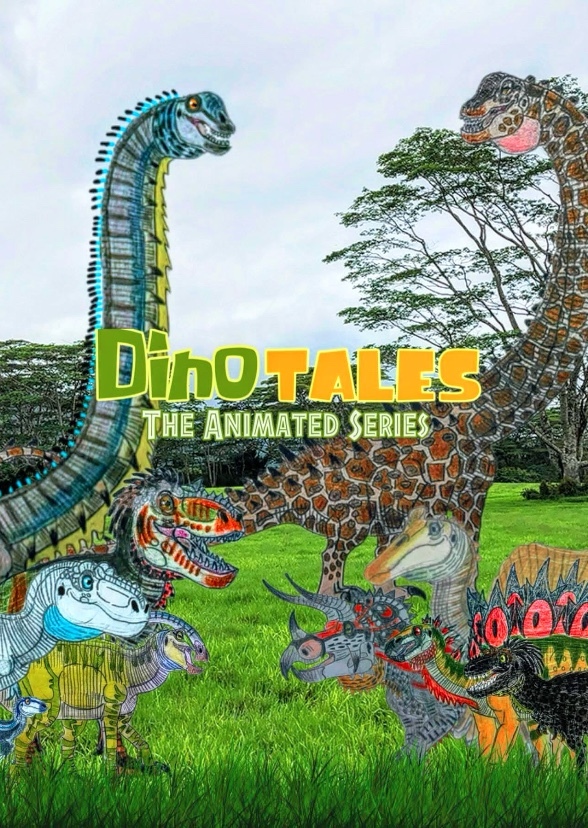
A Green Male Tyrannosaurus Rex named Timmy who enjoys living his lives with best friends Pamela (A Female Parasaurolophus Walkeri), Trent (A Male Triceratops Prorsus), Brydan (A Male Barosaurus Lentus), Stella (A female Spinosaurus Aegyptiacus) and Amy (A Female Alamosaurus Sanjuanensis) living on the HUGEST Island in the North Pacific called “Prehistoric Island (The home of Dinosaurs and other prehistoric beasts)”. Timmy and friends embark on various adventures with their neighbours, families and millions of Other Residents on Prehistoric Island. They are then encountered By A Malevolent, Cruel, Violent Wicked Tyrannosaurus Vannus from PalaeoTerra named Tyros who is planning take over Prehistoric Island as The King ever since he’s been planning his takeover on the throne of PalaeoTerra. Timmy And friends must team up with Other Residents/inhabitants on Prehistoric Island and go to PalaeoTerra to face many obstacles in order defeat Tyros. It is up to Timmy and his friends to protect Prehistoric Island from the villainous Tyrannosaurus Vannus.