Age: 53
male
David Jude Heyworth Law (born 29 December 1972) is an English actor. He began his career in British theatre before landing small roles in various television productions and feature films. Law gained international recognition for his role in Anthony Minghella's The Talented Mr. Ripley (1999), for which he won the BAFTA Award for Best Actor in a Supporting Role and was nominated for the Academy Award in the same category. Law found further critical and commercial success in Steven Spielberg's A.I. Artificial Intelligence (2001), Sam Mendes' Road to Perdition (2002), Minghella's Cold Mountain (2003), for which he earned Academy Award and BAFTA nominations, in addition to the drama Closer (2004) and the romantic comedy The Holiday (2006). His subsequent roles were as Dr. Watson in Sherlock Holmes (2009) and Sherlock Holmes: A Game of Shadows (2011), a young Albus Dumbledore in Fantastic Beasts: The Crimes of Grindelwald (2018) and Fantastic Beasts: The Secrets of Dumbledore (2022), and Yon-Rogg in Captain Marvel (2019); all of which rank among his highest-grossing releases. Other notable films include Contagion (2011), Hugo (2011), Side Effects (2013), The Grand Budapest Hotel (2014), and Spy (2015), as well as the television series The Young Pope (2016), The New Pope (2020), and Star Wars: Skeleton Crew (2024), earning a Children's and Family Emmy Award for Outstanding Lead Performer nomination for the latter. In addition to his film work, Law has performed in several West End and Broadway productions, including Les Parents terribles in 1994, Hamlet in 2010, and Anna Christie in 2011. These earned him nominations for two Tony Awards. He has also been awarded the Honorary César and was named a knight of the Order of Arts and Letters by the French government. Description above from the Wikipedia article Jude Law, licensed under CC-BY-SA, full list of contributors on Wikipedia.
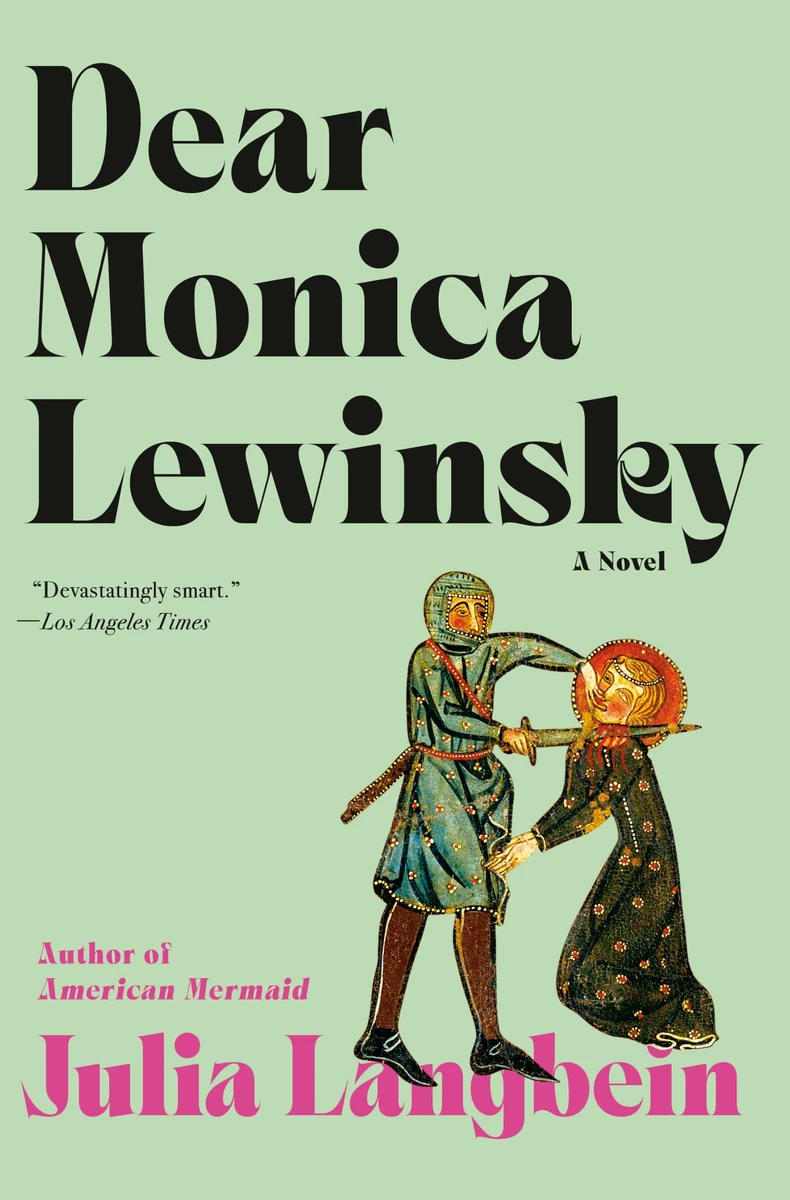
Forty-five-year old Jean Dornan cannot escape the shadow of something that happened several decades ago. During a study abroad program in France she had a deeply inappropriate relationship with her professor. When the professor contacts her out of the blue to invite her to his retirement ceremony, she is jolted out of her malaise and filled with the need to understand why the affair derailed her life. Rereading her old diaries, she is shocked to realize her relationship with the professor occurred during the summer of the Bill Clinton–Monica Lewinsky scandal, yet she never saw the parallels. In a frenzy of guilt and regret, she finds herself praying to Monica Lewinsky—as if she were some kind of secular saint, the patron of persecuted and demonized women, perhaps?—and begging Monica’s forgiveness for not understanding everything they had in common. To her shock, Saint Monica appears to her and leads her back in time to reassess what happened. Had Jean merely been weak, stupid, and blind, as she has told herself for years? What was it about her that led to the affair? What did she really do that summer?