
Age: 71
male
William James "Willem" Dafoe (born July 22, 1955) is an American actor. Known for his prolific career portraying diverse roles in both mainstream and arthouse films, he is the recipient of various accolades, including the Volpi Cup for Best Actor as well as nominations for four Academy Awards, a BAFTA Award, four Golden Globe Awards, four Critics' Choice Movie Awards, and five Screen Actors Guild Awards. He has frequently collaborated with filmmakers Paul Schrader, Abel Ferrara, Lars von Trier, Julian Schnabel, Wes Anderson, and Robert Eggers. Dafoe was a founding member of experimental theatre company The Wooster Group. He made his film debut with an uncredited role in Heaven's Gate (1980). Dafoe's early career includes credits for The Loveless (1982), Streets of Fire (1984), and To Live and Die in L.A. (1985). He earned his first Academy Award nomination for the war drama Platoon (1986), followed by nominations for his roles in Shadow of the Vampire (2000), The Florida Project (2017), and the Vincent van Gogh biopic At Eternity's Gate (2018). He also gained acclaim and wide recognition for his roles as Jesus Christ in The Last Temptation of Christ (1988) and as the supervillain Norman Osborn in the superhero film Spider-Man (2002), a role he reprised in its sequels Spider-Man 2 (2004) and Spider-Man 3 (2007), and the Marvel Cinematic Universe film Spider-Man: No Way Home (2021). His other film appearance include roles in Mississippi Burning (1988), Born on the Fourth of July (1989), Wild at Heart (1990), Light Sleeper (1992), Body of Evidence (1993), Clear and Present Danger (1994), The English Patient (1996), Affliction (1997), New Rose Hotel(1998), Existenz (1999), The Boondock Saints (1999), American Psycho (2000), Auto Focus (2002), Finding Nemo (2003), The Life Aquatic with Steve Zissou (2004), Inside Man (2006), Mr. Bean's Holiday (2007), Antichrist (2009), Fantastic Mr. Fox (2009), Nymphomaniac (2013), The Fault in Our Stars (2014), John Wick (2014), The Grand Budapest Hotel (2014), Aquaman (2018), The Lighthouse (2019), Nightmare Alley (2021), Poor Things (2023), and Beetlejuice Beetlejuice (2024).
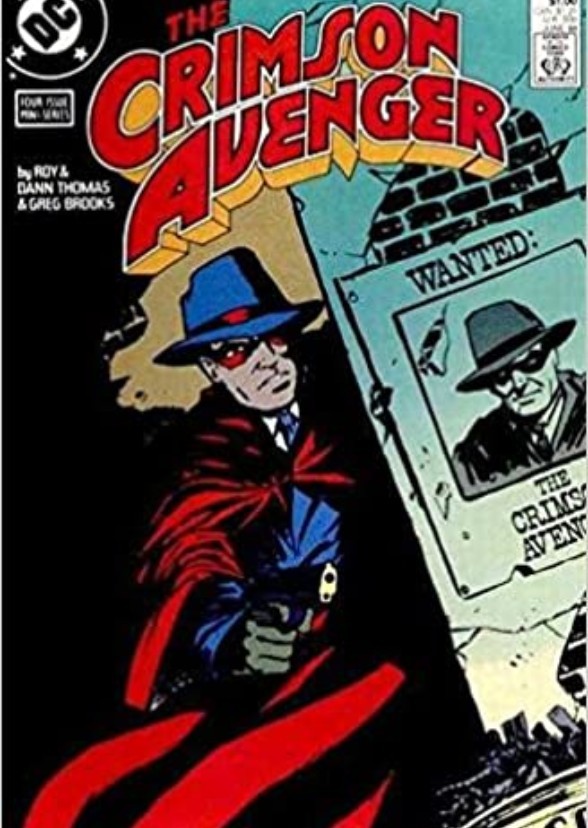
Two separate accounts of the Crimson Avenger's origins have been printed which complement each other in some areas, but contradict in others. The first origin story appeared in Secret Origins and was written by Roy Thomas, with art by Gene Colan. Taking place in late October 1938, it depicts Lee Walter Travis, the young publisher of the Globe-Leader, a paper devoted to progressive causes. At a costume ball on Halloween, Travis appears in a "highway robber" costume. This is the night of Orson Welles' famous broadcast of The War of the Worlds and — having gotten advance notice of the radio show — a group of criminals dressed in alien-like costumes takes advantage of the ensuing panic in order to rob the party guests. The villain's murder a young journalist, and Travis is enraged, going after the costumed thieves and exchanging gunfire. Travis drives the thieves into a ditch and disappears before the police arrive, now inspired to become the Crimson Avenger. The use of Orson Welles' War of the Worlds in the story was inspired by the fact that the Crimson Avenger's first comic book appearance was dated Oct 1938, the same month as the radio broadcast.


