
Age: 64
male
David Andrew Leo Fincher (born August 28, 1962) is an American film director. His films, mostly thrillers, have received 40 nominations at the Academy Awards, including three for him as Best Director. Born in Denver, Colorado, Fincher was interested in filmmaking at an early age. He directed numerous music videos, most notably Madonna's "Express Yourself" in 1989 and "Vogue" in 1990, both of which won him the MTV Video Music Award for Best Direction. He made his feature film debut with Alien 3 (1992), which garnered mixed reviews, followed by the thriller Seven (1995), which was better received. Fincher found lukewarm success with The Game (1997) and Fight Club (1999), but the latter eventually became a cult classic. In 2002, he returned to prominence with the thriller Panic Room starring Jodie Foster. Fincher also directed Zodiac (2007), The Social Network (2010), The Girl with the Dragon Tattoo (2011), and Mank (2020). For The Social Network, he won the Golden Globe Award for Best Director and BAFTA Award for Best Direction. His biggest commercial successes are The Curious Case of Benjamin Button (2008) and Gone Girl (2014), both of which grossed more than $300 million worldwide, with the former earning thirteen nominations at the Academy Awards, and eleven at the British Academy Film Awards. He also served as an executive producer and director for the Netflix series House of Cards (2013–2018) and Mindhunter (2017–2019), winning the Primetime Emmy Award for Outstanding Directing for a Drama Series for the pilot episode of House of Cards. Fincher was the co-founder of Propaganda Films, a film, and music.
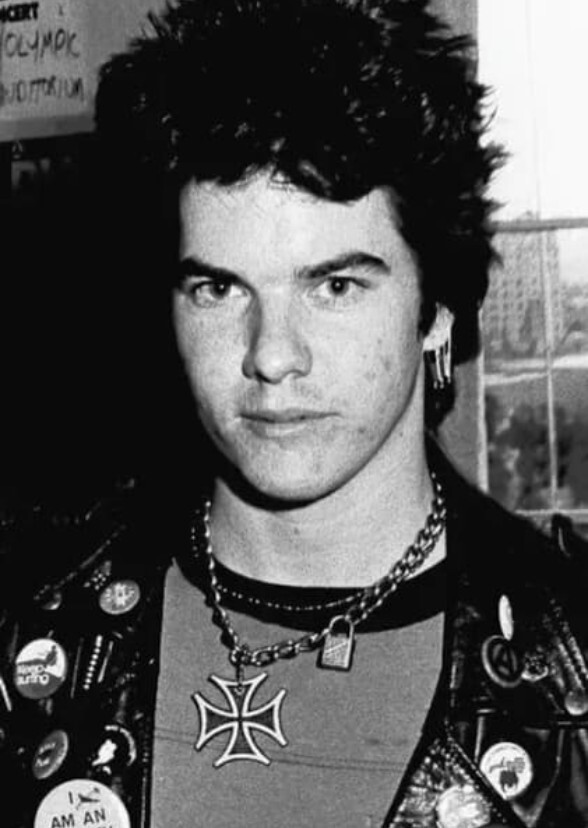
Imagine the late 1970s Los Angeles punk scene: smoky clubs filled with raucous fans, graffiti-covered walls vibrating with the energy of kids desperate for a place to belong. This world had no real icons yet, just restless youth breaking the mold, and in its core was Darby Crash — a charismatic, troubled, larger-than-life figure whose own self-doubt and existential musings were masked by his fierce performances. Crash & Burn would be both a raw character study and an immersive journey into punk’s early days, depicting Darby as both hero and antihero. We explore how Jan Paul Beahm — a misfit teen who studied Nietzsche and created his philosophy for life — evolved into Darby Crash, a magnetic figure whose every action seemed like a bold artistic statement. Through the eyes of Darby and those who loved him, we see a vision of punk rock not as a genre but as a way of life, born out of pain, disillusionment, and a deep-seated need to feel heard.



