male
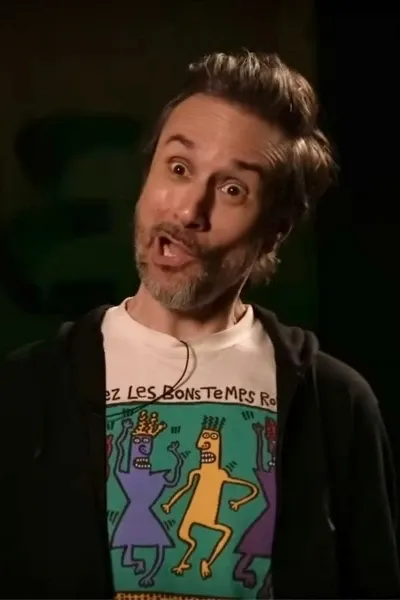
Lloyd Floyd, The Man of 1,036 Voices, is an American voice actor who has been a Screen Actors Guild member since 1982. As a child, he booked his first audition for Stephen DeAngelis of Grey Advertising for a Ground Round commercial. Years later he would go on to perform his first paid stand-up comedy gig at the local Ground Round on Route 9 W. He went on to advertise for several other products, including Curad Band-aids, North Eastern Electric at Howard Schwartz Recording, Intellivision with George Plimpton, Hi-C with Brian Bloom, a McGruff the Crime Dog PSA, also with Brian Bloom who he appeared with in an episode of "As The World Turns," and an on-camera commercial for the "Return of The Jedi" board game. He also auditioned for and made it to the third round of callbacks for The Goonies, The Toy, and The NeverEnding Story. In freshman year of high school, Lloyd quit acting to pursue a career in rock 'n' roll. He fronted a number of bands between the years 1987 and 1997, most notably among them Shadow Harvest, The Tao, and Juan Von Michaelangelo. At 30 years old, he gave up on rock 'n' roll and entered the world of stand-up comedy and the Lower East Side's Art Stars scene in New York City. As a voice actor, Lloyd Floyd works primarily in video games. Description above from the Wikipedia article Lloyd Floyd, licensed under CC-BY-SA, full list of contributors on Wikipedia.
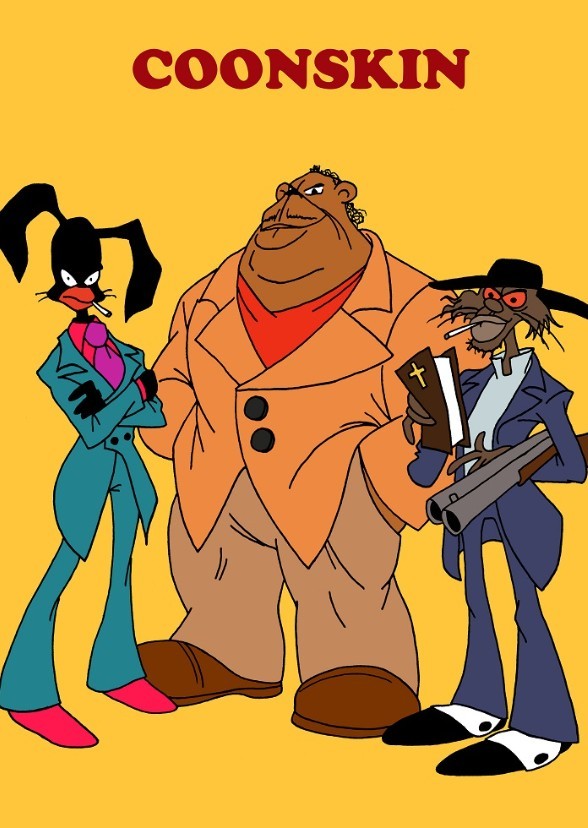
Coonskin is a 1975 American adult animated satirical crime film written and directed by Ralph Bakshi. The film references the Uncle Remus folk tales and satirizes the blaxploitation film genre as well as Disney's racially controversial film Song of the South, also adapted from the Uncle Remus folk tales. The film's narrative concerns three anthropomorphic Uncle Remus characters, Br'er Rabbit (referred to as Brother Rabbit), Br'er Fox (referred to as Preacher Fox), and Br'er Bear (referred to as Brother Bear). They rise to the top of the organized crime racket in Harlem, encountering corrupt law enforcement, con artists, and the Mafia, in a satire of both racism within the Hollywood film system, and America itself. Originally produced under the titles Harlem Nights and Coonskin No More... at Paramount Pictures, Coonskin encountered controversy before its original theatrical release when the Congress of Racial Equality accused the film of being racist. When the film was released, Bryanston gave it limited distribution and it initially received mixed reviews. Later re-released under the titles Bustin' Out and Street Fight, Coonskin has since been re-appraised, recontextualizing the film as the condemnation of racism that the director intended, rather than a product of a racist imagination, as its detractors had claimed.