
Age: 63
male
Shaun Toub is an Iranian-American film and television actor. He is perhaps best known for his role as Farhad in the 2004 movie Crash, as Rahim Khan in the movie The Kite Runner, and as Yinsen in the film adaptation of the Iron Man comic book series. Toub, who is of Persian Jewish background, was born in Tehran, Iran and raised in Manchester, England (his family left Iran before the 1979 revolution). At the age of fourteen, he moved to Switzerland and after a two year stay, he crossed the Atlantic to Nashua, New Hampshire to finish his last year of high school. His high school yearbook notes: "The funniest guy in school and the most likely to succeed in the entertainment world." After two years of college in Massachusetts, Shaun transferred to USC. Shaun is active in the Iranian Jewish community. Through various charity events and public speaking engagements, he inspires the community to embrace the arts, as the arts enhance everyday life. He has been a recipient of the Sephard award at the Los Angeles Sephardic Film Festival. Toub currently resides in Los Angeles.
Shaun Toub

Yildizz
for Yildizz in Conan: The Hyborian Age (TV-Series)
Suggested by rickzeo
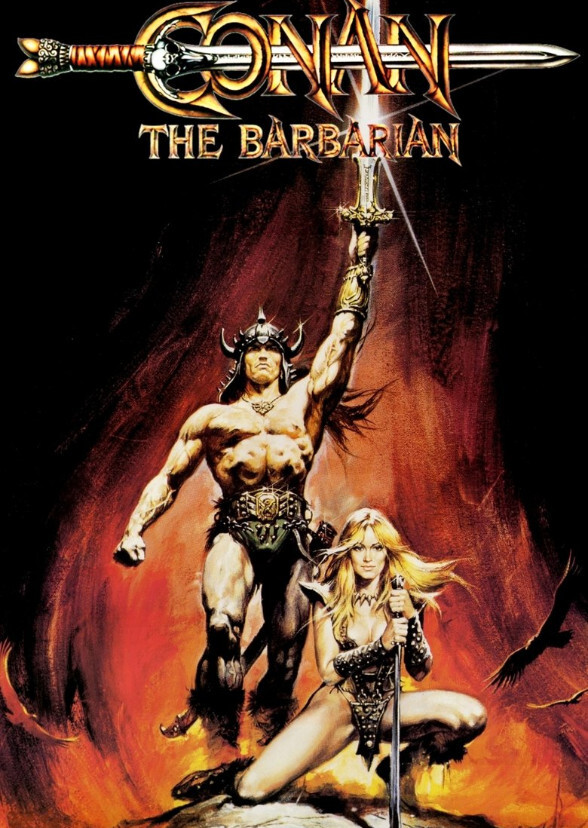
The kingdoms of the Hyborian Age have reached a decadent pinnacle. In the great nations of the West , a new "Doctrine of Serenity" has taken hold. Led by a class of refined scholars and "benevolent" viziers, society has come to view the primal impulses of man—his capacity for protective violence, his rugged independence, and his competitive fire—as "atavistic tremors" that threaten the social harmony. Strength is treated as a defect; passion is treated as a sickness. Amidst this quiet, perfumed stagnation arrives Conan of Cimmeria. To the "enlightened" nobility, he is a walking blasphemy—a man who smells of sweat and leather in a world of silk and incense. He does not speak in riddles, he does not perform for the court, and he reacts to injustice with a heavy hand. He is the "Inconvenient Man," an unrefined mirror reflecting the cowardice of a society that has traded its agency for comfort. But the "Doctrine of Serenity" is not a human evolution; it is a siege strategy. The viziers are the Serpent Men of Valusia, ancient reptilian infiltrators who have traded their swords for the "Illusion of the Serpent." They understand that a man who has lost his "will to strive" is a man who cannot defend his home. By systematically shaming the warrior spirit and pathologizing the individual, the Serpent Men are "taming" humanity into a docile herd, stripping away their natural defenses before the final strike. The tragedy lies in the people themselves. Conditioned to fear their own shadows, the citizens actively hunt the "barbarians" among them, believing that by extinguishing the last embers of human fire, they will finally be safe. Only when the Serpent Men shed their human masks do the deluded realize their error. In a world of "harmonious" slaves, the unrefined Cimmerian alone remains capable of holding a blade, proving that the savage virtues society tried to "cure" were the only things keeping the darkness at bay.


