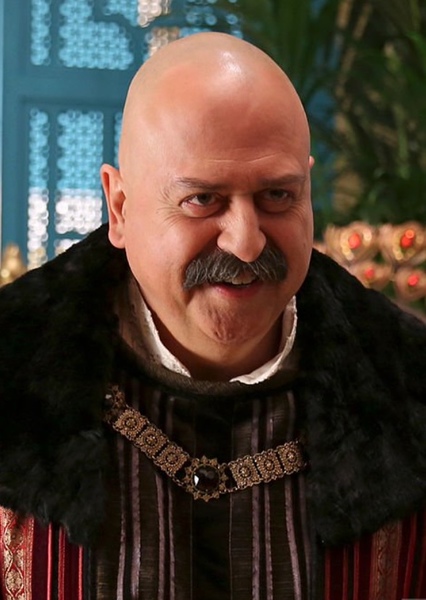
Age: 65
male
Stanley Townsend (born August 1961) is an Irish actor. Townsend was born and brought up in Dublin. After attending Wesley College, Dublin, he studied mathematics and civil engineering at Trinity College. While there he joined the Dublin University Players, the college's Amateur Dramatic Society. He later co-founded co-operative theatre company Rough Magic with writer/director Declan Hughes and theatre director Lynne Parker, performing in numerous productions including The Country Wife, Nightshade, and Sexual Perversity in Chicago. He subsequently went on to perform in several productions at The Gate and The Abbey Theatres in Dublin. In London, he has worked with such directors as Sam Mendes in The Plough and the Stars, Richard Eyre in Guys and Dolls and Rufus Norris in Under the Blue Sky. Theatre appearances at the Royal Court include The Alice Trilogy directed by Ian Rickson and Shining City directed by Conor McPherson, for which he won an Irish Theatre Award and was nominated for the Evening Standard Theatre Award for Best Actor in 2004. Townsend's television work began on a number of shows for RTÉ in Dublin. Since moving to London, television appearances have included Spooks, The Commander, Hustle, Waking the Dead, and Omagh Bombing. ilm credits include Mike Newell's Into the West, Jim Sheridan's In the Name of the Father with Daniel Day-Lewis, The Van by Stephen Frears, Peter Greenaway's The Tulse Luper Suitcases, The Libertine with Johnny Depp, Paul Morrison's Wondrous Oblivion with Delroy Lindo, John Boorman's The Tiger's Tale and Michael Radford's Flawless. He currently lives in London.
Stanley Townsend

Vibius Latro
for Vibius Latro in Conan: The Hyborian Age (TV-Series)
Suggested by rickzeo
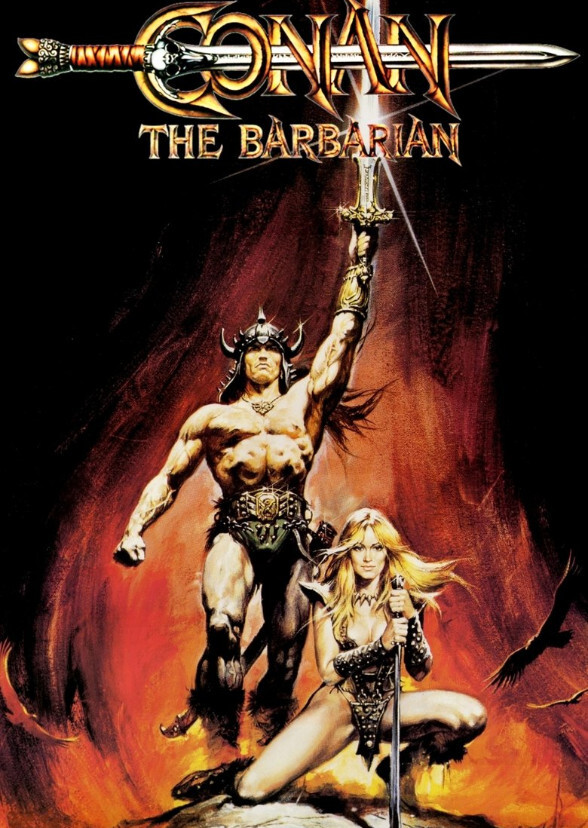
The kingdoms of the Hyborian Age have reached a decadent pinnacle. In the great nations of the West , a new "Doctrine of Serenity" has taken hold. Led by a class of refined scholars and "benevolent" viziers, society has come to view the primal impulses of man—his capacity for protective violence, his rugged independence, and his competitive fire—as "atavistic tremors" that threaten the social harmony. Strength is treated as a defect; passion is treated as a sickness. Amidst this quiet, perfumed stagnation arrives Conan of Cimmeria. To the "enlightened" nobility, he is a walking blasphemy—a man who smells of sweat and leather in a world of silk and incense. He does not speak in riddles, he does not perform for the court, and he reacts to injustice with a heavy hand. He is the "Inconvenient Man," an unrefined mirror reflecting the cowardice of a society that has traded its agency for comfort. But the "Doctrine of Serenity" is not a human evolution; it is a siege strategy. The viziers are the Serpent Men of Valusia, ancient reptilian infiltrators who have traded their swords for the "Illusion of the Serpent." They understand that a man who has lost his "will to strive" is a man who cannot defend his home. By systematically shaming the warrior spirit and pathologizing the individual, the Serpent Men are "taming" humanity into a docile herd, stripping away their natural defenses before the final strike. The tragedy lies in the people themselves. Conditioned to fear their own shadows, the citizens actively hunt the "barbarians" among them, believing that by extinguishing the last embers of human fire, they will finally be safe. Only when the Serpent Men shed their human masks do the deluded realize their error. In a world of "harmonious" slaves, the unrefined Cimmerian alone remains capable of holding a blade, proving that the savage virtues society tried to "cure" were the only things keeping the darkness at bay.

