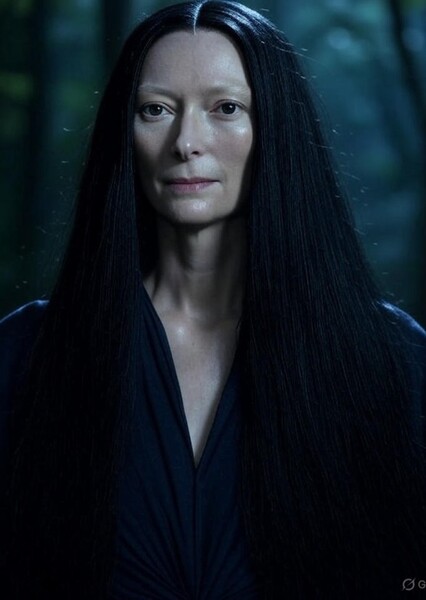
Age: 65
female
Katherine Matilda Swinton (born November 5, 1960) is an award-winning British actress of Scottish descent, known for her versatile roles in independent films and blockbusters. She is a recipient various accolades throughout her long career, including an Academy Award and two BAFTA Awards, in addition to being nominated for three Golden Globe Awards and five Screen Actors Guild Awards. Swinton began her career by appearing in experimental films starting with Caravaggio (1986), followed by The Last of England (1988), War Requiem (1989), and The Garden (1990). She won the Volpi Cup for Best Actress at the Venice Film Festival for her portrayal of Isabella of France in Edward II (1991). She next starred in Sally Potter's Orlando (1992), for which she received a nomination for the European Film Award for Best Actress. She was nominated for a Golden Globe Award for her performance in The Deep End (2001), and followed this with appearances in Vanilla Sky (2001), Adaptation (2002), Constantine (2005), Julia (2008), and I Am Love (2009). For the film Young Adam (2003), she won the British Academy Scotland Award for Best Actress. Her performance in Michael Clayton (2007) won her the Academy Award for Best Supporting Actress and the BAFTA Award for Best Actress in a Supporting Role. Additionally, she won the European Film Award for Best Actress and received a nomination for the BAFTA Award for Best Actress in a Leading Role for the psychological thriller We Need to Talk About Kevin (2011). Swinton has also played the White Witch in The Chronicles of Narnia series (2005–2010) and the Ancient One in the Marvel Cinematic Universe franchise. Swinton was awarded the Richard Harris Award by the British Independent Film Awards in recognition of her contributions to the British film industry. In 2013, she was given a special tribute by the Museum of Modern Art. In 2020, Swinton was awarded the British Film Institute Fellowship, the highest honour presented by the institution, for her "daringly eclectic and striking talents as a performer and film-maker and recognizes her great contribution to film culture, independent film exhibition and philanthropy." That same year, The New York Times ranked her thirteenth on its list of the greatest actors of the 21st century up to that point.
Tilda Swinton

Vammatar
for Vammatar in Conan: The Hyborian Age (TV-Series)
Suggested by rickzeo
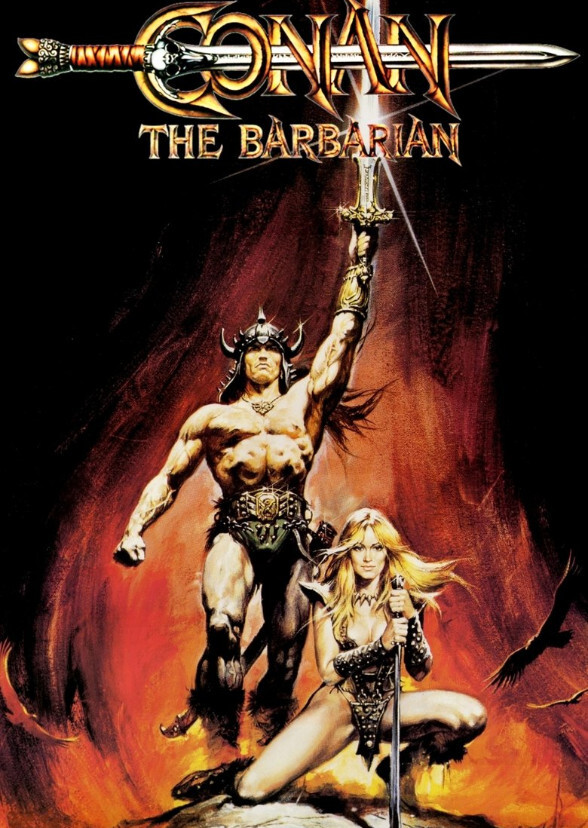
The kingdoms of the Hyborian Age have reached a decadent pinnacle. In the great nations of the West , a new "Doctrine of Serenity" has taken hold. Led by a class of refined scholars and "benevolent" viziers, society has come to view the primal impulses of man—his capacity for protective violence, his rugged independence, and his competitive fire—as "atavistic tremors" that threaten the social harmony. Strength is treated as a defect; passion is treated as a sickness. Amidst this quiet, perfumed stagnation arrives Conan of Cimmeria. To the "enlightened" nobility, he is a walking blasphemy—a man who smells of sweat and leather in a world of silk and incense. He does not speak in riddles, he does not perform for the court, and he reacts to injustice with a heavy hand. He is the "Inconvenient Man," an unrefined mirror reflecting the cowardice of a society that has traded its agency for comfort. But the "Doctrine of Serenity" is not a human evolution; it is a siege strategy. The viziers are the Serpent Men of Valusia, ancient reptilian infiltrators who have traded their swords for the "Illusion of the Serpent." They understand that a man who has lost his "will to strive" is a man who cannot defend his home. By systematically shaming the warrior spirit and pathologizing the individual, the Serpent Men are "taming" humanity into a docile herd, stripping away their natural defenses before the final strike. The tragedy lies in the people themselves. Conditioned to fear their own shadows, the citizens actively hunt the "barbarians" among them, believing that by extinguishing the last embers of human fire, they will finally be safe. Only when the Serpent Men shed their human masks do the deluded realize their error. In a world of "harmonious" slaves, the unrefined Cimmerian alone remains capable of holding a blade, proving that the savage virtues society tried to "cure" were the only things keeping the darkness at bay.

