
Age: 43
male
Rizwan "Riz" Ahmed (Urdu pronunciation: [ɾɪzˌwɑːnˈɛɦˌməd̪]; born 1 December 1982) is a British actor and rapper. He has received several awards, including an Academy Award and a Primetime Emmy Award, with nominations for two Golden Globe Awards and two British Academy Film Awards. In 2017, he was named in the Time Listing of the most influential people in the world. After studying acting at the Royal Central School of Speech and Drama, Ahmed began his acting career with independent films such as The Road to Guantanamo (2006), Shifty (2008), Four Lions (2010), Trishna (2011), and The Reluctant Fundamentalist (2012). He had his break-out role in Nightcrawler (2014), which led to roles in the 2016 big-budget films Jason Bourne and Rogue One. For starring as a young man accused of murder in the HBO miniseries The Night Of (2016), Ahmed won the Primetime Emmy Award for Outstanding Lead Actor in a Limited Series. He received another Emmy nomination in the same year for his guest role in Girls. He went on to play Carlton Drake in the superhero film Venom (2018) and a drummer who loses his hearing in the drama film Sound of Metal (2019). The latter earned him a nomination for the Academy Award for Best Actor. He produced, co-wrote, and starred in Mogul Mowgli (2020), which earned a nomination for the BAFTA Award for Outstanding British Film. As a rapper, Ahmed is a member of the Swet Shop Boys and has earned critical acclaim with the hip hop albums Microscope and Cashmere and commercial success featuring in the Billboard 200 chart-topping Hamilton Mixtape, with his song "Immigrants (We Get the Job Done)" winning an MTV Video Music Award. His second studio album, The Long Goodbye, was accompanied by a short film of the same name, which won him the Academy Award for Best Live Action Short Film. As an activist, Ahmed is known for his political rap music, has been involved in raising awareness and funds for Rohingya and Syrian refugee children, and has advocated 'BAME' representation at the House of Commons. Description above from the Wikipedia article Riz Ahmed, licensed under CC-BY-SA, full list of contributors on Wikipedia.
Riz Ahmed

Shevatas
for Shevatas in Conan: The Hyborian Age (TV-Series)
Suggested by rickzeo
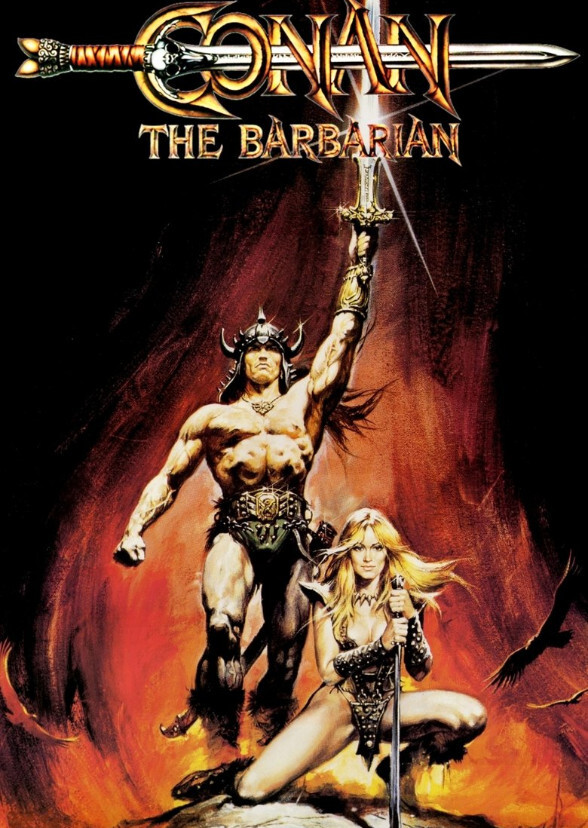
The kingdoms of the Hyborian Age have reached a decadent pinnacle. In the great nations of the West , a new "Doctrine of Serenity" has taken hold. Led by a class of refined scholars and "benevolent" viziers, society has come to view the primal impulses of man—his capacity for protective violence, his rugged independence, and his competitive fire—as "atavistic tremors" that threaten the social harmony. Strength is treated as a defect; passion is treated as a sickness. Amidst this quiet, perfumed stagnation arrives Conan of Cimmeria. To the "enlightened" nobility, he is a walking blasphemy—a man who smells of sweat and leather in a world of silk and incense. He does not speak in riddles, he does not perform for the court, and he reacts to injustice with a heavy hand. He is the "Inconvenient Man," an unrefined mirror reflecting the cowardice of a society that has traded its agency for comfort. But the "Doctrine of Serenity" is not a human evolution; it is a siege strategy. The viziers are the Serpent Men of Valusia, ancient reptilian infiltrators who have traded their swords for the "Illusion of the Serpent." They understand that a man who has lost his "will to strive" is a man who cannot defend his home. By systematically shaming the warrior spirit and pathologizing the individual, the Serpent Men are "taming" humanity into a docile herd, stripping away their natural defenses before the final strike. The tragedy lies in the people themselves. Conditioned to fear their own shadows, the citizens actively hunt the "barbarians" among them, believing that by extinguishing the last embers of human fire, they will finally be safe. Only when the Serpent Men shed their human masks do the deluded realize their error. In a world of "harmonious" slaves, the unrefined Cimmerian alone remains capable of holding a blade, proving that the savage virtues society tried to "cure" were the only things keeping the darkness at bay.

