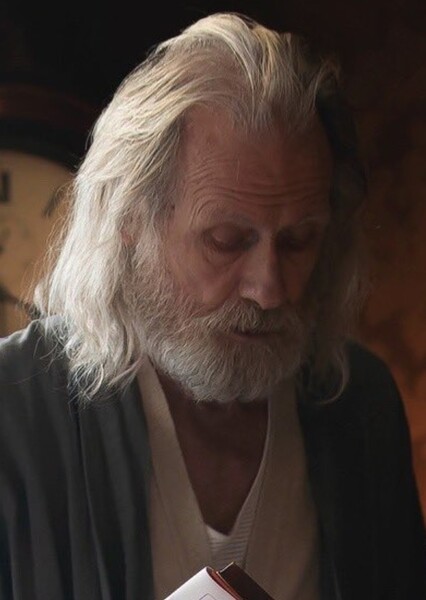
Age: 76
male
William Francis Nighy (born 12 December 1949) is an English actor. Known for his work on screen and stage, he has received numerous awards, including two BAFTA Awards, a Golden Globe Award and nominations for an Academy Award and a Tony Award. Nighy started his career with the Everyman Theatre, Liverpool and made his London debut with the Royal National Theatre starting with The Illuminatus! in 1977. There he gained acclaim for his roles in David Hare's Pravda in 1985, Harold Pinter's Betrayal in 1991, Tom Stoppard's Arcadia in 1993, and Anton Chekov's The Seagull in 1994. He received a Laurence Olivier Award for Best Actor nomination for his performance in Blue/Orange in 2001. He made his Broadway debut in Hare's The Vertical Hour in 2006, and returned in the 2015 revival of Hare's Skylight earning a Tony Award for Best Actor in a Play nomination. Early film roles include in the comedies Still Crazy (1998), and Blow Dry (1999) before his breakout role in Love Actually (2003) which earned him a BAFTA Award for Best Supporting Actor. He soon gained recognition portraying Davy Jones in the Pirates of the Caribbean film series (2006-2007), and Viktor in the Underworld film series (2003-2009). Other films include Shaun of the Dead (2004), The Hitchhiker's Guide to the Galaxy (2005), The Constant Gardener (2005), Notes on a Scandal (2006), Hot Fuzz (2007), Valkyrie (2008), Harry Potter and the Deathly Hallows – Part 1 (2010), The Best Exotic Marigold Hotel (2012), About Time (2013), Emma (2020), and Living (2022), the last of these earning him his first career Academy Award nomination. Nighy has gained acclaim for his roles in television earning a British Academy Television Award for Best Actor for his performance in BBC One series State of Play (2003), and a Golden Globe Award for Best Actor for the BBC film Gideon's Daughter (2007). He's also known for his roles in HBO's The Girl in the Café (2006) and PBS's Page Eight (2012).
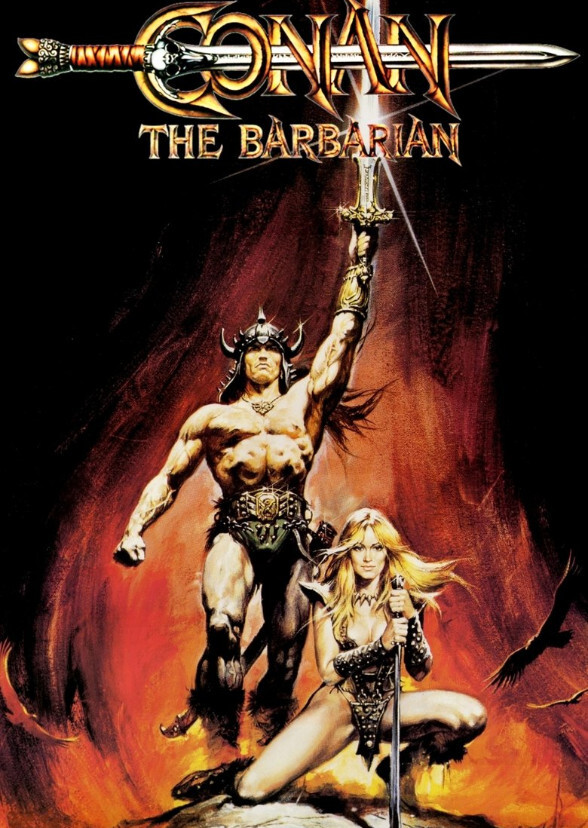
The kingdoms of the Hyborian Age have reached a decadent pinnacle. In the great nations of the West , a new "Doctrine of Serenity" has taken hold. Led by a class of refined scholars and "benevolent" viziers, society has come to view the primal impulses of man—his capacity for protective violence, his rugged independence, and his competitive fire—as "atavistic tremors" that threaten the social harmony. Strength is treated as a defect; passion is treated as a sickness. Amidst this quiet, perfumed stagnation arrives Conan of Cimmeria. To the "enlightened" nobility, he is a walking blasphemy—a man who smells of sweat and leather in a world of silk and incense. He does not speak in riddles, he does not perform for the court, and he reacts to injustice with a heavy hand. He is the "Inconvenient Man," an unrefined mirror reflecting the cowardice of a society that has traded its agency for comfort. But the "Doctrine of Serenity" is not a human evolution; it is a siege strategy. The viziers are the Serpent Men of Valusia, ancient reptilian infiltrators who have traded their swords for the "Illusion of the Serpent." They understand that a man who has lost his "will to strive" is a man who cannot defend his home. By systematically shaming the warrior spirit and pathologizing the individual, the Serpent Men are "taming" humanity into a docile herd, stripping away their natural defenses before the final strike. The tragedy lies in the people themselves. Conditioned to fear their own shadows, the citizens actively hunt the "barbarians" among them, believing that by extinguishing the last embers of human fire, they will finally be safe. Only when the Serpent Men shed their human masks do the deluded realize their error. In a world of "harmonious" slaves, the unrefined Cimmerian alone remains capable of holding a blade, proving that the savage virtues society tried to "cure" were the only things keeping the darkness at bay.


