Died at 79
male
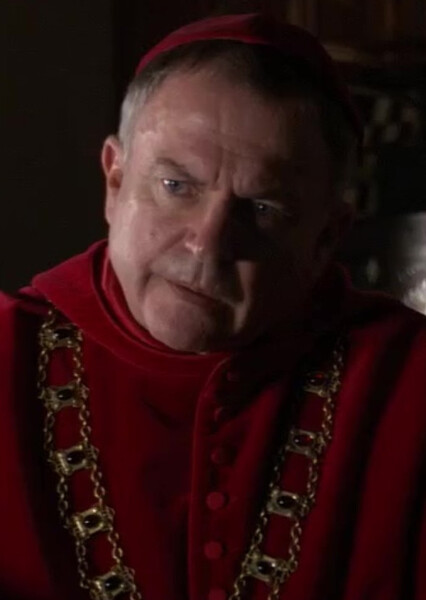
Sir Nigel John Dermot "Sam" Neill (14 September 1947 - 13 July 2026) was a Northern Irish-born New Zealand actor. His career has included leading roles in both dramas and blockbusters. Considered an "international leading man", he is regarded as one of the most versatile actors of his generation. Born in Northern Ireland to an English mother and New Zealand father, Neill moved to Christchurch with his family in 1954. He first achieved recognition with his appearance in the film Sleeping Dogs (1977), which he followed with leading roles in My Brilliant Career (1979), Omen III: The Final Conflict, Possession (both 1981), Evil Angels (also known as A Cry in the Dark) (1988), Dead Calm (1989), The Hunt For Red October (1990), The Piano (1993), and In the Mouth of Madness (1994). He came to international prominence as Dr. Alan Grant in Jurassic Park (1993), reprising the role in Jurassic Park III (2001) and Jurassic World Dominion (2022). Outside of film, Neill has appeared in numerous television series in guest and recurring roles, including Reilly, Ace of Spies (1983), The Simpsons (1994), The Tudors (2007), Crusoe (2008–2010), Happy Town (2010), Alcatraz (2012), and Rick and Morty (2019). He also starred as the titular character Merlin in Merlin (1998) and Merlin's Apprentice (2006) and as Major Chester Campbell in the first two series of Peaky Blinders (2013–2014). He has presented and narrated several documentaries. Neill receives the AACTA Award for Best Actor in a Leading Role, the Longford Lyell Award, the New Zealand Film Award, and the Logie Award for Most Outstanding Actor. He also has three Golden Globe and two Primetime Emmy Award nominations. He won the Silver Logie for Most Popular Actor at the 2023 Logies. Description above from the Wikipedia article Sam Neill, licensed under CC-BY-SA, full list of contributors on Wikipedia.
Sam Neill

Dexitheus
for Dexitheus in Conan: The Hyborian Age (TV-Series)
Suggested by rickzeo
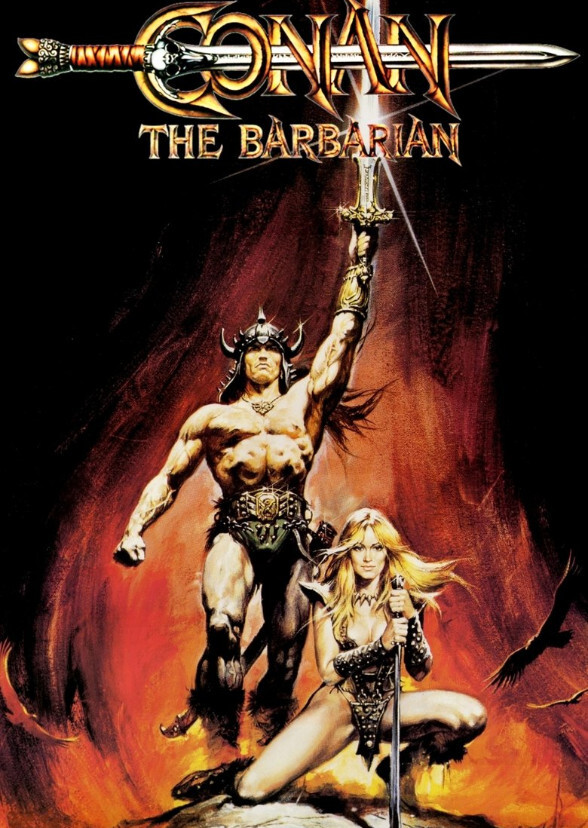
The kingdoms of the Hyborian Age have reached a decadent pinnacle. In the great nations of the West , a new "Doctrine of Serenity" has taken hold. Led by a class of refined scholars and "benevolent" viziers, society has come to view the primal impulses of man—his capacity for protective violence, his rugged independence, and his competitive fire—as "atavistic tremors" that threaten the social harmony. Strength is treated as a defect; passion is treated as a sickness. Amidst this quiet, perfumed stagnation arrives Conan of Cimmeria. To the "enlightened" nobility, he is a walking blasphemy—a man who smells of sweat and leather in a world of silk and incense. He does not speak in riddles, he does not perform for the court, and he reacts to injustice with a heavy hand. He is the "Inconvenient Man," an unrefined mirror reflecting the cowardice of a society that has traded its agency for comfort. But the "Doctrine of Serenity" is not a human evolution; it is a siege strategy. The viziers are the Serpent Men of Valusia, ancient reptilian infiltrators who have traded their swords for the "Illusion of the Serpent." They understand that a man who has lost his "will to strive" is a man who cannot defend his home. By systematically shaming the warrior spirit and pathologizing the individual, the Serpent Men are "taming" humanity into a docile herd, stripping away their natural defenses before the final strike. The tragedy lies in the people themselves. Conditioned to fear their own shadows, the citizens actively hunt the "barbarians" among them, believing that by extinguishing the last embers of human fire, they will finally be safe. Only when the Serpent Men shed their human masks do the deluded realize their error. In a world of "harmonious" slaves, the unrefined Cimmerian alone remains capable of holding a blade, proving that the savage virtues society tried to "cure" were the only things keeping the darkness at bay.

