
Age: 73
male
Delroy George Lindo (born 18 November 1952) is a British actor. Starting his career in the 1975 stage production of Of Mice and Men, he later earned a Tony Award nomination for Best Featured Actor for his work in the 1988 production of Joe Turner's Come and Gone. He received wider recognition with roles in several Spike Lee films, playing West Indian Archie in Malcolm X (1992), Woody Carmichael in Crooklyn (1994), Rodney Little in Clockers (1995), and Paul, a Vietnam War veteran, in Da 5 Bloods (2020), the latter of which earned him the New York Film Critics Circle Award for Best Actor and the National Society of Film Critics Award for Best Actor. For his role as blues player Delta Slim in Ryan Coogler's Sinners (2025), he was nominated for the Academy Award for Best Supporting Actor. Lindo is also known for playing Bo Catlett in Get Shorty (1995), Arthur Rose in The Cider House Rules (1999), Detective Castlebeck in Gone in 60 Seconds (2000), Isaak O'Day in Romeo Must Die (2000) Joe Black in This Christmas (2007), and Bass Reeves in The Harder They Fall (2021). He also voiced the character Beta in the Pixar animated film Up (2009). On television, he portrayed Matthew Henson in the 1998 television film Glory & Honor, and Supreme Court Justice Clarence Thomas in Strange Justice (1999). Lindo later starred as Alderman Ronin Gibbons in the series The Chicago Code (2011), as Winter in the fantasy drama series Believe (2014), and as Adrian Boseman in The Good Fight (2017–2021). Description above from the Wikipedia article Delroy Lindo, licensed under CC-BY-SA, full list of contributors on Wikipedia.
Delroy Lindo

Arrakkamani
for Arrakkamani in Conan: The Hyborian Age (TV-Series)
Suggested by rickzeo
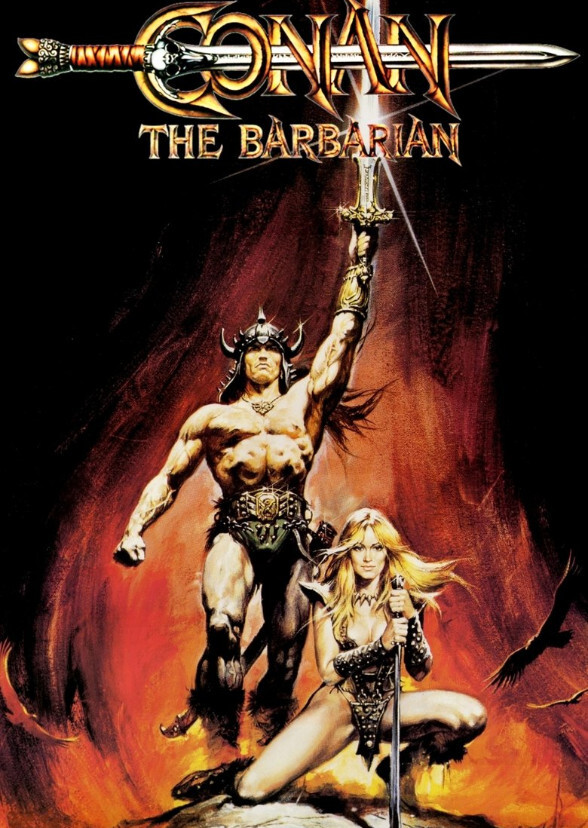
The kingdoms of the Hyborian Age have reached a decadent pinnacle. In the great nations of the West , a new "Doctrine of Serenity" has taken hold. Led by a class of refined scholars and "benevolent" viziers, society has come to view the primal impulses of man—his capacity for protective violence, his rugged independence, and his competitive fire—as "atavistic tremors" that threaten the social harmony. Strength is treated as a defect; passion is treated as a sickness. Amidst this quiet, perfumed stagnation arrives Conan of Cimmeria. To the "enlightened" nobility, he is a walking blasphemy—a man who smells of sweat and leather in a world of silk and incense. He does not speak in riddles, he does not perform for the court, and he reacts to injustice with a heavy hand. He is the "Inconvenient Man," an unrefined mirror reflecting the cowardice of a society that has traded its agency for comfort. But the "Doctrine of Serenity" is not a human evolution; it is a siege strategy. The viziers are the Serpent Men of Valusia, ancient reptilian infiltrators who have traded their swords for the "Illusion of the Serpent." They understand that a man who has lost his "will to strive" is a man who cannot defend his home. By systematically shaming the warrior spirit and pathologizing the individual, the Serpent Men are "taming" humanity into a docile herd, stripping away their natural defenses before the final strike. The tragedy lies in the people themselves. Conditioned to fear their own shadows, the citizens actively hunt the "barbarians" among them, believing that by extinguishing the last embers of human fire, they will finally be safe. Only when the Serpent Men shed their human masks do the deluded realize their error. In a world of "harmonious" slaves, the unrefined Cimmerian alone remains capable of holding a blade, proving that the savage virtues society tried to "cure" were the only things keeping the darkness at bay.

