
Age: 51
male
Taika David Cohen ONZM (born 16 August 1975), known professionally as Taika Waititi(/ˈtaɪkə ˈwaɪtɪti/ TY-kə WY-tee-tee), is a New Zealand filmmaker, actor and comedian. He is known for directing quirky comedy films and has expanded his career as a voice actor and producer on numerous projects. He has received multiple accolades, including an Academy Award, a BAFTA Award and a Grammy Award. Time magazine named him one of the 100 most influential people in the world in 2022. His feature films Boy (2010) and Hunt for the Wilderpeople (2016) have each been the top-grossing New Zealand film. Waititi's 2003 short film Two Cars, One Night earned him an Academy Award nomination for Best Live Action Short Film. He co-wrote, co-directed and starred in the horror comedy film What We Do in the Shadows (2014) with Jemaine Clement, which was adapted into a television series of the same name in 2019. The series has been nominated for the Primetime Emmy Award for Outstanding Comedy Series. His directing credits include the superhero films Thor: Ragnarok (2017) and Thor: Love and Thunder (2022), as well as the black comedy film Jojo Rabbit (2019), the last of which he also wrote and starred in as an imaginary version of Adolf Hitler. Jojo Rabbit received six Academy Award nominations and won Best Adapted Screenplay. Waititi also earned a Grammy Award for producing the film's soundtrack. In television, Waititi co-created and produced the comedy-drama series Reservation Dogs and directed, produced, and starred in the comedy Our Flag Means Death. In addition to directing an episode of The Mandalorian series, he voiced the character IG-11, for which he was nominated for the Primetime Emmy Award for Outstanding Character Voice-Over Performance. Description above from the Wikipedia article Taika Waititi, licensed under CC-BY-SA, full list of contributors on Wikipedia.
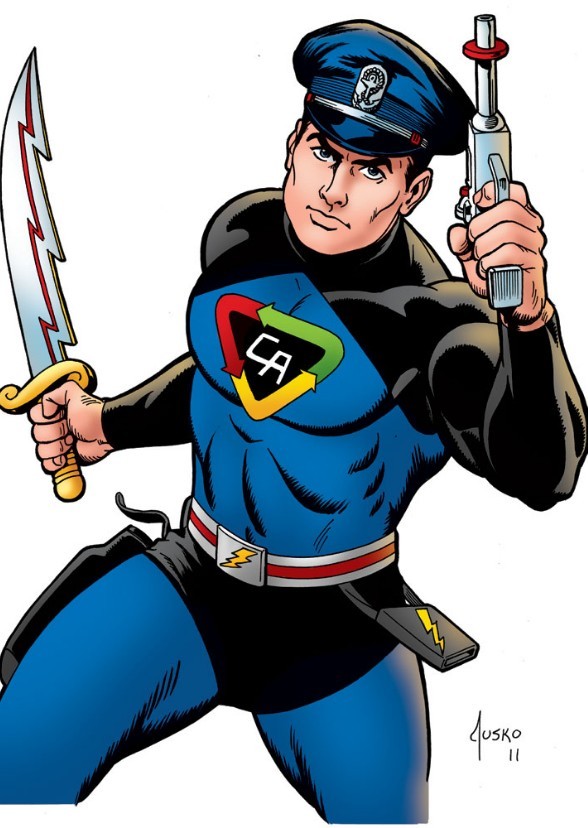
National Periodical (DC Comics) licensed the character from Ideal and published five issues of Captain Action in 1968,[2] illustrated at first by Wally Wood, then by Gil Kane. The scripts were by Jim Shooter and Gil Kane. The comic book story line had little to do with the toy concept, as some of the heroes licensed for use as costumes for the Captain Action doll were not owned and published by DC (Spider-Man and Captain America for example, were Marvel Comics characters), therefore the ability to change into different characters was entirely dropped. Instead, Captain Action came to possess magical coins, each of which provided him with a spectacular power from a Greek, Roman, or Norse mythological god (in a similar way to the original Captain Marvel). Captain Action was given a real name of his own, Clive Arno, and was identified as a widowed archaeologist and museum curator, and was described as having located "the coins of power" in a buried city. Action Boy's comic-book alter-ego was Carl Arno, son of Clive. Dr. Evil was given a back-story too, having been Captain Action's father-in-law, then going mad in a mishap. In the early 1980s, writer Mike Tiefenbacher wrote a story proposal that would have revived Captain Action and Action Boy as "Captain Triumph" and "Javelin" in the "Whatever Happened To...?" backup feature in DC Comics Presents. DC Comics rejected the idea due to copyright concerns regarding the characters.[3] Issue #5 of the comic, retitled 'Thrills and Adventure', was used as a prop in the 'It's the Arts' episode of Monty Python's Flying Circus.


