
Age: 67
male
Paul Michael Gross (born April 30, 1959) is a Canadian actor, producer, director, singer and writer born in Calgary, Alberta. He is known for his lead role as Constable Benton Fraser in the television series Due South as well as his 2008 war film Passchendaele, which he wrote, produced, directed, and starred in. During Due South's final season, Gross acted as executive producer in addition to starring, wrote the season three opener and finale, the two part series finale and wrote and sang for the show, some of which can be found on the two Due South soundtracks. He later found success with another Canadian TV series, Slings and Arrows. Gross studied acting at the University of Alberta in Edmonton, but he left during the third year of his study. He went back later to complete the half-credit needed to receive his fine arts degree. He appeared in several stage productions, such as Hamlet and Romeo and Juliet. Other productions in which he appeared include Observe the Sons of Ulster Marching Towards the Somme and As You Like It. After the play Successful Strangers, Gross starred in his first movie, Turning to Stone. Description above from the Wikipedia article Paul Gross, licensed under CC-BY-SA, full list of contributors on Wikipedia.
Paul Gross

Canadian commander
for Canadian commander in Canada: A Mysterious Story
Suggested by val71
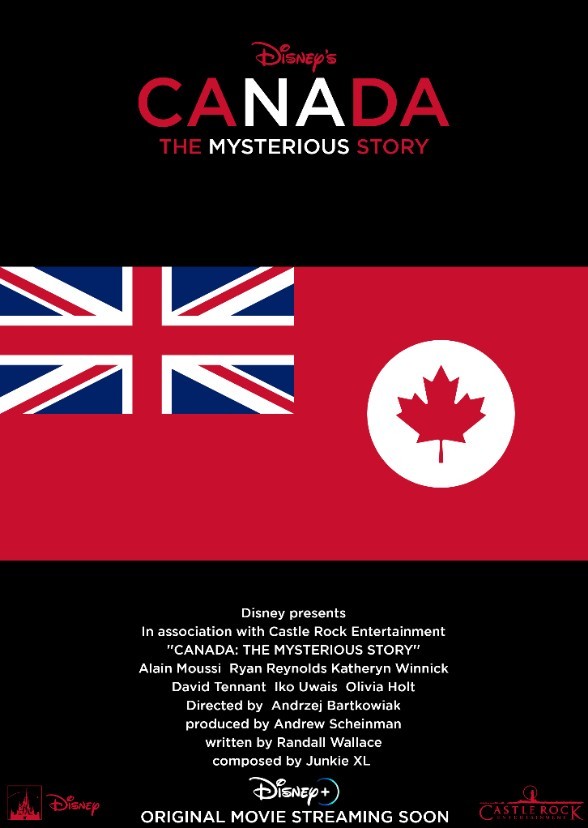
Prior to European colonization, the lands encompassing present-day Canada were inhabited for millennia by Indigenous peoples, with distinct trade networks, spiritual beliefs, and styles of social organization. Some of these older civilizations had long faded by the time of the first European arrivals and have been discovered through archeological investigations. From the late 15th century, French and British expeditions explored, colonized, and fought over various places within North America in what constitutes present-day Canada. The colony of New France was claimed in 1534 with permanent settlements beginning in 1608. France ceded nearly all its North American possessions to the United Kingdom in 1763 at the Treaty of Paris after the Seven Years' War. The now British Province of Quebec was divided into Upper and Lower Canada in 1791. The two provinces were united as the Province of Canada by the Act of Union 1840, which came into force in 1841. In 1867, the Province of Canada was joined with two other British colonies of New Brunswick and Nova Scotia through Confederation, forming a self-governing entity. "Canada" was adopted as the legal name of the new country and the word "Dominion" was conferred as the country's title. Over the next eighty-two years, Canada expanded by incorporating other parts of British North America, finishing with Newfoundland and Labrador in 1949.

