
Edmontosaurus (/ɛdˌmɒntəˈsɔːrəs/ ed-MON-tə-SAWR-əs) (meaning "lizard from Edmonton") is a genus of hadrosaurid (duck-billed) dinosaur. It contains two known species: Edmontosaurus regalis and Edmontosaurus annectens. Fossils of E. regalis have been found in rocks of western North America that date from the late Campanian stage of the Cretaceous Period 73 million years ago, while those of E. annectens were found in the same geographic region but in rocks dated to the end of the Maastrichtian stage of the Cretaceous, 66 million years ago. Edmontosaurus was one of the last non-avian dinosaurs, and lived alongside dinosaurs like Triceratops, Tyrannosaurus, Albertosaurus and Pachycephalosaurus shortly before the Cretaceous–Paleogene extinction event. Edmontosaurus included some of the largest hadrosaurid species, measuring up to 12 metres (39 ft) long and weighing around 4.0 metric tons (4.4 short tons). Evidence does exist in the form of two fossilized specimens housed at the Museum of the Rockies for an even greater maximum size of 15 m (49 ft) and weighing 9.07 metric tons (10.00 short tons) for Edmontosaurus annectens.[2] Several well-preserved specimens are known that include not only bones, but in some cases extensive skin impressions and possible gut contents. It is classified as a genus of saurolophine (or hadrosaurine) hadrosaurid, a member of the group of hadrosaurids which lacked large, hollow crests, instead having smaller solid crests or fleshy combs.[3] The first fossils named Edmontosaurus were discovered in southern Alberta (named after Edmonton, the capital city), in the Horseshoe Canyon Formation (formerly called the lower Edmonton Formation). The type species, E. regalis, was named by Lawrence Lambe in 1917, although several other species that are now classified in Edmontosaurus were named earlier. The best known of these is E. annectens, named by Othniel Charles Marsh in 1892; originally as a species of Claosaurus, known for many years as a species of Trachodon, and later as Anatosaurus annectens. Anatosaurus, Anatotitan and Ugrunaaluk are now generally regarded as synonyms of Edmontosaurus. Edmontosaurus was widely distributed across western North America. The distribution of Edmontosaurus fossils suggests that it preferred coasts and coastal plains. It was a herbivore that could move on both two legs and four. Because it is known from several bone beds, Edmontosaurus is thought to have lived in groups, and may have been migratory as well. The wealth of fossils has allowed researchers to study its paleobiology in detail, including its brain, how it may have fed, and its injuries and pathologies, such as evidence for tyrannosaur attacks on a few edmontosaur specimens.
Edmontosaurus

Dinosaurs late period Cretaceous North América
for Dinosaurs late period Cretaceous North América in Blue Sky studios Walking with Dinosaurs
Suggested by manassestobias
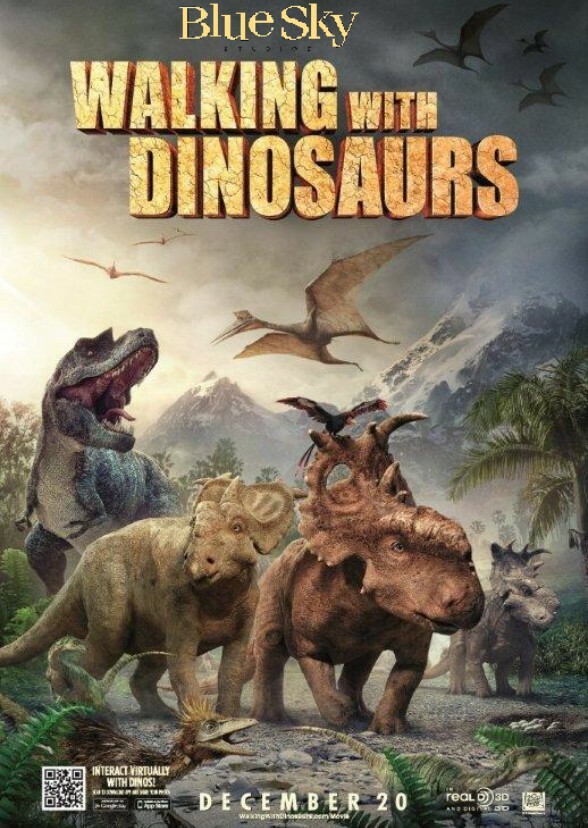
A paleontologist named Zack takes his nephew Ricky and his niece Jade on a fossil hunt in Alaska while their parents are on vacation in Europe. While alone, Ricky encounters an anthropomorphic raven named Alex, who then transforms into a prehistoric ancestor, Alexornis. Alex tells Ricky of a story set in the Late Cretaceous period, 70 million years ago, about his best friend Patchi. Patchi is the youngest and smallest in a litter of Pachyrhinosaurus hatchlings and is often bullied by his older brother Scowler. Their father Bulldust is the leader of the herd. Alex, who is Patchi's mentor, protector, and teacher, tries to help Patchi impress a female Pachyrhinosaurus named Juniper, but her herd migrates south without him. Patchi is also attacked by a troodontid, which attempts to eat him, but he is saved by his dad, resulting in Patchi having a hole in his frill as an injury which Alex claims that Patchi is "destined for greatness".




