
Died at 75
male
Robin McLaurin Williams (July 21, 1951 – August 11, 2014) was an American actor and comedian. Known for his improvisational skills and the wide variety of characters he created on the spur of the moment and portrayed on film, in dramas and comedies alike, he is regarded as one of the greatest comedians of all time. He received numerous accolades including an Academy Award, two Primetime Emmy Awards, six Golden Globe Awards, two Screen Actors Guild Awards, and five Grammy Awards. Williams began performing stand-up comedy in San Francisco and Los Angeles during the mid-1970s, and released several comedy albums including Reality ... What a Concept in 1980. He rose to fame playing the alien Mork in the ABC sitcom Mork & Mindy (1978–1982). He received his first leading film role in Popeye (1980). Williams went on to win the Academy Award for Best Supporting Actor for Good Will Hunting (1997). His other Oscar-nominated roles were for Good Morning, Vietnam (1987), Dead Poets Society (1989), and The Fisher King (1991). Williams starred in the critically acclaimed dramas The World According to Garp (1982), Moscow on the Hudson (1984), Dead Poets Society (1989), Awakenings (1990), Patch Adams (1998), Insomnia (2002), One Hour Photo (2002), and World's Greatest Dad (2009). He also starred in family films such as Hook (1991), Mrs. Doubtfire (1993), Jumanji (1995), Jack (1996), Flubber (1997), RV (2006), and the Night at the Museum trilogy (2006–2014). He lent his voice to the animated films Aladdin (1992), Robots (2005), Happy Feet (2006), and its 2011 sequel. Williams was found dead at his home in Paradise Cay, California, in August 2014, at the age of 63. At the time of his suicide, he had been diagnosed with Parkinson's disease. According to his widow, Williams had experienced depression, anxiety, and increasing paranoia. His autopsy found "diffuse Lewy body disease" and Lewy body dementia professionals said his symptoms were consistent with dementia with Lewy bodies.
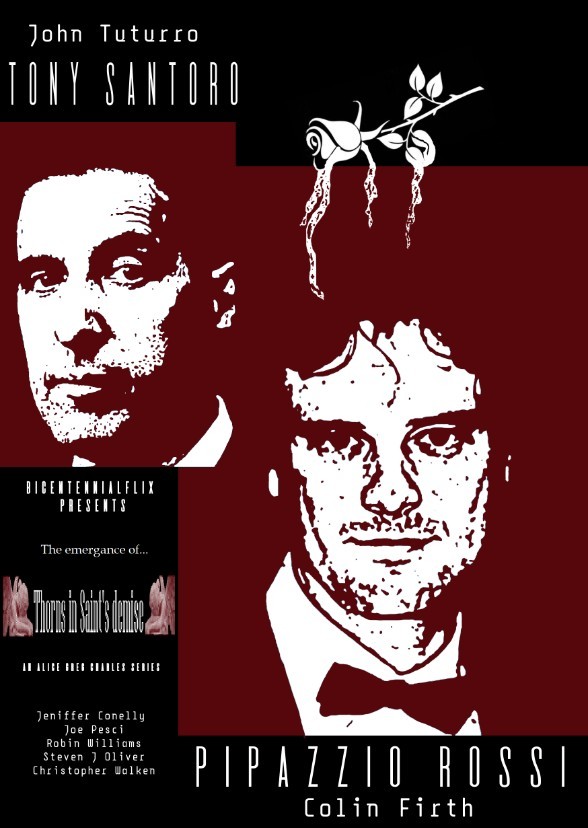
Fictional 90s mafia queer movie set on the 60s The plot follows Pipazzio, a young trans adult who has just won the top prize in the grand cooking contest with his sweetheart, Marion. The couple returns to Palermo, Italy, the protagonist's hometown to build a life for themselves but P's plans are interrupted thanks to his own reckless spendthrift soul and the proposal of Marion to throw a big party that ends up using up much of her wealth. This combined with unnecessary purchases by his parents end up burying the family in debt. desperate to reclaim stability, he is lured into a mafia that masquerades as a legitimate racing agency. Here, he confronts a world rife with toxic masculinity and oppressive hierarchies, mirroring the extremist fascism of the era, in wich freedom is only for male hegemony. It has a style unseen in the most known man centered crime movies in this case Pipazzio always had this risk clear, but because of being out of tune with the attitudes of the average mobster, he ends up being seen as an enemy to the rest and a constant threat to his most loved ones, wich choose symbolic affairs over a conceited glorified life, making pipazzio feel his expression as a man only encapsulated him more . In terms of direction this movie doesn't invent nothing new, but uses the elements stablished by previous films in the most complete and sublime way possible creating a satyrical and predictable tension and mystery.


