Age: 75
male
Kurt Vogel Russell (born March 17, 1951) is an American actor. At 12, he began acting in the Western TV series The Travels of Jaimie McPheeters (1963–1964). In the late 1960s, he signed a ten-year contract with The Walt Disney Company, where he starred as Dexter Riley in films such as The Computer Wore Tennis Shoes (1969), Now You See Him, Now You Don't (1972), and The Strongest Man in the World (1975). For his portrayal of rock and roll superstar Elvis Presley in Elvis (1979), he was nominated for the Primetime Emmy Award for Outstanding Lead Actor in a Limited or Anthology Series or Movie. According to Robert Osborne of Turner Classic Movies, Russell became the studio's top star of the 1970s. Russell was nominated for a Golden Globe Award for Best Supporting Actor – Motion Picture for his performance in Mike Nichols's Silkwood (1983). Also in the 1980s, he starred in several films directed by John Carpenter in which he played anti-hero roles: the futuristic action film Escape from New York (1981), its sequel Escape from L.A.(1996), the horror film The Thing (1982), and the kung-fu comedy action film Big Trouble in Little China (1986). Russell starred in various other films, including Used Cars (1980), The Best of Times (1986), Overboard (1987), Tango & Cash (1989), Backdraft (1991), Tombstone (1993), Stargate (1994), Executive Decision (1996), Breakdown (1997), Vanilla Sky (2001), Miracle (2004), Sky High (2005), Death Proof (2007), The Hateful Eight (2015) and Once Upon a Time in Hollywood (2019). He also appeared in the Fast & Furious franchise as Mr. Nobody (starring in Furious 7 (2015), The Fate of the Furious (2017), and F9 (2021)). He also portrayed Ego in the Marvel Cinematic Universe (MCU) instalments Guardians of the Galaxy Vol. 2 (2017) and What If...?(2021), and played the role of Santa Claus in The Christmas Chronicles (2018) and The Christmas Chronicles 2 (2020).
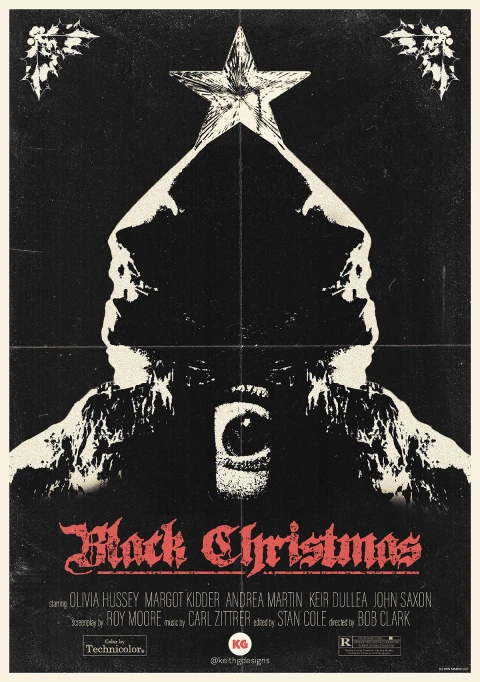
Black Christmas follows a group of sorority sisters during the Christmas holiday break as they prepare to leave their house for winter vacation. When several members decide to stay behind, they begin receiving mysterious and increasingly disturbing phone calls from an unknown caller lurking somewhere within the house itself. As the women try to determine the source of the calls and escape their predicament, they discover that a dangerous intruder has infiltrated their home. Trapped together during the festive season, the sorority sisters must band together to survive the night and unmask the killer in their midst. The film masterfully builds tension through minimal dialogue and unseen threats, creating an atmosphere of claustrophobic dread. With its innovative use of point-of-view camera work and the killer's perspective, Black Christmas pioneered many techniques that would become staples of the slasher genre. The film transforms the warmth and joy of Christmas into a backdrop for psychological horror, as the women face both external danger and their own mounting paranoia.