
Age: 71
male
Deepak Chakraborty (born 2 November 1955), better known in film career as Chiranjeet Chakraborty, is an Indian actor and director in the Bengali film industry located in Kolkata, West Bengal. He is also a politician and a Member of the Legislative Assembly of Government of West Bengal. He was born on 2 November 1955 at Kolkata. He has got the BFJA Award for his film Abaidha in 2002. The film was directed by Gul Bahar Singh. Chiranjeet completed his Higher Secondary from Mitra Institution (Main). He studied B.E in Architecture at Jadavpur University, but did not appear for his final examination. He has worked for Desh magazine and as a newsreader on TV. He is also a famous stage artist. He is married and has a daughter. He made his debut with the 1981 film Sonay Sohaga. But it did not make his career. He gained popularity after starring in Anjan Choudhury's 1984 film Shotru. His first solo hit was the 1985 film Antarale. After that, he gave a series of hits like Pratikar, Paapi, Paap Punyo, Beder Meye Joshna, Amarkantak, Jibon Joubon, Bhoy, Shaitan, Pennam Kolkata, Chotushkone, etc. He got a turning point after starring in Rituparno Ghosh's 2000 film Bariwali. He is considered to be one of the most successful actors of Bengali Cinema.
Chiranjeet Chakraborty

Murarimohon
for Murarimohon in Bhashanbari
Suggested by abhishekchowdhury
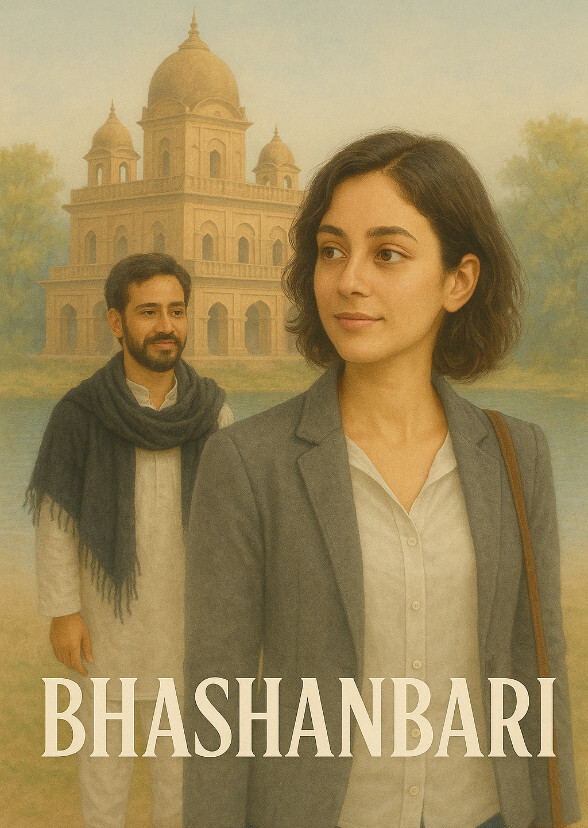
Two centuries ago, an eccentric astronomer built a mansion atop an old village pond where idols were once immersed after Durga Puja. The pond, once called Bhashanpukur, gave the house its name — Bhashanbari, the House of Immersion. Locals whisper that the spirit of the pond still resides within the mansion — a house that doesn’t just shelter people but silently draws them toward their end. It is said that Bhashanbari can "carry you away" — just like the idols drifting toward dissolution — not into death, but into something unexplainable. Now, a terminally ill woman named Haimanti arrives at the mansion without knowing why she's been drawn there. The caretaker, Ashwini, tends to her with eerie familiarity, constantly gazing into mirrors and watching her with a quiet reverence. He never explains why. Legends echo through the walls — that people return to Bhashanbari in cycles, like Halley’s Comet, bound by some cosmic rhythm. As the boundary between time and memory blurs, Haimanti begins to sense that endings are not always final — and that someone, somewhere, might still be waiting for her rebirth.

