Age: 52
male
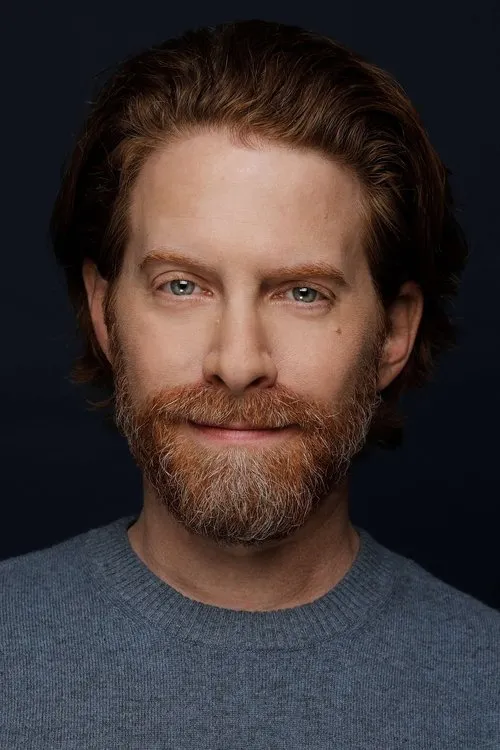
Seth Benjamin Green (né Gesshel-Green; born February 8, 1974) is an American actor. His film debut came with a role in the comedy-drama film The Hotel New Hampshire (1984), and he went on to have supporting roles in comedy films throughout the 1980s, including Radio Days (1987) and Big Business (1988). During the 1990s and 2000s, Green began starring in comedy films such as Idle Hands (1999), Rat Race (2001), Without a Paddle (2004), and Be Cool (2005). He also became known for his portrayal of Scott Evil, Dr. Evil's son, in the Austin Powers film series (1997–2002). Green has also taken serious roles in films, including The Attic Expeditions (2001) and Party Monster (2003). He has provided the voice for Howard the Duck in a number of Marvel Cinematic Universe films and series, including Guardians of the Galaxy (2014), Guardians of the Galaxy Vol. 2 (2017), and Guardians of the Galaxy Vol. 3 (2023) and in the animated series What If...? (2021–present). In 2019, he wrote, directed, and starred in the comedy-drama film Changeland. Green's first lead role on television was on the ABC sitcom Good & Evil in 1991, for which he won a Young Artist Award. Green later gained attention for his supporting roles as Oz, a teenage guitarist and the boyfriend of Willow Rosenberg, on the fantasy television series Buffy the Vampire Slayer (1997–2000), and as the voice of Chris Griffin on the Fox adult animated comedy series Family Guy (1999–present). He also voiced Leonardo in the Nickelodeon animated series Teenage Mutant Ninja Turtles (2014–2017) and the Joker in the Mass Effect video game series (2007–2012). Green created, directed, wrote, and produced the adult animated comedy series Robot Chicken and its spinoffs (2005–present), which have earned him three Primetime Emmy Awards and five Annie Awards. Description above from the Wikipedia article Seth Green, licensed under CC-BY-SA, full list of contributors on Wikipedia.

The Strauss–Howe generational theory, devised by William Strauss and Neil Howe, describes a theorized recurring generation cycle in American history and Western history. According to the theory, historical events are associated with recurring generational personas (archetypes). Each generational persona unleashes a new era (called a turning) lasting around 20–25 years, in which a new social, political, and economic climate (mood) exists. An average life is 80 years and consists of four periods of ~20–22 years Childhood → Young adult → Midlife → Elderhood A generation is an aggregate of people born every ~20–22 years Baby Boomers → Gen X → Millennials → Homelanders Each generation experiences "four turnings" every ~80–90 years High → Awakening → Unraveling → Crisis A generation is considered "dominant" or "recessive" according to the turning experienced as young adults. But as a youth generation comes of age and defines its collective persona an opposing generational archetype is in its midlife peak of power. Dominant: independent behavior + attitudes in defining an era Recessive: dependent role in defining an era https://en.wikipedia.org/wiki/Strauss%E2%80%93Howe_generational_theory