Age: 45
male
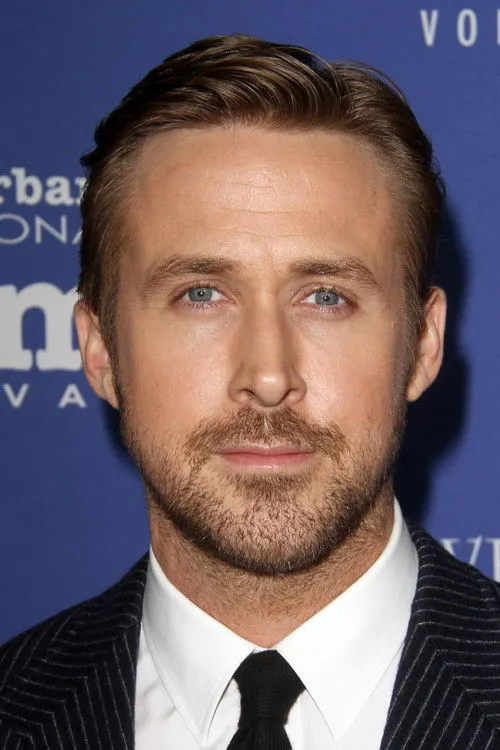
Ryan Thomas Gosling (born November 12, 1980) is a Canadian actor. Prominent in independent film, he has also worked in blockbuster films of varying genres, and has accrued a worldwide box office gross of over 1.9 billion USD. He has received various accolades, including a Golden Globe Award, and nominations for two Academy Awards and a BAFTA Award. Born and raised in Canada, he rose to prominence at age 13 for being a child star on the Disney Channel's The Mickey Mouse Club (1993–1995), and went on to appear in other family entertainment programs, including Are You Afraid of the Dark? (1995) and Goosebumps (1996). His first film role was as a Jewish neo-Nazi in The Believer (2001), and he went on to star in several independent films, including Murder by Numbers (2002), The Slaughter Rule (2002), and The United States of Leland (2003). Gosling gained wider recognition and stardom for the 2004 romance film The Notebook. This was followed by starring roles in a string of critically acclaimed independent dramas including Half Nelson (2006), for which he was nominated for the Academy Award for Best Actor. Gosling co-starred in three mainstream films in 2011, the romantic comedy Crazy, Stupid, Love and the action drama Drive, all of which were critical and commercial successes. He then starred in the acclaimed financial satire The Big Short (2015) and the romantic musical La La Land (2016), the latter of which won him the Golden Globe Award for Best Actor and a second Academy Award nomination for Best Actor. Further acclaim followed with the science fiction thriller Blade Runner 2049 (2017) and the biopic First Man (2018). In addition to acting, he made his directorial debut in 2014's Lost River.
Ryan Gosling

Generation X
for Generation X in Best by Generation
Suggested by gustavosoaresdemorales

The Strauss–Howe generational theory, devised by William Strauss and Neil Howe, describes a theorized recurring generation cycle in American history and Western history. According to the theory, historical events are associated with recurring generational personas (archetypes). Each generational persona unleashes a new era (called a turning) lasting around 20–25 years, in which a new social, political, and economic climate (mood) exists. An average life is 80 years and consists of four periods of ~20–22 years Childhood → Young adult → Midlife → Elderhood A generation is an aggregate of people born every ~20–22 years Baby Boomers → Gen X → Millennials → Homelanders Each generation experiences "four turnings" every ~80–90 years High → Awakening → Unraveling → Crisis A generation is considered "dominant" or "recessive" according to the turning experienced as young adults. But as a youth generation comes of age and defines its collective persona an opposing generational archetype is in its midlife peak of power. Dominant: independent behavior + attitudes in defining an era Recessive: dependent role in defining an era https://en.wikipedia.org/wiki/Strauss%E2%80%93Howe_generational_theory