Died at 223
male
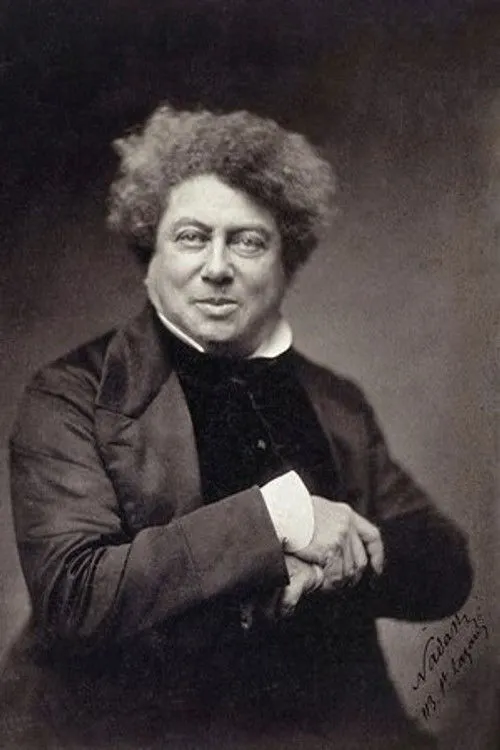
Alexandre Dumas (born Alexandre Dumas Davy de la Pailleterie, 24 July 1802 – 5 December 1870), also known as Alexandre Dumas père, was a French novelist and playwright. His works have been translated into many languages, and he is one of the most widely read French authors. His historical adventure novels were initially published as serials, including The Count of Monte Cristo, The Three Musketeers, Twenty Years After and The Vicomte of Bragelonne: Ten Years Later. Since the early 20th century, his novels have been adapted into nearly 200 films. Prolific in several genres, Dumas began his career by writing successfully produced plays. He wrote numerous magazine articles and travel books; his published works totalled 100,000 pages. In the 1840s, Dumas founded the Théâtre Historique in Paris. His father, General Thomas-Alexandre Dumas Davy de la Pailleterie, was born in the French colony of Saint-Domingue (present-day Haiti) to Alexandre Antoine Davy de la Pailleterie, a French nobleman, and Marie-Cessette Dumas, an African slave. At age 14, his father took Thomas-Alexandre to France, where he was educated in a military academy and entered the military for what became an illustrious career. Alexandre acquired work with Louis-Philippe, Duke of Orléans, then as a writer, a career that led to his early success. Decades later, after the election of Louis-Napoléon Bonaparte in 1851, Dumas fell from favour and left France for Belgium, where he stayed for several years. He moved to Russia for a few years and then to Italy. In 1861, he founded and published the newspaper L'Indépendent, which supported Italian unification. He returned to Paris in 1864. English playwright Watts Phillips, who knew Dumas in his later life, described him as "the most generous, large-hearted being in the world. He also was the most delightfully amusing and egotistical creature on the face of the earth. His tongue was like a windmill – once set in motion, you would never know when he would stop, especially if the theme was himself." Description above from the Wikipedia article Alexandre Dumas, licensed under CC-BY-SA, full list of contributors on Wikipedia.
Alexandre Dumas

Transcendental Generation
for Transcendental Generation in Best by Generation
Suggested by gustavosoaresdemorales

The Strauss–Howe generational theory, devised by William Strauss and Neil Howe, describes a theorized recurring generation cycle in American history and Western history. According to the theory, historical events are associated with recurring generational personas (archetypes). Each generational persona unleashes a new era (called a turning) lasting around 20–25 years, in which a new social, political, and economic climate (mood) exists. An average life is 80 years and consists of four periods of ~20–22 years Childhood → Young adult → Midlife → Elderhood A generation is an aggregate of people born every ~20–22 years Baby Boomers → Gen X → Millennials → Homelanders Each generation experiences "four turnings" every ~80–90 years High → Awakening → Unraveling → Crisis A generation is considered "dominant" or "recessive" according to the turning experienced as young adults. But as a youth generation comes of age and defines its collective persona an opposing generational archetype is in its midlife peak of power. Dominant: independent behavior + attitudes in defining an era Recessive: dependent role in defining an era https://en.wikipedia.org/wiki/Strauss%E2%80%93Howe_generational_theory