Age: 92
female
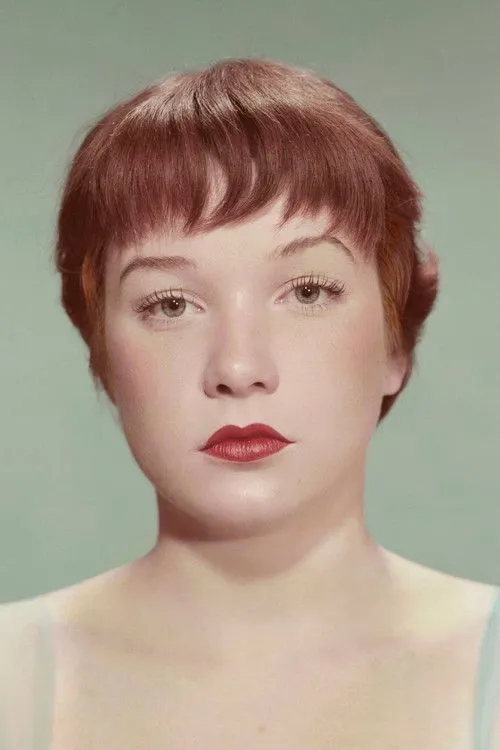
Shirley MacLaine (born Shirley MacLean Beaty; April 24, 1934) is an American actress, singer, author, activist, and former dancer. Known for her portrayals of quirky, headstrong, and eccentric women, MacLaine has received numerous accolades throughout her career spanning seven decades, including an Academy Award, a Primetime Emmy Award, two British Academy Film Awards, and six Golden Globe Awards. Born in Richmond, Virginia, MacLaine made her acting debut as a teenager with minor roles in the Broadway musicals Oklahoma! and The Pajama Game. Following minor appearances as an understudy in various other productions, MacLaine made her film debut with Alfred Hitchcock's black comedy The Trouble with Harry (1955), winning the Golden Globe Award for New Star of the Year – Actress. She rose to prominence with starring roles in Around the World in 80 Days (1956), Some Came Running (1958), Ask Any Girl (1959), The Apartment (1960), The Children's Hour (1961), Two for the Seesaw (1962), Irma la Douce (1963), and Sweet Charity (1969). A six time Academy Award nominee, MacLaine won the Academy Award for Best Actress for the comedy-drama Terms of Endearment (1983). Her other prominent films include The Turning Point (1977), Being There (1979), Madame Sousatzka (1988), Steel Magnolias (1989), Postcards from the Edge (1990), The Evening Star (1996), Bewitched (2005), In Her Shoes (2005), Valentine's Day (2010), and The Little Mermaid (2018). MacLaine has been the recipient of many honorary awards. She was awarded the AFI Life Achievement Award in 2012, Gala Tribute from the Film Society of Lincoln Center in 1995, and Kennedy Center Honor in 2013 for her contribution to American culture, through performing arts. In 1998, she was awarded the Golden Globe Cecil B. DeMille Award. Apart from acting, MacLaine has written numerous books regarding the subjects of metaphysics, spirituality, and reincarnation, as well as a best-selling memoir, Out on a Limb (1983).
Shirley MacLaine

Silent Generation
for Silent Generation in Best by Generation
Suggested by gustavosoaresdemorales

The Strauss–Howe generational theory, devised by William Strauss and Neil Howe, describes a theorized recurring generation cycle in American history and Western history. According to the theory, historical events are associated with recurring generational personas (archetypes). Each generational persona unleashes a new era (called a turning) lasting around 20–25 years, in which a new social, political, and economic climate (mood) exists. An average life is 80 years and consists of four periods of ~20–22 years Childhood → Young adult → Midlife → Elderhood A generation is an aggregate of people born every ~20–22 years Baby Boomers → Gen X → Millennials → Homelanders Each generation experiences "four turnings" every ~80–90 years High → Awakening → Unraveling → Crisis A generation is considered "dominant" or "recessive" according to the turning experienced as young adults. But as a youth generation comes of age and defines its collective persona an opposing generational archetype is in its midlife peak of power. Dominant: independent behavior + attitudes in defining an era Recessive: dependent role in defining an era https://en.wikipedia.org/wiki/Strauss%E2%80%93Howe_generational_theory