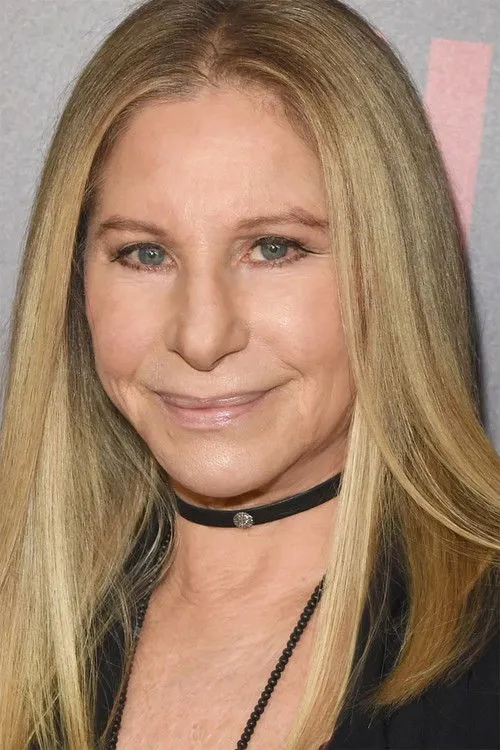
Age: 84
female
Barbara Joan 'Barbra' Streisand (born April 24, 1942) is an American singer, actress and director. With a career spanning over six decades, she has achieved success in multiple fields of entertainment, and is among the few performers awarded an Emmy, Grammy, Oscar, and Tony (EGOT). With sales exceeding 150 million records worldwide, she is one of the best-selling recording artists of all time. According to the Recording Industry Association of America (RIAA), she is the second highest-certified female artist in the United States, with 68.5 million certified album units. Billboard ranked her as the greatest female artist on the Billboard 200 chart and the top Adult Contemporary female artist of all time. Her accolades include two Academy Awards, 10 Grammy Awards including the Grammy Lifetime Achievement Award and the Grammy Legend Award, five Emmy Awards, four Peabody Awards, the Presidential Medal of Freedom, and nine Golden Globes. She began her career by performing in nightclubs and Broadway theaters in the early 1960s. Following her guest appearances on various television shows, she signed to Columbia Records, insisting that she retain full artistic control, and accepting lower pay in exchange, an arrangement that continued throughout her career, and released her debut The Barbra Streisand Album (1963), which won the Grammy Award for Album of the Year. Throughout her recording career, she has topped the US Billboard 200 chart with 11 albums—a record for a woman—including People (1964), The Way We Were (1974), Guilty (1980), and The Broadway Album (1985). She also achieved five number-one singles on the US Billboard Hot 100—"The Way We Were", "Evergreen", "You Don't Bring Me Flowers", "No More Tears (Enough Is Enough)", and "Woman in Love". Following her established recording success in the 1960s, she ventured into film by the end of that decade. She starred in the critically acclaimed Funny Girl (1968), for which she won the Academy Award for Best Actress. Additional fame followed with films including the extravagant musical Hello, Dolly! (1969), the screwball comedy What's Up, Doc? (1972), and the romantic drama The Way We Were (1973). She won a second Academy Award for writing the love theme from A Star Is Born (1976), the first woman to be honored as a composer. With the release of Yentl (1983), she became the first woman to write, produce, direct, and star in a major studio film. The film won an Oscar for Best Score and a Golden Globe for Best Motion Picture Musical. She also received the Golden Globe Award for Best Director, becoming the first (and for 37 years, the only) woman to win that award. She later directed The Prince of Tides (1991) and The Mirror Has Two Faces (1996).
Barbra Streisand

Silent Generation
for Silent Generation in Best by Generation
Suggested by gustavosoaresdemorales

The Strauss–Howe generational theory, devised by William Strauss and Neil Howe, describes a theorized recurring generation cycle in American history and Western history. According to the theory, historical events are associated with recurring generational personas (archetypes). Each generational persona unleashes a new era (called a turning) lasting around 20–25 years, in which a new social, political, and economic climate (mood) exists. An average life is 80 years and consists of four periods of ~20–22 years Childhood → Young adult → Midlife → Elderhood A generation is an aggregate of people born every ~20–22 years Baby Boomers → Gen X → Millennials → Homelanders Each generation experiences "four turnings" every ~80–90 years High → Awakening → Unraveling → Crisis A generation is considered "dominant" or "recessive" according to the turning experienced as young adults. But as a youth generation comes of age and defines its collective persona an opposing generational archetype is in its midlife peak of power. Dominant: independent behavior + attitudes in defining an era Recessive: dependent role in defining an era https://en.wikipedia.org/wiki/Strauss%E2%80%93Howe_generational_theory