Died at 144
male
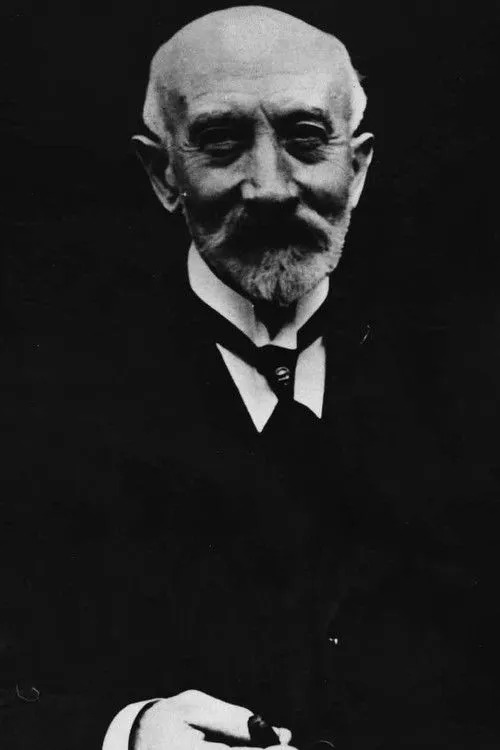
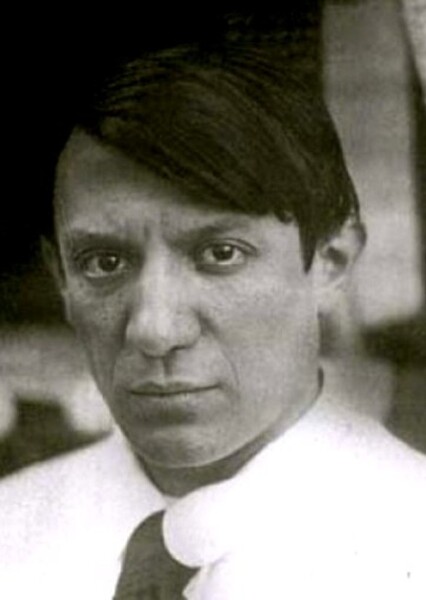
Pablo Ruiz Picasso (25 October 1881 – 8 April 1973) was a Spanish painter, sculptor, printmaker, ceramicist and theatre designer who spent most of his adult life in France. One of the most influential artists of the 20th century, he is known for co-founding the Cubist movement, the invention of constructed sculpture, the co-invention of collage, and for the wide variety of styles that he helped develop and explore. Among his most famous works are the proto-Cubist Les Demoiselles d'Avignon (1907), and the anti-war painting Guernica (1937), a dramatic portrayal of the bombing of Guernica by German and Italian air forces during the Spanish Civil War. Picasso demonstrated extraordinary artistic talent in his early years, painting in a naturalistic manner through his childhood and adolescence. During the first decade of the 20th century, his style changed as he experimented with different theories, techniques, and ideas. After 1906, the Fauvist work of the older artist Henri Matisse motivated Picasso to explore more radical styles, beginning a fruitful rivalry between the two artists, who subsequently were often paired by critics as the leaders of modern art. Picasso's work is often categorized into periods. While the names of many of his later periods are debated, the most commonly accepted periods in his work are the Blue Period (1901–1904), the Rose Period (1904–1906), the African-influenced Period (1907–1909), Analytic Cubism (1909–1912), and Synthetic Cubism (1912–1919), also referred to as the Crystal period. Much of Picasso's work of the late 1910s and early 1920s is in a neoclassical style, and his work in the mid-1920s often has characteristics of Surrealism. His later work often combines elements of his earlier styles. Exceptionally prolific throughout the course of his long life, Picasso achieved universal renown and immense fortune for his revolutionary artistic accomplishments, and became one of the best-known figures in 20th-century art. Picasso was born at 23:15 on 25 October 1881, in the city of Málaga, Andalusia, in southern Spain. He was the first child of Don José Ruiz y Blasco (1838–1913) and María Picasso y López. Picasso's family was of middle-class background. His father was a painter who specialized in naturalistic depictions of birds and other game. For most of his life, Ruiz was a professor of art at the School of Crafts and a curator of a local museum. Ruiz's ancestors were minor aristocrats. Picasso's birth certificate and the record of his baptism include very long names, combining those of various saints and relatives. Ruiz y Picasso were his paternal and maternal surnames, respectively, per Spanish custom. The surname "Picasso" comes from Liguria, a coastal region of north-western Italy. Pablo's maternal great-grandfather, Tommaso Picasso, moved to Spain around 1807. ... Source: Article "Pablo Picasso" from Wikipedia in English, licensed under CC-BY-SA 3.0.
Pablo Picasso

Missionary Generation
for Missionary Generation in Best by Generation
Suggested by gustavosoaresdemorales

The Strauss–Howe generational theory, devised by William Strauss and Neil Howe, describes a theorized recurring generation cycle in American history and Western history. According to the theory, historical events are associated with recurring generational personas (archetypes). Each generational persona unleashes a new era (called a turning) lasting around 20–25 years, in which a new social, political, and economic climate (mood) exists. An average life is 80 years and consists of four periods of ~20–22 years Childhood → Young adult → Midlife → Elderhood A generation is an aggregate of people born every ~20–22 years Baby Boomers → Gen X → Millennials → Homelanders Each generation experiences "four turnings" every ~80–90 years High → Awakening → Unraveling → Crisis A generation is considered "dominant" or "recessive" according to the turning experienced as young adults. But as a youth generation comes of age and defines its collective persona an opposing generational archetype is in its midlife peak of power. Dominant: independent behavior + attitudes in defining an era Recessive: dependent role in defining an era https://en.wikipedia.org/wiki/Strauss%E2%80%93Howe_generational_theory