Died at 113
male
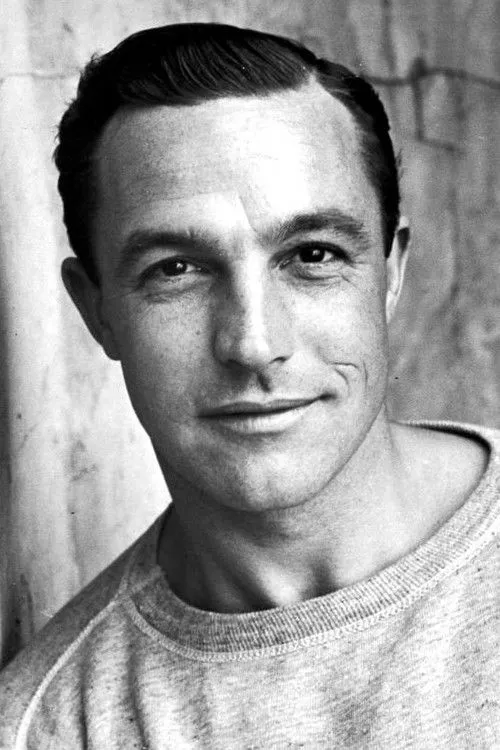
Eugene Curran Kelly (August 23, 1912 – February 2, 1996) was an American actor, dancer, singer, filmmaker, and choreographer. He was known for his energetic and athletic dancing style, his good looks, and the likable characters that he played on screen. He starred in, choreographed, or co-directed some of the most well-regarded musical films of the 1940s and 1950s, until they fell out of fashion in the late 1950s. Kelly is best known today for his performances in films such as Cover Girl (1944), Anchors Aweigh (1945), for which he was nominated for an Academy Award for Best Actor, On the Town (1949), which was his directorial debut, An American in Paris (1951), Singin' in the Rain (1952), Brigadoon (1954), and It's Always Fair Weather (1955). Kelly made his film debut with Judy Garland in For Me and My Gal (1942), and followed by Du Barry Was a Lady (1943), Thousands Cheer (1943), The Pirate (1948), Summer Stock (1950), and Les Girls (1957) among others. After musicals he starred in two films outside the musical genre: Inherit the Wind (1960) and What a Way to Go! (1964). In 1967, he appeared in French director Jacques Demy's musical comedy The Young Girls of Rochefort opposite Catherine Deneuve. Kelly solo directed the comedy A Guide for the Married Man (1967) starring Walter Matthau, and later the extravagant musical Hello, Dolly! (1969) starring Barbra Streisand, recognized with an Oscar nomination for Best Picture. Kelly co-hosted and appeared in Ziegfeld Follies (1946), That's Entertainment! (1974), That's Entertainment, Part II (1976), That's Dancing! (1985), and That's Entertainment, Part III (1994). His many innovations transformed the Hollywood musical, and he is credited with almost single-handedly making the ballet form commercially acceptable to film audiences. Kelly received an Academy Honorary Award in 1952 for his career achievements; the same year, An American in Paris won six Academy Awards, including Best Picture. He later received lifetime achievement awards in the Kennedy Center Honors (1982) and from the Screen Actors Guild and American Film Institute. In 1999, the American Film Institute also ranked him as the 15th greatest male screen legend of Classic Hollywood Cinema.
Gene Kelly

Greatest Generation (GI Generation)
for Greatest Generation (GI Generation) in Best by Generation
Suggested by gustavosoaresdemorales

The Strauss–Howe generational theory, devised by William Strauss and Neil Howe, describes a theorized recurring generation cycle in American history and Western history. According to the theory, historical events are associated with recurring generational personas (archetypes). Each generational persona unleashes a new era (called a turning) lasting around 20–25 years, in which a new social, political, and economic climate (mood) exists. An average life is 80 years and consists of four periods of ~20–22 years Childhood → Young adult → Midlife → Elderhood A generation is an aggregate of people born every ~20–22 years Baby Boomers → Gen X → Millennials → Homelanders Each generation experiences "four turnings" every ~80–90 years High → Awakening → Unraveling → Crisis A generation is considered "dominant" or "recessive" according to the turning experienced as young adults. But as a youth generation comes of age and defines its collective persona an opposing generational archetype is in its midlife peak of power. Dominant: independent behavior + attitudes in defining an era Recessive: dependent role in defining an era https://en.wikipedia.org/wiki/Strauss%E2%80%93Howe_generational_theory