Age: 71
male
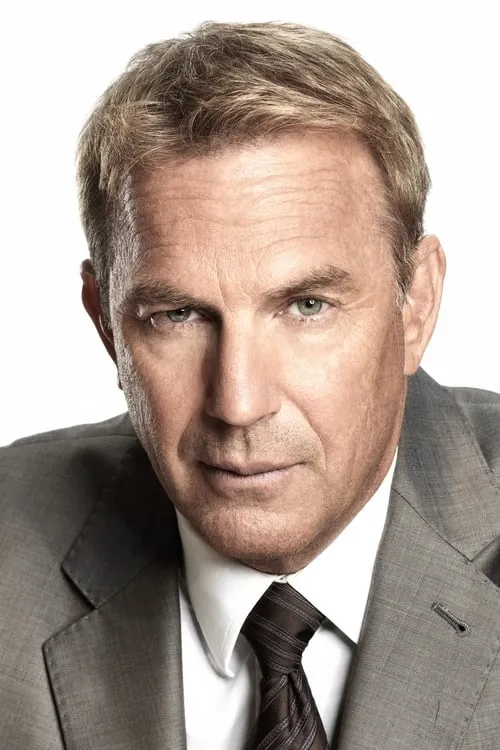
Kevin Michael Costner (born January 18, 1955) is an American actor and filmmaker. He has received two Academy Awards, two Golden Globe Awards, a Primetime Emmy Award, and two Screen Actors Guild Awards. Costner starred in Fandango, American Flyers, Silverado and many other films. He rose to prominence with his starring roles in The Untouchables and No Way Out (1987). He then starred in Bull Durham (1988), Field of Dreams (1989), Dances with Wolves (1990), for which he won two Academy Awards, JFK (1991), Robin Hood: Prince of Thieves (1991), The Bodyguard (1992), A Perfect World (1993), and Wyatt Earp (1994). In 1995, Costner starred in and co-produced Waterworld. His second directorial feature, The Postman, was released in 1997. He later starred in Message in a Bottle (1999), For Love of the Game (1999), Thirteen Days (2000), 3000 Miles to Graceland (2001), Dragonfly (2002), Rumor Has It (2005), The Guardian (2006), Mr. Brooks (2007), 3 Days to Kill (2014), McFarland, USA (2015), Draft Day (2014), and Criminal (2016). He has also played supporting parts in such films as The Upside of Anger (2005), Man of Steel (2013), Hidden Figures (2016), Molly's Game (2017), and Let Him Go (2020). On television, Costner portrayed Devil Anse Hatfield in the miniseries Hatfields & McCoys (2012), winning the Primetime Emmy Award for Outstanding Lead Actor in a Limited Series or Movie. Since 2018, he has starred as John Dutton on the drama series Yellowstone for which he received a Screen Actors Guild Award nomination.
Kevin Costner

Baby Boomers
for Baby Boomers in Best by Generation
Suggested by gustavosoaresdemorales

The Strauss–Howe generational theory, devised by William Strauss and Neil Howe, describes a theorized recurring generation cycle in American history and Western history. According to the theory, historical events are associated with recurring generational personas (archetypes). Each generational persona unleashes a new era (called a turning) lasting around 20–25 years, in which a new social, political, and economic climate (mood) exists. An average life is 80 years and consists of four periods of ~20–22 years Childhood → Young adult → Midlife → Elderhood A generation is an aggregate of people born every ~20–22 years Baby Boomers → Gen X → Millennials → Homelanders Each generation experiences "four turnings" every ~80–90 years High → Awakening → Unraveling → Crisis A generation is considered "dominant" or "recessive" according to the turning experienced as young adults. But as a youth generation comes of age and defines its collective persona an opposing generational archetype is in its midlife peak of power. Dominant: independent behavior + attitudes in defining an era Recessive: dependent role in defining an era https://en.wikipedia.org/wiki/Strauss%E2%80%93Howe_generational_theory