Age: 66
male
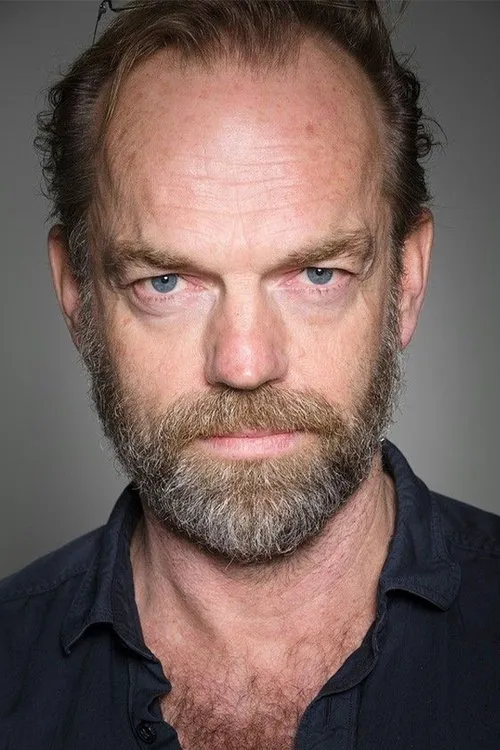
Hugo Wallace Weaving AO (born 4 April 1960) is an English actor. Born in Colonial Nigeria to English parents, he has resided in Australia for the entirety of his career. He is the recipient of six Australian Academy of Cinema and Television Arts Awards (AACTA) and has also been recognised as an Honorary Officer of the Order of Australia. Weaving landed his first major role as English cricket captain Douglas Jardine on the Australian television series Bodyline (1984). Continuing to act in Australia, he rose to prominence with his appearances in the films Proof (1991) and The Adventures of Priscilla, Queen of the Desert (1994), winning his first AACTA Award for Best Actor in a Leading Role with the former. By the turn of the millennium, Weaving achieved international recognition through appearances in mainstream American productions. His most notable film roles include Agent Smith in the first three The Matrix films (1999–2003), Elrond in The Lord of the Rings (2001–2003) and The Hobbit (2012–2014) trilogies, the title character in V for Vendetta (2005), and Johann Schmidt / Red Skull in the Marvel Cinematic Universe (MCU) film Captain America: The First Avenger (2011). In addition to his live action appearances, Weaving has had several voice over roles, including in the films Babe (1995), Happy Feet (2006) and Happy Feet Two (2011), and the Transformers series as Megatron (2007–2011). He also reprised his roles of Agent Smith and Elrond in Matrix and Lord of the Rings video game adaptations.
Hugo Weaving

Baby Boomers
for Baby Boomers in Best by Generation
Suggested by gustavosoaresdemorales

The Strauss–Howe generational theory, devised by William Strauss and Neil Howe, describes a theorized recurring generation cycle in American history and Western history. According to the theory, historical events are associated with recurring generational personas (archetypes). Each generational persona unleashes a new era (called a turning) lasting around 20–25 years, in which a new social, political, and economic climate (mood) exists. An average life is 80 years and consists of four periods of ~20–22 years Childhood → Young adult → Midlife → Elderhood A generation is an aggregate of people born every ~20–22 years Baby Boomers → Gen X → Millennials → Homelanders Each generation experiences "four turnings" every ~80–90 years High → Awakening → Unraveling → Crisis A generation is considered "dominant" or "recessive" according to the turning experienced as young adults. But as a youth generation comes of age and defines its collective persona an opposing generational archetype is in its midlife peak of power. Dominant: independent behavior + attitudes in defining an era Recessive: dependent role in defining an era https://en.wikipedia.org/wiki/Strauss%E2%80%93Howe_generational_theory