Age: 63
female
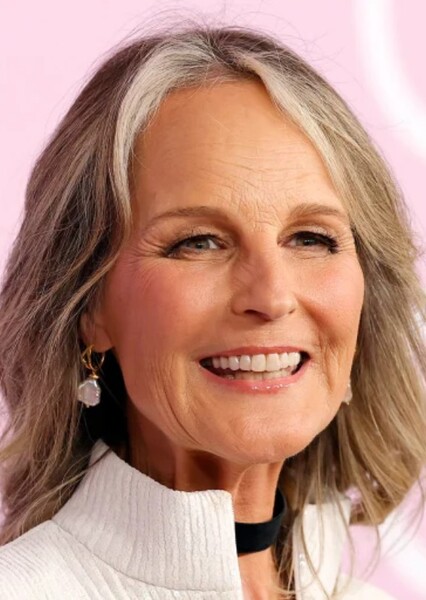
Helen Elizabeth Hunt (born June 15, 1963) is an American actress and director. She is the recipient of numerous accolades, including an Academy Award, four Primetime Emmy Awards, and four Golden Globe Awards. Hunt rose to fame in 1992, portraying Jamie Buchman in the sitcom Mad About You which earned her three Golden Globe Awards for Best Actress and four Primetime Emmy Awards for Lead Actress. In 1997, Hunt won the Academy Award for Best Actress for starring as Carol Connelly in the romantic comedy As Good as It Gets, while her portrayal of Cheryl Cohen-Greene in The Sessions (2012), gained her a nomination for the Academy Award for Best Supporting Actress. Her other notable films include Twister (1996), Cast Away (2000), What Women Want (2000), Pay It Forward (2000), Bobby (2006), Soul Surfer (2011), and The Miracle Season (2018). Hunt made her directorial film debut with Then She Found Me (2007), and has directed the film Ride (2014), and episodes of television series, including House of Lies, This Is Us, Feud: Bette and Joan, American Housewife, and the premiere episode of the Mad About You revival. Description above from the Wikipedia article Helen Hunt, licensed under CC-BY-SA, full list of contributors on Wikipedia.
Helen Hunt

Baby Boomers
for Baby Boomers in Best by Generation
Suggested by gustavosoaresdemorales

The Strauss–Howe generational theory, devised by William Strauss and Neil Howe, describes a theorized recurring generation cycle in American history and Western history. According to the theory, historical events are associated with recurring generational personas (archetypes). Each generational persona unleashes a new era (called a turning) lasting around 20–25 years, in which a new social, political, and economic climate (mood) exists. An average life is 80 years and consists of four periods of ~20–22 years Childhood → Young adult → Midlife → Elderhood A generation is an aggregate of people born every ~20–22 years Baby Boomers → Gen X → Millennials → Homelanders Each generation experiences "four turnings" every ~80–90 years High → Awakening → Unraveling → Crisis A generation is considered "dominant" or "recessive" according to the turning experienced as young adults. But as a youth generation comes of age and defines its collective persona an opposing generational archetype is in its midlife peak of power. Dominant: independent behavior + attitudes in defining an era Recessive: dependent role in defining an era https://en.wikipedia.org/wiki/Strauss%E2%80%93Howe_generational_theory