Age: 73
male
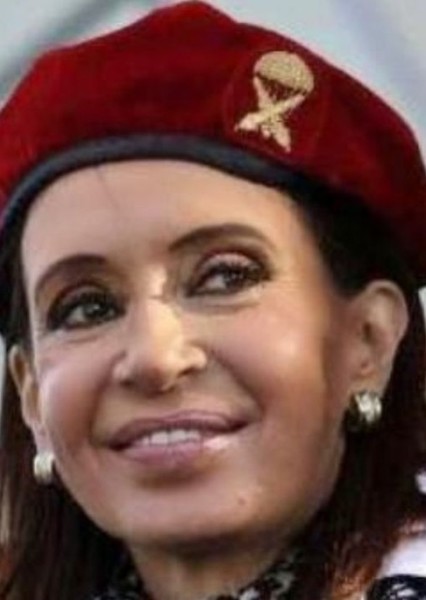
From Wikipedia, the free encyclopedia. Cristina Elisabet Fernández de Kirchner (born 19 February 1953), commonly known as Cristina Fernández or Cristina Kirchner, is the 55th and current President of Argentina and the widow of former President Néstor Kirchner. She is Argentina's first elected female President, and the second female President ever to serve (after Isabel Martínez de Perón, 1974–1976). A Justicialist, Fernández served one term as National Deputy and three terms as National Senator for both Santa Cruz and Buenos Aires Provinces. A native of La Plata, Buenos Aires, Fernández is a graduate of the National University of La Plata. She met her husband during her studies, and they moved to Santa Cruz to work as lawyers. In May 1991, she was elected to the provincial legislature. Between 1995 and 2007, she was repeatedly elected to the Argentine National Congress, both as a National Deputy and National Senator. During Kirchner's presidency (2003–2007) she acted as First Lady. Fernández was chosen the Front for Victory presidential candidate in 2007. In the October 2007 general election she obtained 45.3% of the vote and a 22% lead over her nearest rival, avoiding the need for a runoff. She was inaugurated on December 10, 2007. As a First Lady, and later President, she has become a fashion icon for women, and a notable advocate for human rights, poverty awareness and health improvement. Description above from the Wikipedia article Cristina Fernández de Kirchner, licensed under CC-BY-SA, full list of contributors on Wikipedia.
Cristina Fernández de Kirchner

Baby Boomers
for Baby Boomers in Best by Generation
Suggested by gustavosoaresdemorales

The Strauss–Howe generational theory, devised by William Strauss and Neil Howe, describes a theorized recurring generation cycle in American history and Western history. According to the theory, historical events are associated with recurring generational personas (archetypes). Each generational persona unleashes a new era (called a turning) lasting around 20–25 years, in which a new social, political, and economic climate (mood) exists. An average life is 80 years and consists of four periods of ~20–22 years Childhood → Young adult → Midlife → Elderhood A generation is an aggregate of people born every ~20–22 years Baby Boomers → Gen X → Millennials → Homelanders Each generation experiences "four turnings" every ~80–90 years High → Awakening → Unraveling → Crisis A generation is considered "dominant" or "recessive" according to the turning experienced as young adults. But as a youth generation comes of age and defines its collective persona an opposing generational archetype is in its midlife peak of power. Dominant: independent behavior + attitudes in defining an era Recessive: dependent role in defining an era https://en.wikipedia.org/wiki/Strauss%E2%80%93Howe_generational_theory