Age: 65
male
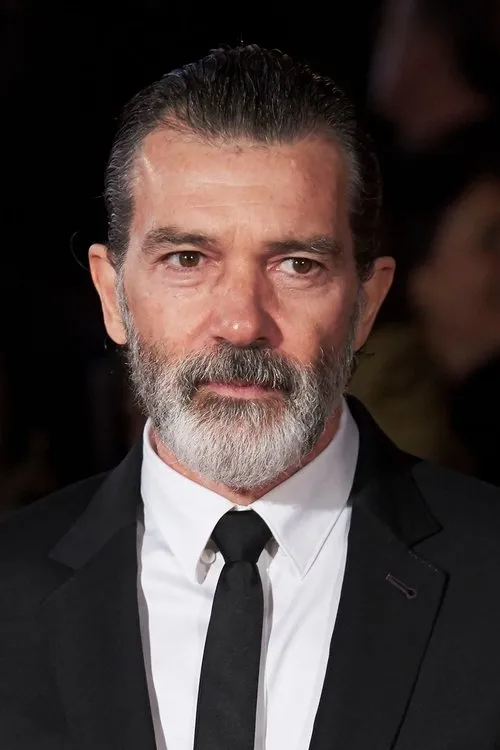
José Antonio Domínguez Bandera (born 10 August 1960), known professionally as Antonio Banderas, is a Spanish actor and singer. Known for his work in films of several genres, he has received various accolades, including a Cannes Film Festival Award and a European Film Award, in addition to nominations for an Academy Award, a Tony Award, two Primetime Emmy Awards, and five Golden Globe Awards. Banderas made his film debut in Pedro Almodóvar's screwball comedy Labyrinth of Passion (1982). They've since collaborated together on many films including Matador (1986), Law of Desire (1987), Women on the Verge of a Nervous Breakdown (1988), Tie Me Up! Tie Me Down! (1989), and The Skin I Live In (2011). For the 2019 film Pain and Glory, Banderas earned various accolades for Best Actor including the Cannes Film Festival Award, Goya Award, and as well as nominations from the Academy Awards and Golden Globe Awards. He's also known for several Hollywood films, such as Philadelphia (1993), Interview with the Vampire (1994), Desperado (1995), Assassins (1995), Evita (1996), and The Mask of Zorro (1998). He also appeared in the first three films of the Spy Kids series (2001-2003) and provided the voice of Puss in Boots in the Shrek franchise (2004–present) and its spin-off films Puss in Boots (2011) and Puss in Boots: The Last Wish (2022). In 2003, Banderas made his US theatre debut as Guido Contini in Nine, for which he was nominated for a Tony Award and won a Drama Desk Award. He received Primetime Emmy Award nominations for his roles in the television film And Starring Pancho Villa as Himself (2004) and the second season of Genius (2018); his portrayal of Pablo Picasso in the latter garnered him critical praise.
Antonio Banderas

Baby Boomers
for Baby Boomers in Best by Generation
Suggested by gustavosoaresdemorales

The Strauss–Howe generational theory, devised by William Strauss and Neil Howe, describes a theorized recurring generation cycle in American history and Western history. According to the theory, historical events are associated with recurring generational personas (archetypes). Each generational persona unleashes a new era (called a turning) lasting around 20–25 years, in which a new social, political, and economic climate (mood) exists. An average life is 80 years and consists of four periods of ~20–22 years Childhood → Young adult → Midlife → Elderhood A generation is an aggregate of people born every ~20–22 years Baby Boomers → Gen X → Millennials → Homelanders Each generation experiences "four turnings" every ~80–90 years High → Awakening → Unraveling → Crisis A generation is considered "dominant" or "recessive" according to the turning experienced as young adults. But as a youth generation comes of age and defines its collective persona an opposing generational archetype is in its midlife peak of power. Dominant: independent behavior + attitudes in defining an era Recessive: dependent role in defining an era https://en.wikipedia.org/wiki/Strauss%E2%80%93Howe_generational_theory