Age: 64
male
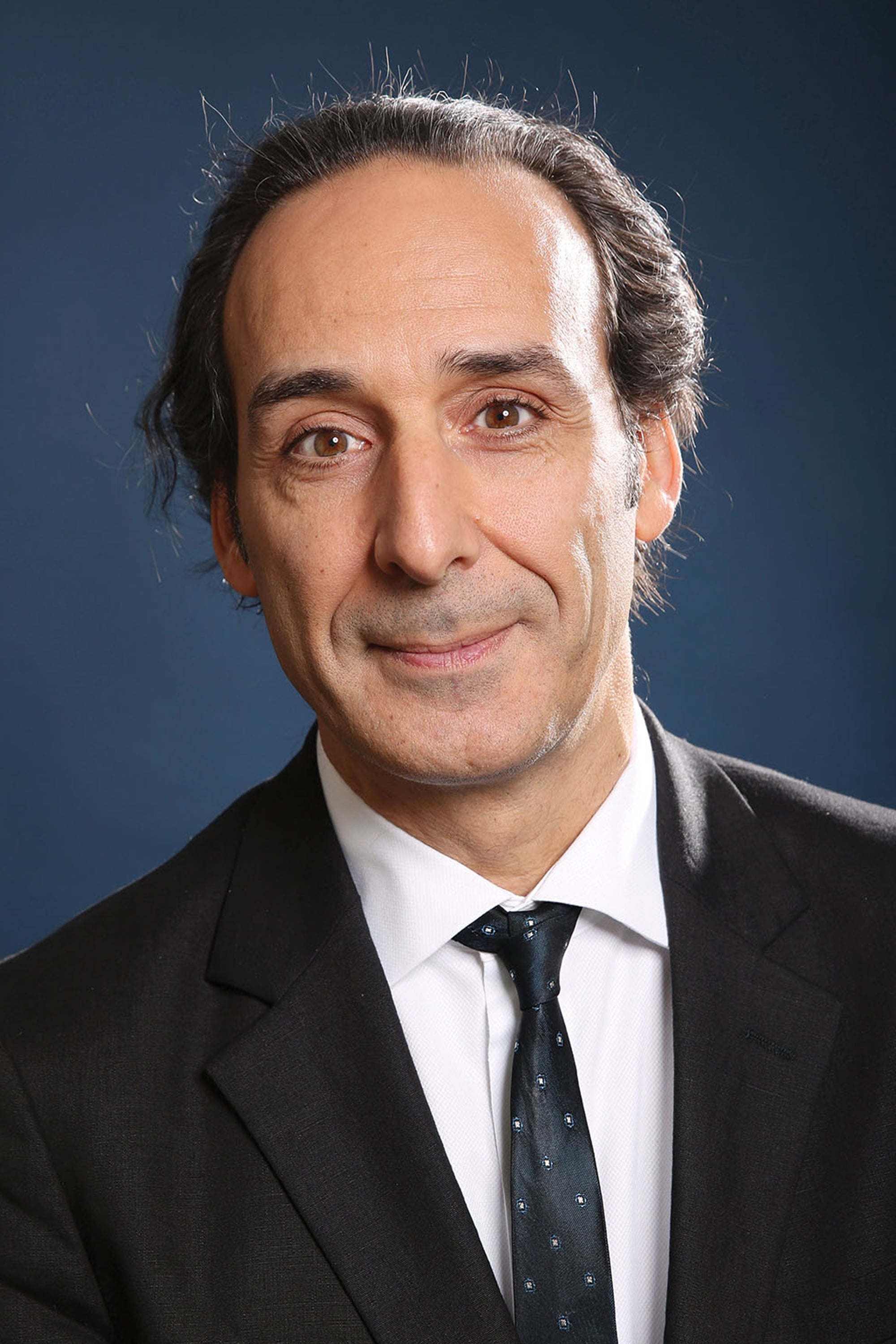
Alexandre Michel Gérard Desplat (French:[alɛksɑ̃dʁ dɛspla]; born 23 August 1961) is a French film composer and conductor. He has received numerous accolades, including two Academy Awards, three BAFTA Awards, two Golden Globe Awards, and two Grammy Awards. Desplat was made an Officer of the Ordre national du Mérite and a Commander of the Ordre des Arts et des Lettres both in 2016. Desplat has received two Academy Awards for Best Original Score for The Grand Budapest Hotel (2014) and The Shape of Water (2017). He was Oscar-nominated for The Queen (2006), The Curious Case of Benjamin Button (2008), Fantastic Mr. Fox (2009), The King's Speech (2010), Argo (2012), Philomena (2013), The Imitation Game (2014), Isle of Dogs (2018), and Little Women (2019). Desplat has composed scores for a wide range of films, including low-budget independent productions and large-scale blockbusters, such as The Golden Compass (2007), The Twilight Saga: New Moon (2009), Harry Potter and the Deathly Hallows – Part 1 (2010) & Part 2 (2011), Moonrise Kingdom (2012), Zero Dark Thirty (2012), Godzilla (2014), Unbroken (2014), The French Dispatch (2021), Guillermo del Toro's Pinocchio (2022) and Jurassic World Rebirth (2025). He has collaborated with directors such as Wes Anderson, Chris Weitz, Terrence Malick, George Clooney, Roman Polanski, Guillermo del Toro and Gareth Edwards. Description above from the Wikipedia article Alexandre Desplat, licensed under CC-BY-SA, full list of contributors on Wikipedia.
Alexandre Desplat

Baby Boomers
for Baby Boomers in Best by Generation
Suggested by gustavosoaresdemorales

The Strauss–Howe generational theory, devised by William Strauss and Neil Howe, describes a theorized recurring generation cycle in American history and Western history. According to the theory, historical events are associated with recurring generational personas (archetypes). Each generational persona unleashes a new era (called a turning) lasting around 20–25 years, in which a new social, political, and economic climate (mood) exists. An average life is 80 years and consists of four periods of ~20–22 years Childhood → Young adult → Midlife → Elderhood A generation is an aggregate of people born every ~20–22 years Baby Boomers → Gen X → Millennials → Homelanders Each generation experiences "four turnings" every ~80–90 years High → Awakening → Unraveling → Crisis A generation is considered "dominant" or "recessive" according to the turning experienced as young adults. But as a youth generation comes of age and defines its collective persona an opposing generational archetype is in its midlife peak of power. Dominant: independent behavior + attitudes in defining an era Recessive: dependent role in defining an era https://en.wikipedia.org/wiki/Strauss%E2%80%93Howe_generational_theory