
Age: 30
female
Anya-Josephine Marie Taylor-Joy (/ˈænjə/; born 16 April 1996) is an American actress and voice actress. Born in Miami and raised in Buenos Aires and London, she left school at 16 to pursue an acting career. After several minor television roles, her breakthrough came with a leading role in the horror film The Witch (2015). Her career progressed with roles in the horror film Split (2016) and its sequel Glass (2019), the black comedy film Thoroughbreds (2017), and playing Emma Woodhouse in the period drama Emma (2020). Taylor-Joy featured in the television crime drama series Peaky Blinders (2019–2022) and earned international recognition for playing Beth Harmon in the period drama miniseries The Queen's Gambit (2020), winning a Golden Globe Award and a SAG Award, in addition to a nomination for a Primetime Emmy Award. She then starred in the horror film Last Night in Soho (2021), the action films The Northman (2022) and The Gorge (2025), and the black comedy The Menu (2022). She also voiced Princess Peach in the animated film The Super Mario Bros. Movie (2023). She starred as Imperator Furiosa in the apocalyptic film Furiosa: A Mad Max Saga (2024). Description above from the Wikipedia article Anya Taylor-Joy, licensed under CC-BY-SA, full list of contributors on Wikipedia.
Anya Taylor-Joy
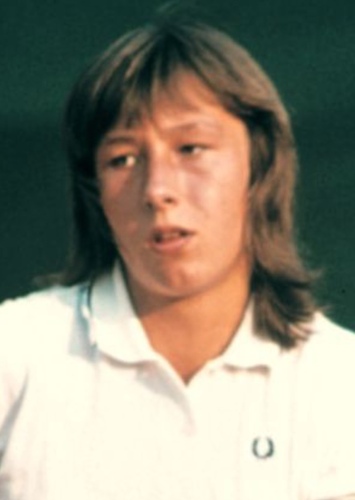
Martina Navratilova
for Martina Navratilova in Battle of the Sexes: Legends of tennis
Suggested by jakubduda
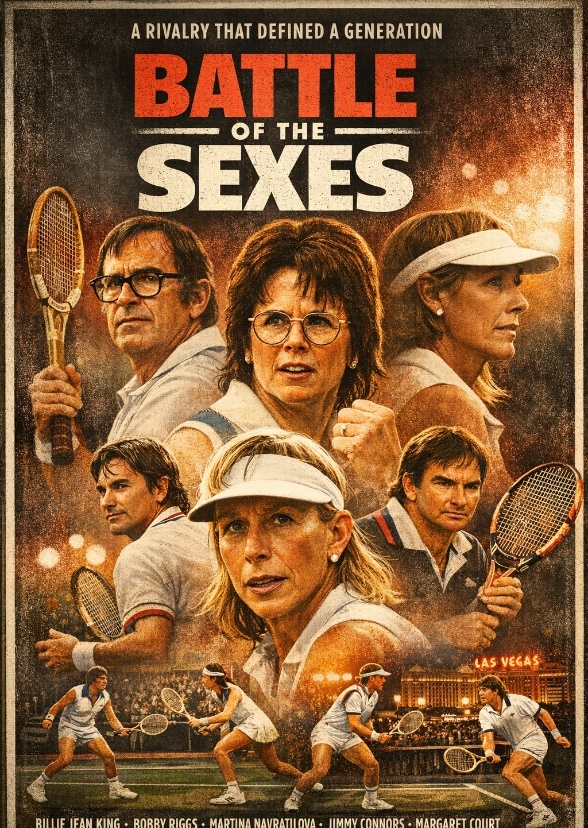
In 1973, tennis becomes a cultural battleground. Former champion and provocateur Bobby Riggs claims that even past his prime, a man can defeat the world’s best women. When he beats Margaret Court, the victory is seized upon as proof, igniting a national debate far beyond sport. The response comes from Billie Jean King. Under immense public pressure, King accepts Riggs’s challenge in a nationally televised match watched by millions. Her victory is celebrated as a final verdict, not just in tennis, but in culture itself. Yet the question does not disappear. In 1975, California hosts the Challenge of the Sexes, where Virginia Wade faces Björn Borg and Evonne Goolagong Cawley plays Ilie Năstase. These quieter, highly competitive exhibitions complicate the narrative, shows that outcomes are shaped by surface, style, context as much as gender. As the sport evolves, so does the debate. In the 1980s, Martina Navratilova emerges as the defining figure of her era. In a mixed-doubles exhibition, Navratilova and Pam Shriver defeat Vitas Gerulaitis and an aging Riggs, underscoring how rules and format redefine fairness. 19 years after the original, the battle returns one last time. In 1992, outside Caesars Palace in Vegas, Battle of Champions pits Jimmy Connors against Navratilova. Promoters call it war, Navratilova a battle of egos. Amid rumors, bravado, and history’s weight, Connors wins in straight sets. Battle is not an about proving who is better and equality does not mean sameness

