
Age: 47
male
Christopher Michael Pratt (born 21 June 1979) is an American actor, known for starring in both television and action films. He rose to prominence for his television roles, particularly in the NBC sitcom Parks and Recreation (2009–2015), for which he received critical acclaim and was nominated for the Critics' Choice Television Award for Best Supporting Actor in a Comedy Series in 2013. He also starred earlier in his career as Bright Abbott in The WB drama series Everwood (2002–2006) and had roles in Wanted (2008), Jennifer's Body (2009), Moneyball (2011), The Five-Year Engagement (2012), Zero Dark Thirty (2013), Delivery Man (2013), and Her (2013). Pratt achieved leading man status in 2014, starring in two critically and commercially successful films: The Lego Movie as Emmet Brickowski, and Marvel Studios' Guardians of the Galaxy as Star-Lord. He starred in Jurassic World (2015) and Jurassic World: Fallen Kingdom (2018), and he reprised his Marvel role in Guardians of the Galaxy Vol. 2 (2017), Avengers: Infinity War (2018), Avengers: Endgame (2019), and the planned Guardians of the Galaxy Vol. 3. Meanwhile, in 2016 he was part of an ensemble cast in The Magnificent Seven and the male lead in Passengers. Description above is from the Wikipedia article Chris Pratt, licensed under CC-BY-SA, full list of contributors on Wikipedia.
Chris Pratt
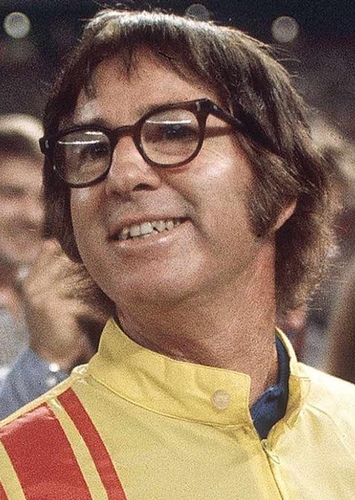
Bobby Riggs
for Bobby Riggs in Battle of the Sexes: Legends of tennis
Suggested by jakubduda
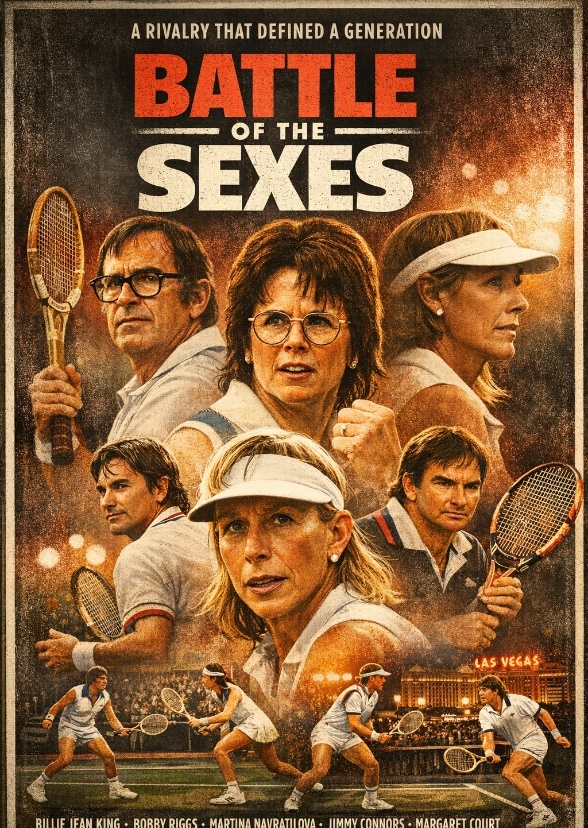
In 1973, tennis becomes a cultural battleground. Former champion and provocateur Bobby Riggs claims that even past his prime, a man can defeat the world’s best women. When he beats Margaret Court, the victory is seized upon as proof, igniting a national debate far beyond sport. The response comes from Billie Jean King. Under immense public pressure, King accepts Riggs’s challenge in a nationally televised match watched by millions. Her victory is celebrated as a final verdict, not just in tennis, but in culture itself. Yet the question does not disappear. In 1975, California hosts the Challenge of the Sexes, where Virginia Wade faces Björn Borg and Evonne Goolagong Cawley plays Ilie Năstase. These quieter, highly competitive exhibitions complicate the narrative, shows that outcomes are shaped by surface, style, context as much as gender. As the sport evolves, so does the debate. In the 1980s, Martina Navratilova emerges as the defining figure of her era. In a mixed-doubles exhibition, Navratilova and Pam Shriver defeat Vitas Gerulaitis and an aging Riggs, underscoring how rules and format redefine fairness. 19 years after the original, the battle returns one last time. In 1992, outside Caesars Palace in Vegas, Battle of Champions pits Jimmy Connors against Navratilova. Promoters call it war, Navratilova a battle of egos. Amid rumors, bravado, and history’s weight, Connors wins in straight sets. Battle is not an about proving who is better and equality does not mean sameness


