
Age: 79
male
Walter Charles Dance OBE (born 10 October 1946) is an English actor, screenwriter, and director. He typically plays strict, authoritarian characters or villains. He is best known for his roles as Tywin Lannister in Game of Thrones, Kitchener in The King's Man, Martin Benson in Amazon Prime's The Widow, Lord Mountbatten in Netflix's The Crown (for which he was nominated for a Primetime Emmy Award for Outstanding Guest Actor in a Drama Series), Thomas in Underworld: Awakening and Underworld: Blood Wars, Harold Fillmore in Ghostbusters (2016), Mr. Bennet in Pride and Prejudice and Zombies, Frankenstein in Victor Frankenstein, Master Vampire in Dracula Untold, Conrad Knox in the Cinemax series Strike Back, Raymond Stockbridge in Gosford Park, one-eyed hitman Benedict in Last Action Hero, Clemens in Alien³, Sardo Numpsa in The Golden Child, and Guy Perron in The Jewel in the Crown. He started his career on stage with the Royal Shakespeare Company (RSC) before appearing in film and television. For his services to drama, he was appointed an Officer of the Order of the British Empire (OBE) by Queen Elizabeth II in 2006. He made his directorial film debut with the drama film Ladies in Lavender (2004), which he also wrote and executive produced.
Charles Dance

Alfred Pennyworth
for Alfred Pennyworth in Batman vs. Robin (Live Action Remake)
Suggested by go77e
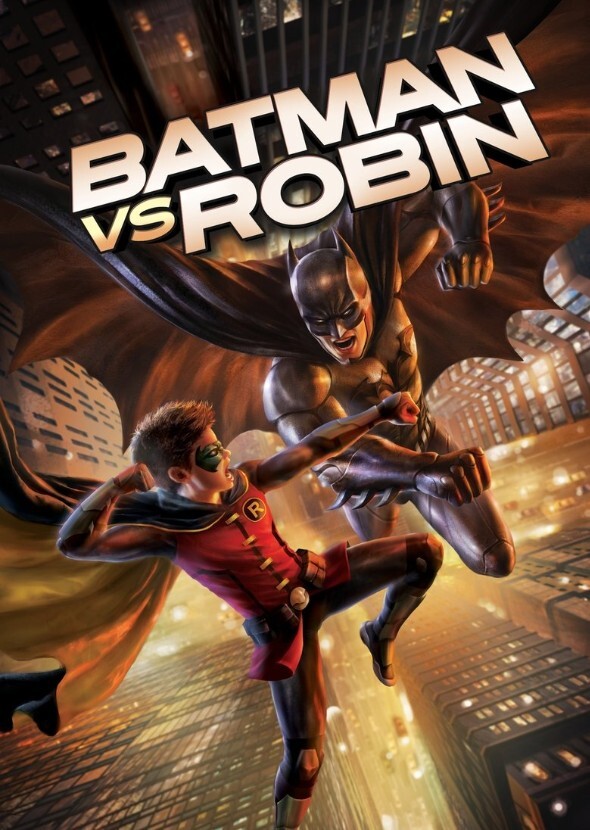
*rewritten for live action* After the events of Son of Batman, Bruce Wayne struggles to raise Damian — a child trained from birth to kill — in a world of moral restraint. Their uneasy relationship begins to fracture as a string of grisly, ritualistic child abductions grips Gotham. As Bruce investigates, he uncovers whispers of a shadow society: the Court of Owls, an ancient cabal that has manipulated Gotham’s elite from the shadows for centuries. Damian, feeling increasingly alienated and suffocated by his father’s rules, is approached by Talon, the Court’s deadly enforcer. Talon offers Damian a twisted version of family — one that embraces his violent instincts rather than suppresses them. The Court sees Damian not only as a weapon but as a potential heir to their legacy. As Bruce digs deeper, he learns that the Court was involved in the downfall of the Waynes and that their influence reaches into Gotham’s deepest institutions. At the same time, Damian is seduced by their vision of power, vengeance, and purpose — all things Bruce has denied him. This culminates in a psychological and physical confrontation: not just between Batman and Robin, but between two ideologies — legacy vs. destiny, control vs. freedom, justice vs. vengeance. In the end, Damian rejects the Court — not out of loyalty to Bruce, but because he begins to forge a third path: one that honors both who he was made to be, and who he’s choosing to become. The Court is exposed, but not destroyed, retreating back into myth. Talon is defeated but vanishes, hinting at a larger game.

