
Age: 70
male
William James "Willem" Dafoe (born July 22, 1955) is an American actor. Known for his prolific career portraying diverse roles in both mainstream and arthouse films, he is the recipient of various accolades, including the Volpi Cup for Best Actor as well as nominations for four Academy Awards, a BAFTA Award, four Golden Globe Awards, four Critics' Choice Movie Awards, and five Screen Actors Guild Awards. He has frequently collaborated with filmmakers Paul Schrader, Abel Ferrara, Lars von Trier, Julian Schnabel, Wes Anderson, and Robert Eggers. Dafoe was a founding member of experimental theatre company The Wooster Group. He made his film debut with an uncredited role in Heaven's Gate (1980). Dafoe's early career includes credits for The Loveless (1982), Streets of Fire (1984), and To Live and Die in L.A. (1985). He earned his first Academy Award nomination for the war drama Platoon (1986), followed by nominations for his roles in Shadow of the Vampire (2000), The Florida Project (2017), and the Vincent van Gogh biopic At Eternity's Gate (2018). He also gained acclaim and wide recognition for his roles as Jesus Christ in The Last Temptation of Christ (1988) and as the supervillain Norman Osborn in the superhero film Spider-Man (2002), a role he reprised in its sequels Spider-Man 2 (2004) and Spider-Man 3 (2007), and the Marvel Cinematic Universe film Spider-Man: No Way Home (2021). His other film appearance include roles in Mississippi Burning (1988), Born on the Fourth of July (1989), Wild at Heart (1990), Light Sleeper (1992), Body of Evidence (1993), Clear and Present Danger (1994), The English Patient (1996), Affliction (1997), New Rose Hotel(1998), Existenz (1999), The Boondock Saints (1999), American Psycho (2000), Auto Focus (2002), Finding Nemo (2003), The Life Aquatic with Steve Zissou (2004), Inside Man (2006), Mr. Bean's Holiday (2007), Antichrist (2009), Fantastic Mr. Fox (2009), Nymphomaniac (2013), The Fault in Our Stars (2014), John Wick (2014), The Grand Budapest Hotel (2014), Aquaman (2018), The Lighthouse (2019), Nightmare Alley (2021), Poor Things (2023), and Beetlejuice Beetlejuice (2024).
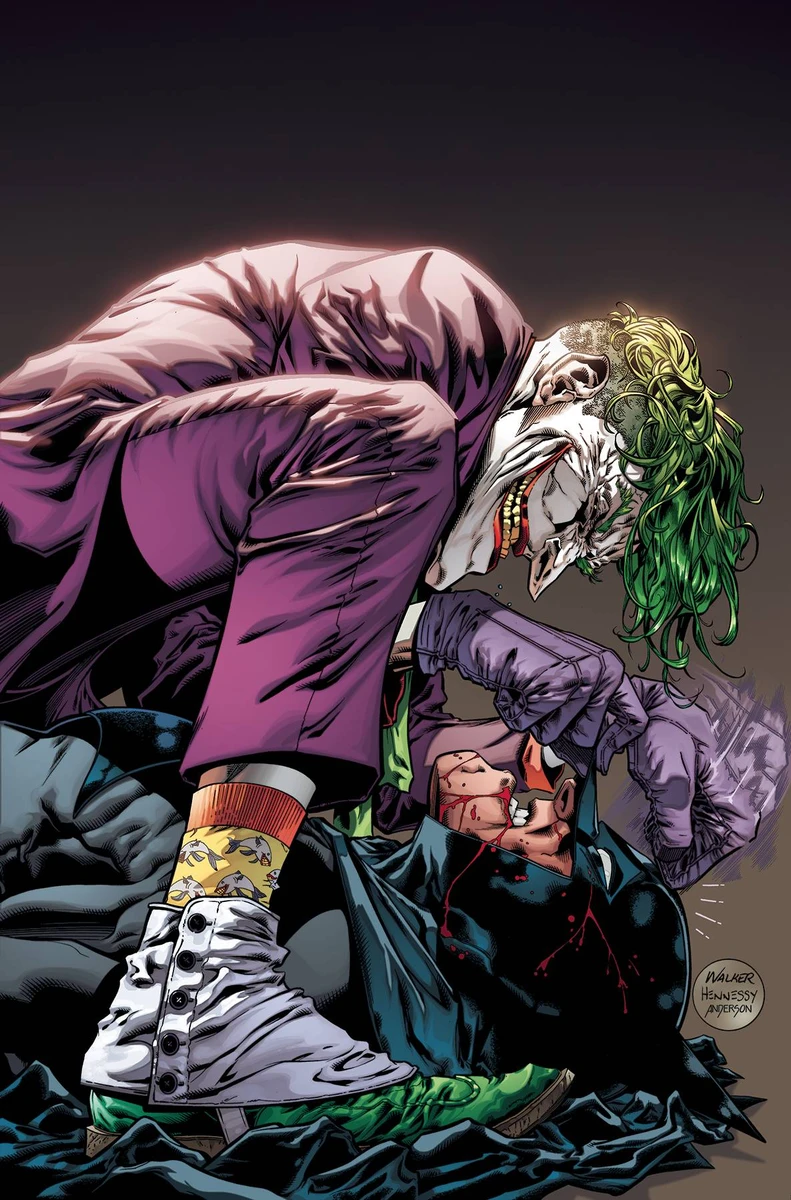
Five years have passed since the Bat-Signal last lit up the clouds of Gotham. In the wake of a devastating tragedy that shattered the Bat-family, Bruce Wayne has become a ghost, a recluse haunted by a past he cannot outrun. But the city has grown darker in his absence. Under the cold grip of A.R.G.U.S., the infamous Arkham district has been walled off, turned into "Arkham State'', a sovereign military zone ruled by the iron fist of Dr. Hugo Strange. Strange’s mandate is simple: total containment. But rumors of "Protocol 10" and horrific biological experiments suggest a much more sinister agenda. When a classified leak reveals a personal connection to Bruce’s past trapped within the walls, the Dark Knight is forced to don the cowl once more. The film plunges the audience in media res into the snowy, blood-soaked streets of the walled-off city. Batman is already inside, and he isn't alone. In a move that defies every moral code he once held, he has liberated The Joker. Told through a fragmented, non-linear narrative, the audience must piece together why Batman has chosen to work with his greatest enemy. As the "Deadly Duo" carves a path through Strange’s private army and the grotesque "Monster Men" stalking the ruins, the Joker plays a sadistic game of psychological warfare, peeling back the layers of Bruce’s trauma. In this claustrophobic descent into madness, the mission is clear: find the heart of Strange’s operation and shut it down. But in a city built on secrets and fueled by vengeance, the greatest threat isn't the monsters behind the glass, it's the fragile bond between two enemies who have nothing left to lose.


