
Died at 90
male
Charles Robert Redford Jr. (August 18, 1936 – September 16, 2025) was an American actor, director and activist. Throughout his career, he won several film awards, including the Academy Award for Best Director for his 1980 film Ordinary People. He also received an honorary Academy Award for Lifetime Achievement in 2002 and was also the founder of the Sundance Film Festival. In 2014, Time magazine named him one of the 100 most influential people in the world, and in 2016 he was honored with a Presidential Medal of Freedom. Appearing on stage in the late 1950s, Redford's television career began in 1960, including an appearance on The Twilight Zone in 1962. He earned an Emmy nomination as Best Supporting Actor for his performance in The Voice of Charlie Pont (1962). His greatest Broadway success was as the stuffy newlywed husband of co-star Elizabeth Ashley's character in Neil Simon's Barefoot in the Park (1963). Redford made his film debut in War Hunt (1962). His role in Inside Daisy Clover (1965) won him a Golden Globe for the best new star. He starred alongside Paul Newman in Butch Cassidy and the Sundance Kid (1969), which was a huge success and made him a major star. He had a critical and box office hit with Jeremiah Johnson (1972), and in 1973 he had the greatest hit of his career, the blockbuster crime caper The Sting, a re-union with Paul Newman, for which he was nominated for an Academy Award; that same year, he also starred opposite Barbra Streisand in The Way We Were. The popular and acclaimed All the President's Men (1976) was a landmark film for Redford. In the 1980s, Redford began his career as a director with Ordinary People (1980), which was one of the most critically and publicly acclaimed films of the decade, winning four Oscars including Best Picture and the Academy Award for Best Director for Redford. He continued acting and starred in Brubaker (1980), as well as playing the male lead in Out of Africa (1985), which was an enormous box office success and won seven Oscars including Best Picture. He released his third film as a director, A River Runs Through It, in 1992. He went on to receive Best Director and Best Picture nominations in 1995 for Quiz Show. He received a second Academy Award—for Lifetime Achievement—in 2002. In 2010, he was made a chevalier of the Légion d'Honneur. He additionally won BAFTA, Directors Guild of America, Golden Globe, and Screen Actors Guild awards.
Robert Redford
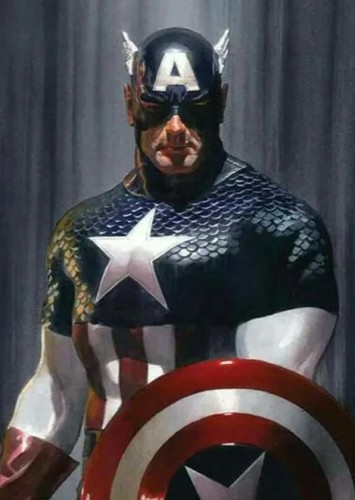
Captain America
for Captain America in Avengers Earth's Mightiest 70s
Suggested by yosefalsalamah
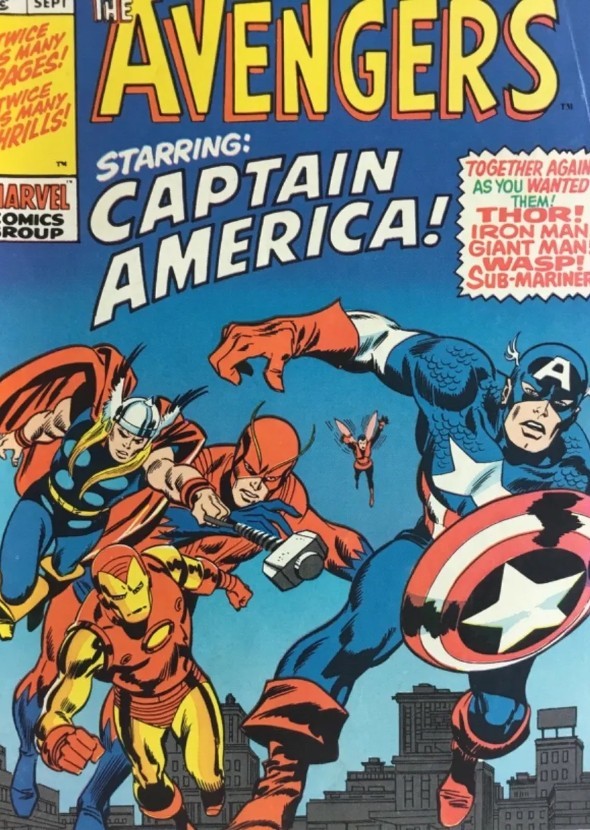
Continuing from last issue, the Avengers are alerted of a string of crimes that are apparently being caused by the Black Panther, which the Sons of the Serpent are using to fuel racial tensions in the city, by promising to unmask the Panther on national television, and expose his criminal nature. This causes the city to become split over the issue of race, and tension on the Dan Dunn show explode. The Avengers, seeking to get to the bottom of things, track down and battle the "Black Panther", who manages to distract the Avengers and escape. While recouping back at Avengers Mansion they soon see on television that the Sons of the Serpent have "captured" Black Panther and are about to unmask him on television. The Avengers rush to the station and battle the Sons of the Serpent. When the real Black Panther is freed, he reveals that the Black Panther "unmasked" by the Serpents was really an impostor. The masterminds behind the Sons of the Serpent are unmasked and revealed to be Dan Dunn and Montague Hale. It turns out their racism was an act intended to stir up hatred and violence that they could use to gain power. Although Hale was using "Black America" for his own ends, Monica Lynne and T'Challa point out that even though the leader was wrong, the cause is still right. They each admit that they have found a new purpose.

